衆
| ||||||||
Translingual
| Traditional | 眾 |
|---|---|
| Shinjitai | 衆 |
| Simplified | 众 |
Glyph origin
Variant of 眾, with bottom component ⿲人亻人 replaced by 乑 (similar to unrelated 衣 and 𠂢).
Current form is graphically 血 + 乑 (“crowd, multitude”) – bottom is originally 3 people, hence “crowd”, though top is unrelated to 血, being originally 罒 (“eye”).
Usage notes
The Kangxi dictionary lists 衆 as the unorthodox form (俗字) of 眾. However, 衆 is the preferred form used in Japanese kanji.
Han character
衆 (radical 143, 血+6, 12 strokes, cangjie input 竹廿竹竹人 (HTHHO) or 竹廿人竹人 (HTOHO), four-corner 27232, composition ⿱血乑)
Derived characters
- 潨, 𪢊
References
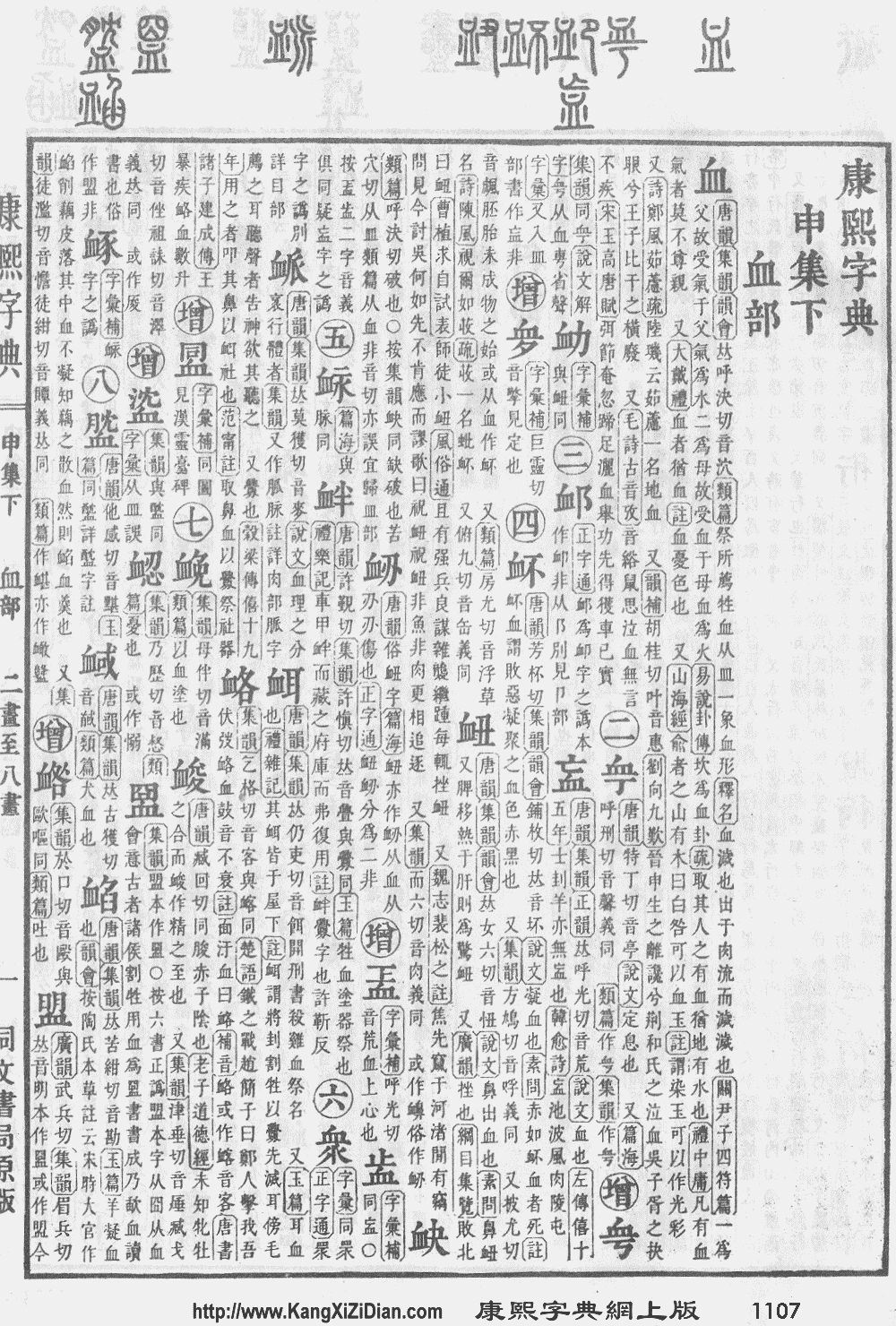
- KangXi: page 1107, character 16
- Dai Kanwa Jiten: character 33981
- Dae Jaweon: page 1569, character 17
- Hanyu Da Zidian: volume 5, page 3051, character 14
- Unihan data for U+8846
Chinese
| For pronunciation and definitions of 衆 – see 眾 (“masses; people; multitude; crowd; everyone; everything; all matters; etc.”). (This character, 衆, is a variant form of 眾.) |
Japanese
Kanji
衆
Readings
- Goon: しゅ (shu, Jōyō, uncommon)←しゆ (syu, historical); す (su)←す (su, historical)
- Kan’on: しゅう (shū, Jōyō)←しゆう (syū, historical)
- Kun: おおい (ōi, 衆い)←おほい (ofoi, historical)
Compounds
Noun
- Antonyms
Korean
Hanja
衆 • (jung) (hangeul 중, revised jung, McCune–Reischauer chung, Yale cwung)
- This term needs a translation to English. Please help out and add a translation, then remove the text
{{rfdef}}.
This article is issued from
Wiktionary.
The text is licensed under Creative Commons - Attribution - Sharealike.
Additional terms may apply for the media files.