蠅
| ||||||||
Translingual
Han character
蠅 (radical 142 虫+13, 19 strokes, cangjie input 中戈口X山 (LIRXU), four-corner 56116, composition ⿰虫黽)
References
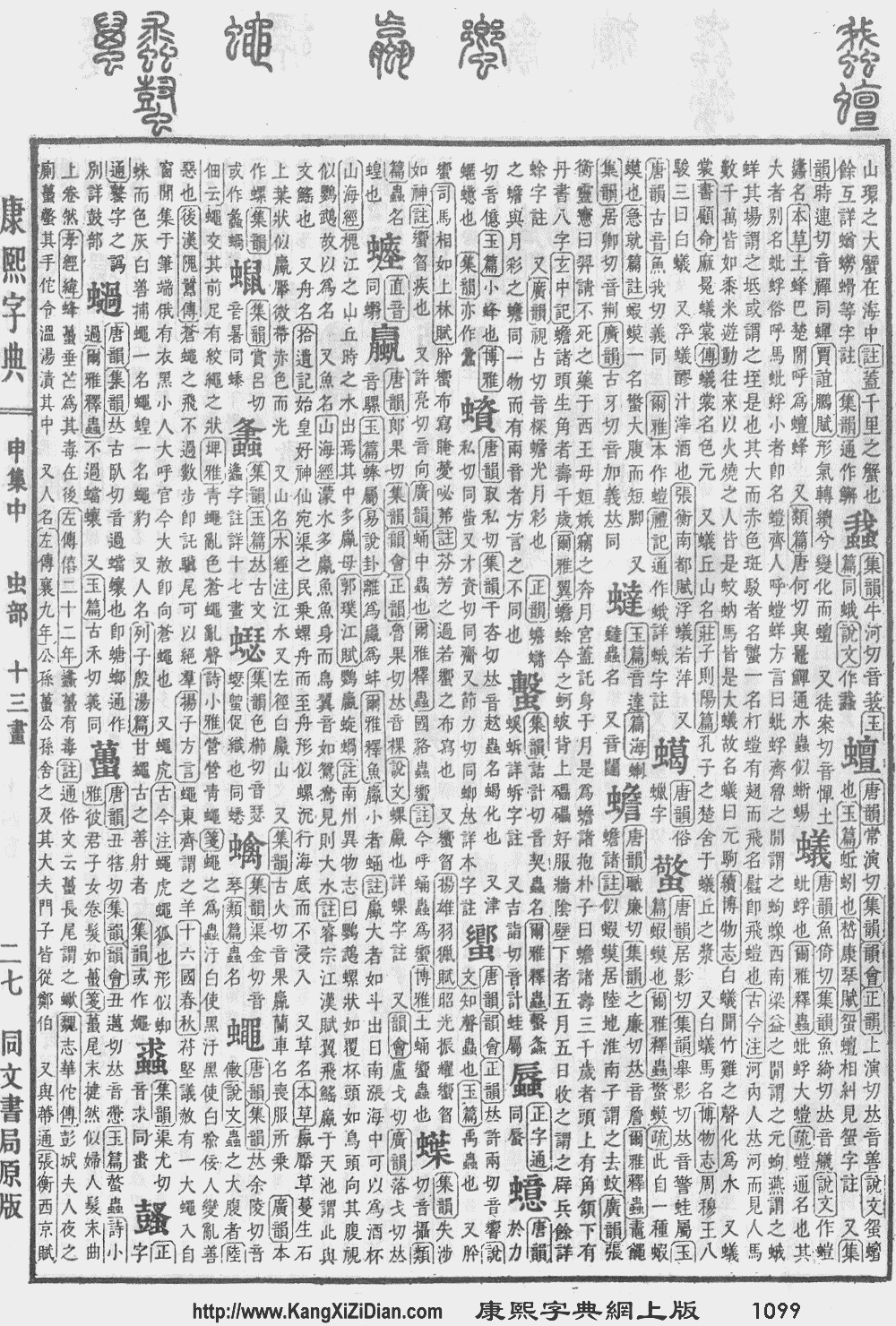
- KangXi: page 1099, character 20
- Dai Kanwa Jiten: character 33690
- Dae Jaweon: page 1563, character 23
- Hanyu Da Zidian: volume 4, page 2897, character 1
- Unihan data for U+8805
Chinese
| trad. | 蠅 | |
|---|---|---|
| simp. | 蝇 | |
Glyph origin
| Characters in the same phonetic series (黽) (Zhengzhang, 2003) | |
|---|---|
| Old Chinese | |
| 澠 | *mlenʔ, *mliŋʔ, *ɦbljɯŋ |
| 黽 | *mlenʔ, *mliŋʔ, *mreːŋʔ |
| 僶 | *mliŋʔ |
| 繩 | *ɦbljɯŋ |
| 譝 | *ɦbljɯŋ |
| 憴 | *ɦbljɯŋ |
| 鱦 | *ɦbljɯŋ, *ɦbljɯŋ, *b·lɯŋs, *mraːŋʔ |
| 蠅 | *b·lɯŋ |
| 鄳 | *mraːŋ, *mraːŋʔ |
| 鼆 | *mreːŋʔ |
Phono-semantic compound (形聲, OC *b·lɯŋ) : semantic 虫 (“insect”) + phonetic 黽 (OC *mlenʔ, *mliŋʔ, *mreːŋʔ).
Etymology
From Proto-Sino-Tibetan *s-b-(r/j)aŋ (“fly, bee”). Compare Tibetan སྦྲང་བུ (sbrang bu, “bee”) and Burmese ယင်ကောင် (yangkaung, “fly”).
Pronunciation
Definitions
蠅
Synonyms
Compounds
Derived terms from 蠅
|
|
|
Japanese
Kanji
蠅
(uncommon “Hyōgai” kanji, kyūjitai kanji, shinjitai form 蝿)
Readings
Noun
| Kanji in this term |
|---|
| 蠅 |
| はえ > はい Hyōgaiji |
| Irregular |
| Kanji in this term |
|---|
| 蠅 |
| はえ Hyōgaiji |
| kun’yomi |
蠅 (kyūjitai kanji, shinjitai kanji 蝿, hiragana はえ, katakana ハエ, rōmaji hae, historical hiragana はへ)
(alternative reading hiragana はい, romaji hai, historical hiragana はひ)
Korean
Hanja
蠅 • (seung) (hangeul 승, revised seung, McCune–Reischauer sŭng, Yale sung)
- This term needs a translation to English. Please help out and add a translation, then remove the text
{{rfdef}}.
This article is issued from
Wiktionary.
The text is licensed under Creative Commons - Attribution - Sharealike.
Additional terms may apply for the media files.