蒜
| ||||||||
Translingual
Han character
蒜 (radical 140, 艸+10, 16 strokes, cangjie input 廿一火火 (TMFF), four-corner 44991, composition ⿱艹祘)
References
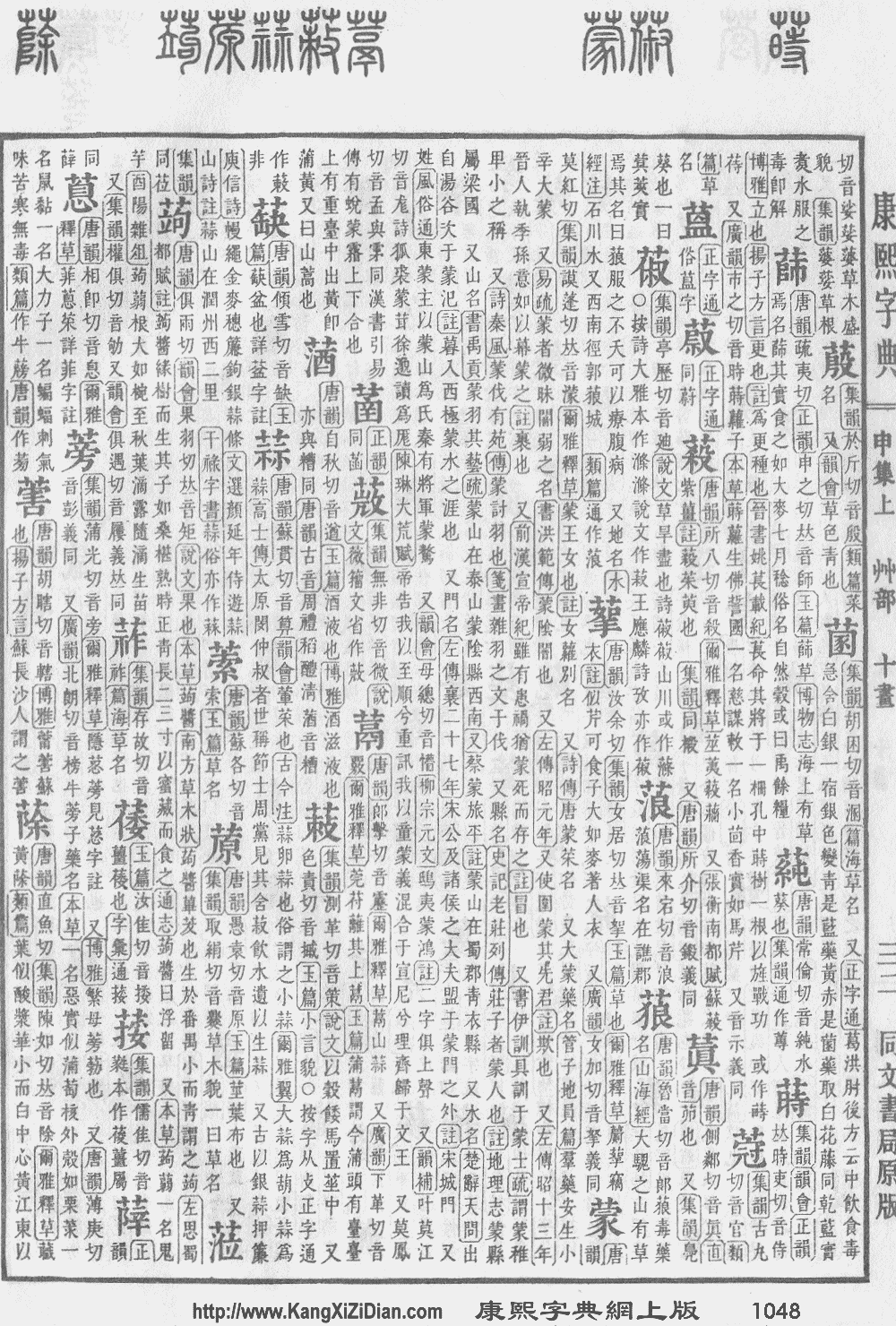
- KangXi: page 1048, character 22
- Dai Kanwa Jiten: character 31562
- Dae Jaweon: page 1510, character 4
- Hanyu Da Zidian: volume 5, page 3259, character 13
- Unihan data for U+849C
Chinese
| simp. and trad. |
蒜 | |
|---|---|---|
Glyph origin
| Characters in the same phonetic series (祘) (Zhengzhang, 2003) | |
|---|---|
| Old Chinese | |
| 蒜 | *sloːns |
| 祘 | *sloːns |
Phono-semantic compound (形聲, OC *sloːns) : semantic 艸 + phonetic 祘 (OC *sloːns).
Etymology
Matisoff considers this to be derived from Proto-Sino-Tibetan *swa-n (“garlic”), but more likely this may be a plant imported from the Western Regions in the Qin–Han era. The relatively late attestation and the earlier form of 卵蒜 (luǎnsuàn) attest to the latter theory.
Compare Sanskrit लशुन (laśuna), Pali lasuṇa, lasuna. The Old Chinese reconstruction was revised to a *-or rhyme in the Baxter–Sagart system, akin to its homophone 算 (“to calculate”). Hence compare Persian سیر (sir, “garlic”), Khotanese sārmā- (sārmā-, “the plant Basella cordifolia or B. lucida or B. rubra”), Hungarian sárma (“Ornithogalum sp.”), as well as (controversial) Proto-Altaic *sera (“a kind of garlic”) (Turkish sarımsak, Mongolian саримс (sarims)).
Either way this word is cognate with the second syllable of Burmese ကြက်သွန် (krakswan, “onion”), ကြက်သွန်ဖြူ (krakswanhpru, “garlic”).
Pronunciation
Definitions
蒜
Compounds
Japanese
Kanji
Readings
Etymology 1
| Kanji in this term |
|---|
| 蒜 |
| にんにく Hyōgaiji |
| kun’yomi |
Said to be from 忍辱.
Pronunciation
Alternative forms
Noun
蒜 (hiragana にんにく, katakana ニンニク, rōmaji ninniku)
Usage notes
As with many terms that name organisms, this term is often spelled in katakana, especially in biological contexts, as ニンニク.
Derived terms
- 浜蒜 (hamaninniku)
Etymology 2
| Kanji in this term |
|---|
| 蒜 |
| ひる Hyōgaiji |
| kun’yomi |
From Proto-Japonic *peru (“garlic”).
Pronunciation
Noun
Derived terms
References
Kikai
Alternative forms
Kanji
蒜 (hiragana ふぃる, romaji firu)
Noun
蒜 (hiragana ふぃる, romaji firu)
References
Korean
Hanja
蒜 • (san) (hangeul 산, revised san, McCune–Reischauer san, Yale san)
- This term needs a translation to English. Please help out and add a translation, then remove the text
{{rfdef}}.
Okinawan
Alternative forms
Etymology
Attested in the 沖縄語典 (Okinawa Goten, “Okinawan Dictionary”) as ひる.[1]
Kanji
Noun
References
- ↑ 1896: 沖縄語典 (Okinawa Goten, “Okinawan Dictionary”). In Japanese. http://kindai.ndl.go.jp/info:ndljp/pid/992016/77
- 沖縄語辞典 (Okinawago Jiten, “Okinawan Dictionary”), 1963
- http://ryukyu-lang.lib.u-ryukyu.ac.jp/srnh/details.php?ID=SN51475