絵
| ||||||||
Translingual
| Traditional | 繪 |
|---|---|
| Shinjitai | 絵 |
| Simplified | 绘 |
Glyph origin
Han character
絵 (radical 120, 糸+6, 12 strokes, cangjie input 女火人一戈 (VFOMI), composition ⿰糸会)
References
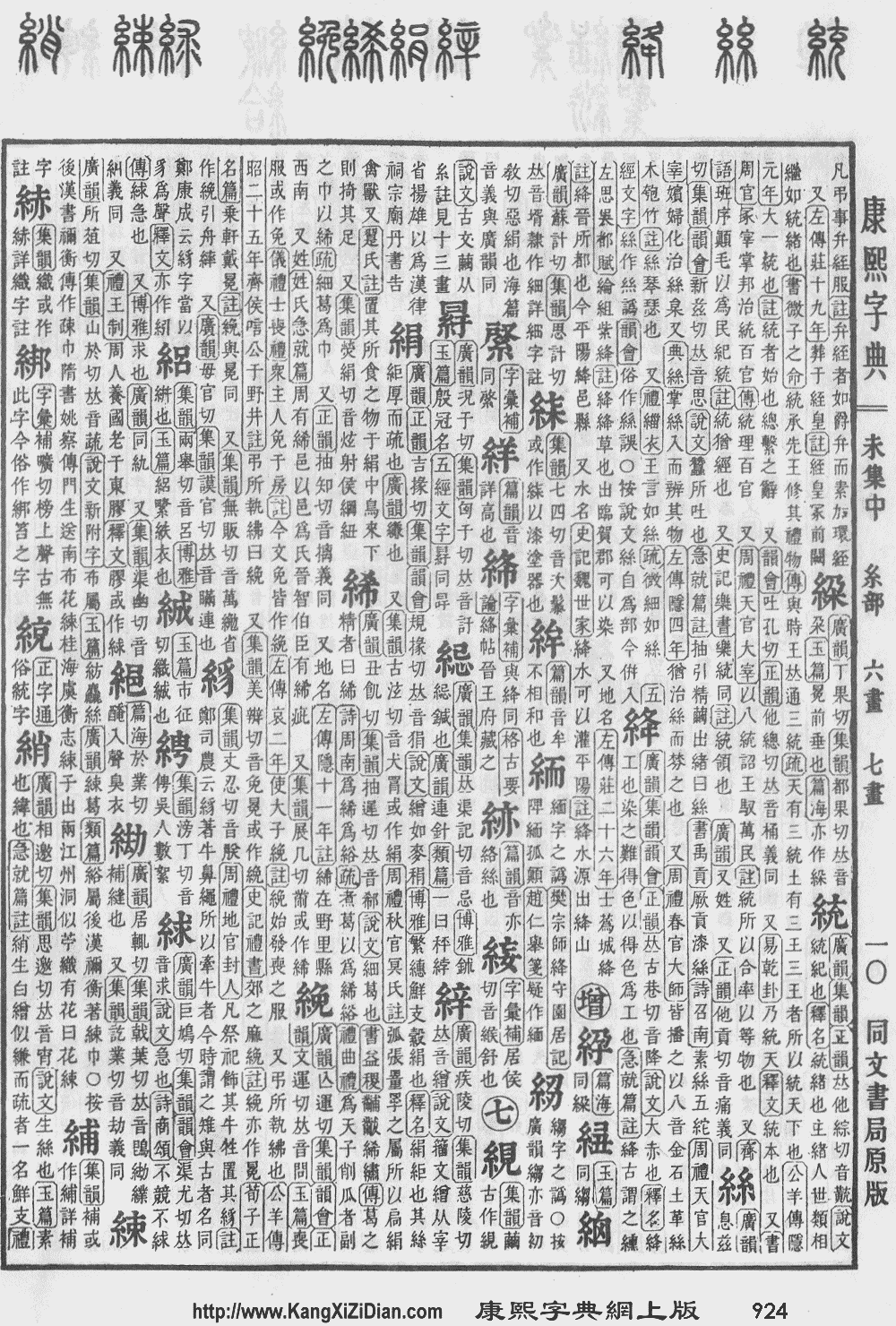
- KangXi: not present, would follow page 924, character 16
- Dai Kanwa Jiten: character 27464
- Dae Jaweon: page 1359, character 15
- Hanyu Da Zidian: not present, would follow volume 5, page 3394, character 10
- Unihan data for U+7D75
Chinese
| For pronunciation and definitions of 絵 – see 繪 (“to draw; to sketch; to paint; to tie one's hair with various colors”). (This character, 絵, is the former (1969–1976) Singaporean simplified form of 繪.) |
Notes:
|
Japanese
| 絵 | |
| 繪 |
Kanji
(grade 2 “Kyōiku” kanji, shinjitai kanji, kyūjitai form 繪)
Readings
Compounds
Etymology
| Kanji in this term |
|---|
| 絵 |
| え Grade: 2 |
| on’yomi |
/we/ → /e/
From Middle Chinese 繪 (yuaih, reconstructed by some linguists as ɦuɑiH).
The goon reading, so likely the initial borrowing. (Can this(+) etymology be sourced?)
Alternative forms
Pronunciation
Noun
Usage notes
The kanji 絵 and 画 (also pronounced e, but can also be pronounced as ga), both having the same meanings and on-readings, can be confusing. While 絵 is used to mean pictures in the "drawn" sense (for example, 挿絵 (sashie), "illustration"), it can also refer to art in front of the speaker, such as 浮世絵 (ukiyo-e, “ukiyo-e”) or 蒔絵 (makie, “sprinkled lacquer”). 画 refers to art by extension, for example, 日本画 (nihonga, “Japanese painting”). Sometimes, both kanji can be interchanged, an example being 影絵, 影画 (kage-e, “shadow play”)
References
Vietnamese
Han character
- This term needs a translation to English. Please help out and add a translation, then remove the text
{{rfdef}}.