禿
See also: 秃
| ||||||||
Translingual
Han character
禿 (radical 115 禾+2, 7 strokes, cangjie input 竹木竹山 (HDHU), four-corner 20217, composition ⿱禾儿)
References
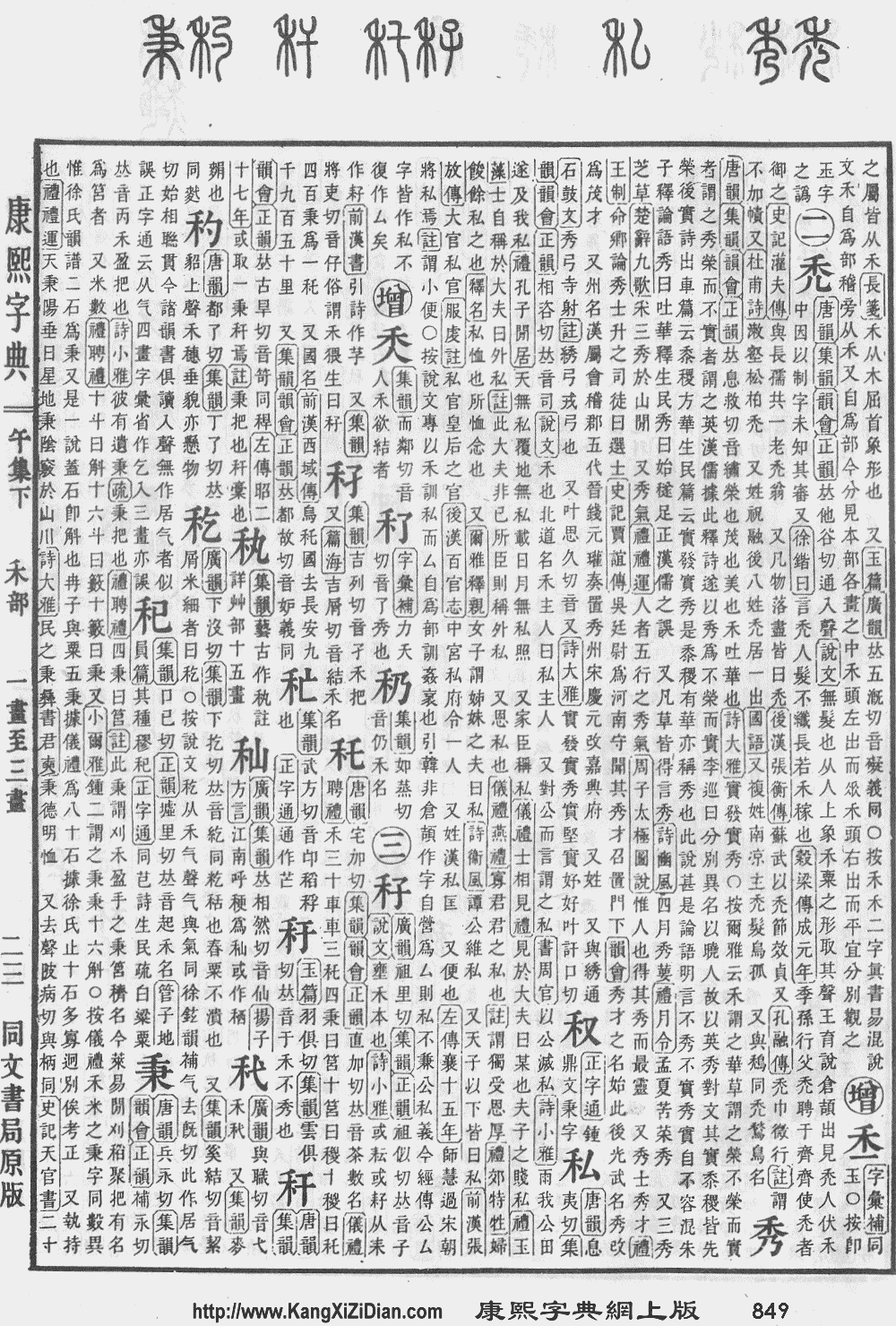
- KangXi: page 849, character 2
- Dai Kanwa Jiten: character 24910
- Dae Jaweon: page 1270, character 15
- Hanyu Da Zidian: not present, would follow volume 4, page 2588, character 7
- Unihan data for U+79BF
Chinese
| trad. | 禿 | |
|---|---|---|
| simp. | 秃 | |
Glyph origin
| Characters in the same phonetic series (禿) (Zhengzhang, 2003) | |
|---|---|
| Old Chinese | |
| 禿 | *tʰoːɡ |
| 鵚 | *tʰoːɡ |
Pronunciation
Definitions
禿
Compounds
Japanese
Kanji
禿
Readings
Compounds
Etymology 1
| Kanji in this term |
|---|
| 禿 |
| はげ Hyōgaiji |
| kun’yomi |
Pronunciation
Noun
Derived terms
Etymology 2
| Kanji in this term |
|---|
| 禿 |
| かむろ Hyōgaiji |
| kun’yomi |
Alteration of kaburo below.[1]
Pronunciation
Noun
禿 (hiragana かむろ, rōmaji kamuro)
- bobbed hair
- baldness
- young girl attendant of a high-class prostitute
Derived terms
Derived terms
- 切り禿 (kirikamuro)
- 羽根の禿 (hanenokamuro)
- 坊主禿 (bōzukamuro)
Etymology 3
| Kanji in this term |
|---|
| 禿 |
| かぶろ Hyōgaiji |
| kun’yomi |
Pronunciation
Noun
禿 (hiragana かぶろ, rōmaji kaburo)
- bobbed hair
- baldness
- young girl attendant of a high-class prostitute
Derived terms
Derived terms
- 海禿 (umikaburo)
- 禿鞘 (kaburozaya)
- 禿立ち (kaburodachi)
- 禿筆 (kaburofude)
- 禿松 (kaburomatsu)
- 引っ込み禿 (hikkomikaburo)
Etymology 4
| Kanji in this term |
|---|
| 禿 |
| とく Hyōgaiji |
| on’yomi |
Affix
Derived terms
References
Korean
Hanja
禿 • (dok) (hangeul 독, revised dok, McCune–Reischauer tok, Yale tok)
- This term needs a translation to English. Please help out and add a translation, then remove the text
{{rfdef}}.
This article is issued from
Wiktionary.
The text is licensed under Creative Commons - Attribution - Sharealike.
Additional terms may apply for the media files.