灯
| ||||||||
Translingual
| Japanese | 灯 |
|---|---|
| Simplified | 灯 |
| Traditional | 燈 |
Glyph origin
Phono-semantic compound (形聲) : semantic 火 + phonetic 丁 (OC *rteːŋ, *teːŋ).
Han character
灯 (radical 86 火+2, 6 strokes, cangjie input 火一弓 (FMN), composition ⿰火丁)
References
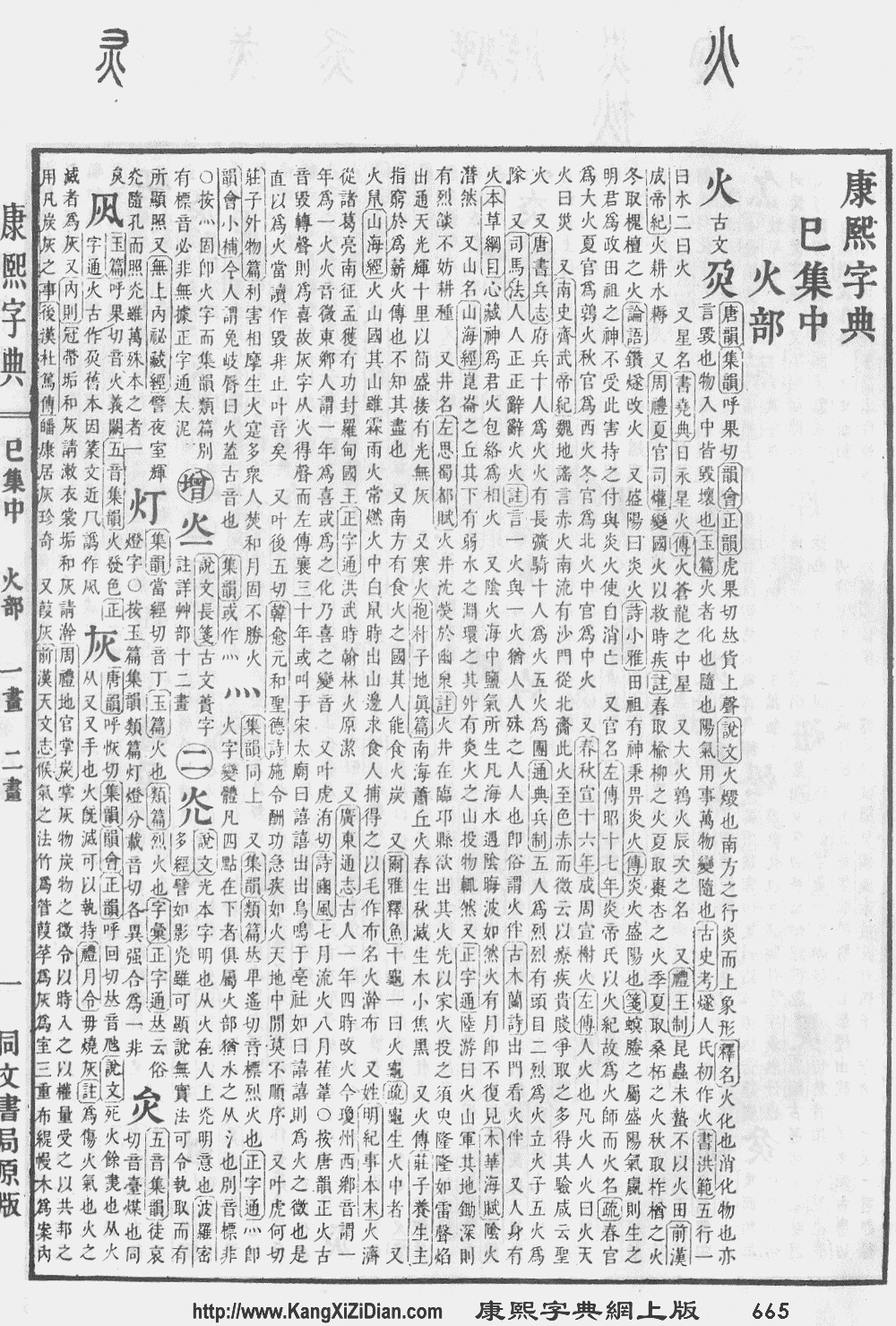
- KangXi: page 665, character 6
- Dai Kanwa Jiten: character 18855
- Dae Jaweon: page 1075, character 3
- Hanyu Da Zidian: volume 3, page 2188, character 3
- Unihan data for U+706F
Chinese
| For pronunciation and definitions of 灯 – see 燈 (“lamp; light; lamp; etc.”). (This character, 灯, is the simplified form of 燈.) |
Notes:
|
Japanese
Kanji
(grade 4 “Kyōiku” kanji, shinjitai kanji, kyūjitai form 燈)
Readings
As shinjitai/variant kanji of 燈:
As unsimplified kanji 灯:
Readings shared by both kanji:
Compounds
Etymology 1
| Kanji in this term |
|---|
| 灯 |
| とう Grade: 4 |
| on’yomi |
From Middle Chinese 燈 (MC təŋ).
Pronunciation
Noun
灯 (shinjitai kanji, kyūjitai kanji 燈, hiragana とう, rōmaji tō)
Counter
灯 (shinjitai kanji, kyūjitai kanji 燈, hiragana とう, rōmaji -tō)
Suffix
灯 (shinjitai kanji, kyūjitai kanji 燈, hiragana とう, rōmaji -tō)
Etymology 2
| Kanji in this term |
|---|
| 灯 |
| ともし Grade: 4 |
| kun’yomi |
The 連用形 (ren'yōkei, “stem or continuative form”) of 点す (tomosu, “to light”).
Pronunciation
Noun
灯 (shinjitai kanji, kyūjitai kanji 燈, hiragana ともし, rōmaji tomoshi)
Etymology 3
| Kanji in this term |
|---|
| 灯 |
| ともしび Grade: 4 |
| kun’yomi |
Compound of 点し (tomoshi), the 連用形 (ren'yōkei, “stem or continuative form”) of 点す (tomosu, “to light”) + 火 (hi, “fire”). The hi changes to bi as an instance of rendaku (連濁).
Alternative forms
Pronunciation
Noun
灯 (shinjitai kanji, kyūjitai kanji 燈, hiragana ともしび, rōmaji tomoshibi)
- a light
- a lit flame such as a candle or torch
- (historical, obsolete) under the Ritsuryō system in the Heian period, a kind of scholarship granted to university students
Derived terms
- 灯消えんとして光を増す (tomoshibi kien toshite hikari o masu)
Etymology 4
| Kanji in this term |
|---|
| 灯 |
| とぼし Grade: 4 |
| kun’yomi |
/tomosi/ → /tobosi/ → /toboɕi/
The 連用形 (ren'yōkei, “stem or continuative form”) of 点す (tobosu, “to light”, archaic).
Appears to be a shift from tomoshi above, nasal /m/ becomes plosive /b/.
Pronunciation
Noun
灯 (shinjitai kanji, kyūjitai kanji 燈, hiragana とぼし, rōmaji toboshi)
Proper noun
灯 (hiragana とぼし, rōmaji Toboshi)
Etymology 5
| Kanji in this term |
|---|
| 灯 |
| あかし Grade: 4 |
| kun’yomi |
The 連用形 (ren'yōkei, “stem or continuative form”) of 明かす (akasu, “to pass”).
Alternative forms
- 明かし
Pronunciation
Noun
灯 (shinjitai kanji, kyūjitai kanji 燈, hiragana あかし, rōmaji akashi)
Derived terms
Etymology 6
| Kanji in this term |
|---|
| 灯 |
| ひ Grade: 4 |
| kun’yomi |
Pronunciation
Noun
灯 (shinjitai kanji, kyūjitai kanji 燈, hiragana ひ, rōmaji hi)
- a light that illuminates objects