泛
| ||||||||
Translingual
Han character
泛 (radical 85 水+5, 7 strokes, cangjie input 水竹戈人 (EHIO), four-corner 32137, composition ⿰氵乏)
Derived characters
- 𭈠, 𣓦, 𥁷
References
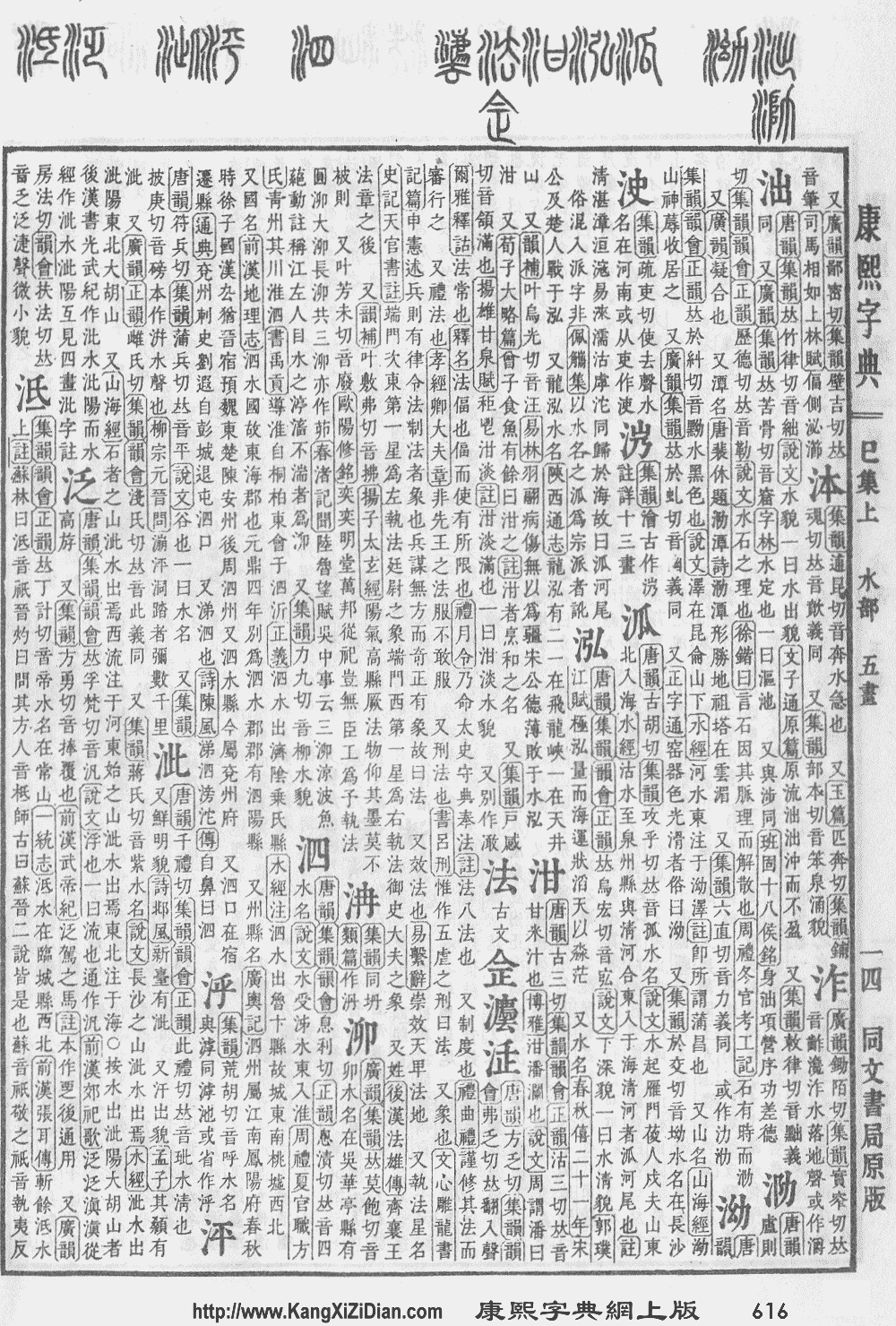
- KangXi: page 616, character 21
- Dai Kanwa Jiten: character 17298
- Dae Jaweon: page 1011, character 4
- Hanyu Da Zidian: volume 3, page 1569, character 2
- Unihan data for U+6CDB
Chinese
| simp. and trad. |
泛 | |
|---|---|---|
Glyph origin
| Characters in the same phonetic series (乏) (Zhengzhang, 2003) | |
|---|---|
| Old Chinese | |
| 砭 | *prom, *proms |
| 貶 | *promʔ |
| 窆 | *proms |
| 泛 | *pʰoms, *bob |
| 姂 | *pʰoms, *bob, *kpʰob |
| 䒦 | *pʰom, *pʰoms |
| 柉 | *bom |
| 覂 | *poŋʔ |
| 眨 | *sproːb |
| 鴔 | *brub |
| 乏 | *bob |
Pronunciation
Definitions
泛
- to float on water; to drift
- to be suffused with
- to flood; to overflow
- superficial; non-specific; superficial
- extensive; general; pan-
- careless; reckless
Compounds
Japanese
Kanji
泛
- This term needs a translation to English. Please help out and add a translation, then remove the text
{{rfdef}}.
Readings
Usage notes
This character is not a modern Japanese character. It appears mostly in news reports of China or Taiwan issues. The character 汎 is the modern Japanese character which parallels this Chinese character in usage, such as in reports about the Pan-Blue Alliance written as 泛藍連盟 in Japanese news reports.
Korean
Hanja
泛 • (beom, bong) (hangeul 범, 봉, revised beom, bong, McCune–Reischauer pŏm, pong, Yale pem, pong)
- This term needs a translation to English. Please help out and add a translation, then remove the text
{{rfdef}}.
Vietnamese
Han character
- This term needs a translation to English. Please help out and add a translation, then remove the text
{{rfdef}}.
This article is issued from
Wiktionary.
The text is licensed under Creative Commons - Attribution - Sharealike.
Additional terms may apply for the media files.