沿
See also: 㳂
| ||||||||
| ||||||||
Translingual
| Japanese | 沿 |
|---|---|
| Simplified | 沿 |
| Traditional | 沿 |
Alternative forms
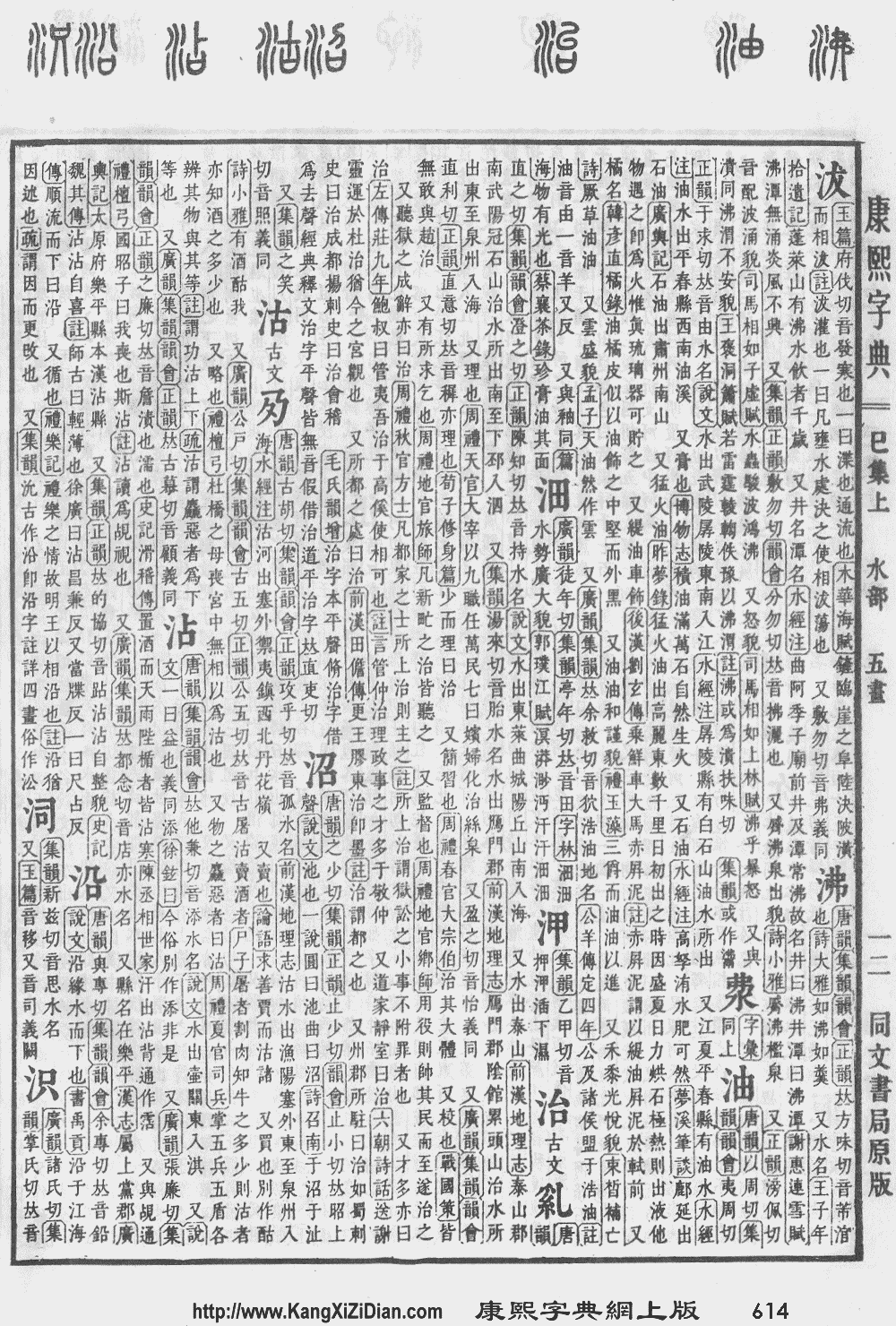
Due to Han unification, different forms of the character are given the same codepoint. In simplified Chinese, Korean Hanja and Vietnamese Chữ Nôm, the upper right component is written 𠘧/几 to give 沿, which is the form found in the Kangxi dictionary. In traditional Chinese (Hong Kong and Taiwan), the upper right component is written 儿 to give 沿. In Japanese shinjitai, the upper right component is written 八 to give 沿.
Han character
沿 (radical 85 水+5, 8 strokes, cangjie input 水金口 (ECR) or 水竹弓口 (EHNR), four-corner 38160, composition ⿰氵⿱𠘧口(GKV) or ⿰氵⿱儿口(HT) or ⿰氵㕣(J))
References
- KangXi: page 614, character 13
- Dai Kanwa Jiten: character 17260
- Dae Jaweon: page 1008, character 4
- Hanyu Da Zidian: volume 3, page 1590, character 4
- Unihan data for U+6CBF
Chinese
| simp. and trad. |
沿 | |
|---|---|---|
| alt. forms | 㳂 | |
Glyph origin
| Characters in the same phonetic series (沿) (Zhengzhang, 2003) | |
|---|---|
| Old Chinese | |
| 船 | *ɦljon |
| 舩 | *ɦljon |
| 沿 | *lon |
| 鉛 | *lon |
| 鈆 | *kljoŋ, *lon |
Etymology 1
Pronunciation
Definitions
沿
Compounds
Etymology 2
| For pronunciation and definitions of 沿 – see 檐 (“eaves of a house; brim; rim; edge”). (This character, 沿, is the second-round simplified form of 檐.) |
Notes:
|
Japanese
Kanji
沿
- This term needs a translation to English. Please help out and add a translation, then remove the text
{{rfdef}}.
Readings
Compounds
Korean
Hanja
沿 • (yeon) (hangeul 연, revised yeon, McCune–Reischauer yŏn, Yale yen)
- This term needs a translation to English. Please help out and add a translation, then remove the text
{{rfdef}}.
Vietnamese
Han character
沿 (duyên)
- This term needs a translation to English. Please help out and add a translation, then remove the text
{{rfdef}}.
This article is issued from
Wiktionary.
The text is licensed under Creative Commons - Attribution - Sharealike.
Additional terms may apply for the media files.