業
| ||||||||
Translingual
Han character
業 (radical 75, 木+9, 13 strokes, cangjie input 廿金廿木 (TCTD), four-corner 32904, composition ⿱业𦍎)
Derived characters
References
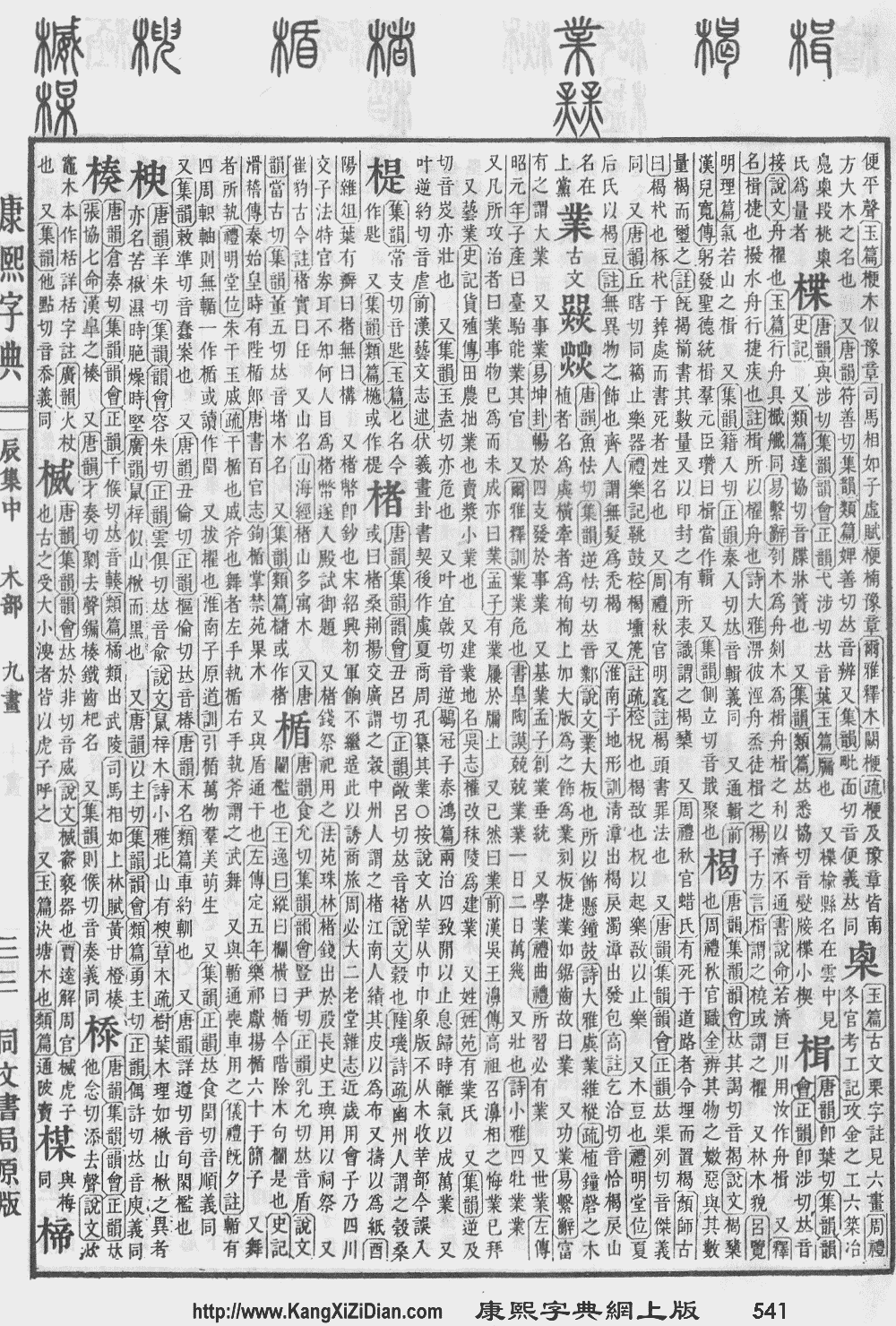
- KangXi: page 541, character 5
- Dai Kanwa Jiten: character 15170
- Dae Jaweon: page 928, character 14
- Hanyu Da Zidian: volume 2, page 1247, character 7
- Unihan data for U+696D
Chinese
| trad. | 業 | |
|---|---|---|
| simp. | 业* | |
Glyph origin
| Historical forms of the character 業 | ||
|---|---|---|
| Western Zhou | Shuowen Jiezi (compiled in Han) | Liushutong (compiled in Ming) |
| Bronze inscriptions | Small seal script | Transcribed ancient scripts |
 |
 |
 |
| Characters in the same phonetic series (業) (Zhengzhang, 2003) | |
|---|---|
| Old Chinese | |
| 礏 | *ŋoːb |
| 業 | *ŋab |
| 鄴 | *ŋab |
| 驜 | *ŋab |
| 嶪 | *ŋab |
| 鸈 | *ŋab |
| 澲 | *ŋab |
Pronunciation
Definitions
業
Compounds
|
|
|
Japanese
Kanji
Readings
Compounds
- 業因 (ごういん, gōin), 業縁 (ごうえん, gōen): (Buddhism) one's actions in life that affect one's karma
- 業果 (ごうか, gōka): (Buddhism) the results of one's karma
- 業火 (ごうか, gōka): hellfire
- 業海 (ごうかい, gōkai): a metaphor for the world as a sea of sin
- 業界 (ぎょうかい, gyōkai): industry, sector
- 業界誌, 業界紙 (ぎょうかい, gyōkai): an industry magazine, a trade paper, a business journal
- 業感 (ごうかん, gōkan): (Buddhism) the joys and sorrows experienced as the results of one's karma
- 業感縁起 (ごうかんえんぎ, gōkan engi): (Buddhism) a doctrine in Hinayana Buddhism
- 業鬼 (ごうき, gōki): (Buddhism) a demon invited or created by sin
- 業々 (ぎょうぎょう, gyōgyō): fearfully; splendidly
- 業苦 (ごうく, gōku): (Buddhism) karmic suffering: suffering experienced in this life due to the sins committed in a previous life
- 業垢 (ごうく, gōku): (Buddhism) evil acts born of sin
- 業根 (ごうこん, gōkon): the root of sin, the ignorance and worldly desires that give rise to sin
- 業作 (ぎょうさ, gyōsa): doing work
- 業曝, 業晒 (ごうさらし, gōsarashi): enduring shame in this life as karma for sins committed in a previous life; a no-good
- 業師 (わざし, wazashi): a master of various techniques in sumo; a schemer; a shrewd person
- 業識 (ごうしき, gōshiki; ごっしき, gosshiki): (Buddhism) a consciousness born out of sin, or moved by ignorance
- 業者 (ぎょうしゃ, gyōsha): a trader, a businessman/businesswoman, a dealer
- 業主 (ぎょうしゅ, gyōshu): a business owner
- 業種 (ぎょうしゅ, gyōshu): a business type or category
- 業所 (なりところ, naritokoro): a field to farm and a farmhouse; a second home, a vacation home
- 業障 (ぎょうしょう, gyōshō, ごっしょう, gosshō): (Buddhism) one of the three obstacles, born of sins in a past life
- 業人 (ごうにん, gōnin): a person suffering in this life for the sins committed in a previous life; a sinner; a no-good
- 業人 (わざびと, wazabito): a person with excellent technique
- 業績 (ぎょうせき, gyōseki): earnings; achievements; results
- 業前 (わざまえ, wazamae): skill, ability
- 業体 (ぎょうてい, gyōtei; ぎょうたい, gyōtai): occupation, profession; a deed, an act; appearance
- 業態 (ぎょうたい, gyōtai): business category, business format; business conditions
- 業恥 (ごうはじ, gōhaji): extreme dishonor, severe humiliation
- 業通 (ごうつう, gōtsū): (Buddhism) supernatural powers or abilities earned karmically through good deeds in past lives
- 業突く張り (ごうつくばり, gōtsukubari): bigoted; obstinate, stubborn
- 業病 (ごうびょう, gōbyō): disease suffered as a result of sins committed in a previous life; an intractable or incurable disease
- 業風 (ごうふう, gōfū): the powerful winds of sin that blow in hell
- 業腹 (ごうはら, gōhara): resentment, resentful
- 業物 (わざもの, wazamono), 業良し (わざよし, wazayoshi): a sword or other blade made by a master craftsman
- 業平 (なりひら, narihira): a lady's man; a lech
- 業平竹 (なりひらだけ, narihira take): a type of bamboo (Semiarundinaria fastuosa)
- 業並み (わざなみ, wazanami): skill, ability
- 業報 (ごうほう, gōhō; ごっぽう, goppō): retribution for past sins; the results of one's karma
- 業報人 (ごうほうにん, gōhōnin; ごっぽうにん, goppōnin): a person suffering retribution for past sins
- 業魔 (ごうま, gōma): (Buddhism) the metaphorical demon of one's own sins, obstructing the way to nirvana
- 業務 (ぎょうむ, gyōmu): business, business affairs, work duties
- 業務管理 (ぎょうむかんり, gyōmu kanri): business management, operational control
- 業務権 (ぎょうむけん, gyōmuken): business right
- 業務執行 (ぎょうむしっこう, gyōmu shikkō): the carrying out of business, business operations
- 業務執行者 (ぎょうむしっこうしゃ, gyōmu shikkōsha): operating officer
- 業務執行社員 (ぎょうむしっこうしゃいん, gyōmu shikkō shain): managing partner, executive member
- 業務上の秘密 (ぎょうむじょうのひみつ, gyōmujō no himitsu): a trade secret
- 業務上の事故 (ぎょうむじょうのじこ, gyōmujō no jiko): an on-the-job accident
- 業務上横領 (ぎょうむじょうおうりょう, gyōmujō ōryō): embezzlement
- 業務上過失 (ぎょうむじょうかしつ, gyōmujō kashitsu): professional negligence
- 業務妨害 (ぎょうむぼうがい, gyōmu bōgai), 業務執行妨害 (ぎょうむしっこうぼうがい, gyōmu shikkō bōgai): interference in the execution of one's duty, obstruction of business
- 業厄 (ごうやく, gōyaku): a disaster or misfortune suffered as retribution for past sins
- 業余 (ぎょうよ, gyōyo): work on the side
- 業力 (ごうりき, gōriki): (Buddhism) the power of karma to bring about reward or retribution
- 業歴 (ぎょうれき, gyōreki): a business calendar
- 業惑 (ごうわく, gōwaku): sin and worldly desires; retribution for sin and worldly desires
- 商業 (しょうぎょう, shōgyō): commerce, trade, business
- 工業 (こうぎょう, kōgyō): industry, manufacturing
- 企業 (きぎょう, kigyō): company, corporation, enterprise
Etymology 1
| Kanji in this term |
|---|
| 業 |
| ぎょう Grade: 3 |
| on’yomi |
/ɡepu/ → /ɡefu/ → /ɡeu/ → /ɡjoː/
From Middle Chinese 業 (MC ŋɨɐp̚). The kan'on, so likely a later borrowing.
Pronunciation
Noun
業 (hiragana ぎょう, rōmaji gyō, historical hiragana げふ)
- work, task, business: the job at hand
- profession, business, trade: what one does to earn a living
- studies, scholarship (the act of being a scholar), the arts
- 医科の業に着手する
- ika no gyō ni chakushu suru
- set to studying medicine, start one's medical studies
- 医科の業に着手する
Proverbs
- 業は勤むるに精しく嬉しむに荒む (gyō wa tsuttomuru ni kuwashiku tanoshimu ni susamu): study hard and become wise, slack off and stay dumb
- 業は道に依って賢し (gyō wa michi ni yotte kashikoshi): the ones doing it are the experts
- 業を創め、統を垂る (gyō o hajime, tō o taru): a man of virtue builds up his skills, and then passes them on to those who come after
Etymology 2
| Kanji in this term |
|---|
| 業 |
| ごう Grade: 3 |
| on’yomi |
/ɡopu/ → /ɡofu/ → /ɡou/ → /ɡoː/
From Middle Chinese 業 (MC ŋɨɐp̚). The goon, so likely an earlier borrowing. Translation from the Sanskrit term कर्मन् (kárman, “act, action, performance”).
Pronunciation
Noun
業 (hiragana ごう, rōmaji gō, historical hiragana ごふ)
Idioms
- 業が深い (gō ga fukai): to be deeply sinful
- 業が煮える (gō ga nieru), 業が煎れる (gō ga ireru), 業が湧く (gō ga waku): to be irritated, to be annoyed, to get angry
- 業を煮やす (gō o niyasu), 業を沸かす (gō o wakasu): to lose one's temper, to fly off the handle
- 業に沈む (gō ni shizumu): to sink into sin and despair
- 業の風 (gō no kaze): the powerful winds of sin that blow in hell
- 業の秤 (gō no hakari): a mythological scale that weighs the sins of the dead
- 業を曝す (gō o sarasu): to endure shame in this life as karma for sins committed in a previous life
Proverbs
- 業によりて果を引く (gō ni yorite ka o hiku): you reap what you sow, what goes around comes around
Etymology 3
| Kanji in this term |
|---|
| 業 |
| なり Grade: 3 |
| kun’yomi |
From Old Japanese. Appears in the Man'yōshū, completed some time after 759 CE.[4]
Derived as the 連用形 (ren'yōkei, “continuative or stem form”) of verb 業る (naru, “to earn a living”). Ultimately of same origin as verb なる (to become).[5]
Pronunciation
Noun
- (archaic, possibly obsolete) a living, a job, what one does to earn a living
Etymology 4
| Kanji in this term |
|---|
| 業 |
| わざ Grade: 3 |
| kun’yomi |
From Old Japanese. Found in the Man'yōshū, completed some time after 759 CE.[6]
Pronunciation
Alternative forms
Noun
- a work of great significance or intent
- an intentional act or action
- (Buddhism) a Buddhist memorial service
- one's job, occupation, profession
- a matter or affair: implies a complication or problem
- 容易な業ではありませんよ。
- Yōi na waza de wa arimasen yo.
- It's no easy matter, I tell you.
- 容易な業ではありませんよ。
- a technique, a means of doing something
- 業を磨く
- waza o migaku
- polish one's technique
- 業を磨く
- a move or technique in sumo, judo, kendo, or other competitive activity
- a disaster, misfortune, calamity
Derived terms
Related terms
- (intentional act): 態と (waza to): intentionally, deliberately
References
- 1 2 3 2006, 大辞林 (Daijirin), Third Edition (in Japanese), Tōkyō: Sanseidō, →ISBN
- 1 2 3 1998, NHK日本語発音アクセント辞典 (NHK Japanese Pronunciation Accent Dictionary) (in Japanese), Tōkyō: NHK, →ISBN
- 1 2 3 1997, 新明解国語辞典 (Shin Meikai Kokugo Jiten), Fifth Edition (in Japanese), Tōkyō: Sanseidō, →ISBN
- ↑ c. 759, Man'yōshū (book 5, poem 805), text here
- ↑ 1988, 国語大辞典(新装版) (Kokugo Dai Jiten, Revised Edition) (in Japanese), Tōkyō: Shogakukan
- ↑ c. 759, Man'yōshū (book 4, poem 721), text here
Korean
Hanja
業 • (eop) (hangeul 업, revised eop, McCune–Reischauer ŏp, Yale ep)
- This term needs a translation to English. Please help out and add a translation, then remove the text
{{rfdef}}.
Vietnamese
Han character
業 (nghiệp)
- This term needs a translation to English. Please help out and add a translation, then remove the text
{{rfdef}}.