曇
See also: 昙
| ||||||||
Translingual
Han character
曇 (radical 72 日+12, 16 strokes, cangjie input 日一月戈 (AMBI), four-corner 60731, composition ⿱日雲)
References
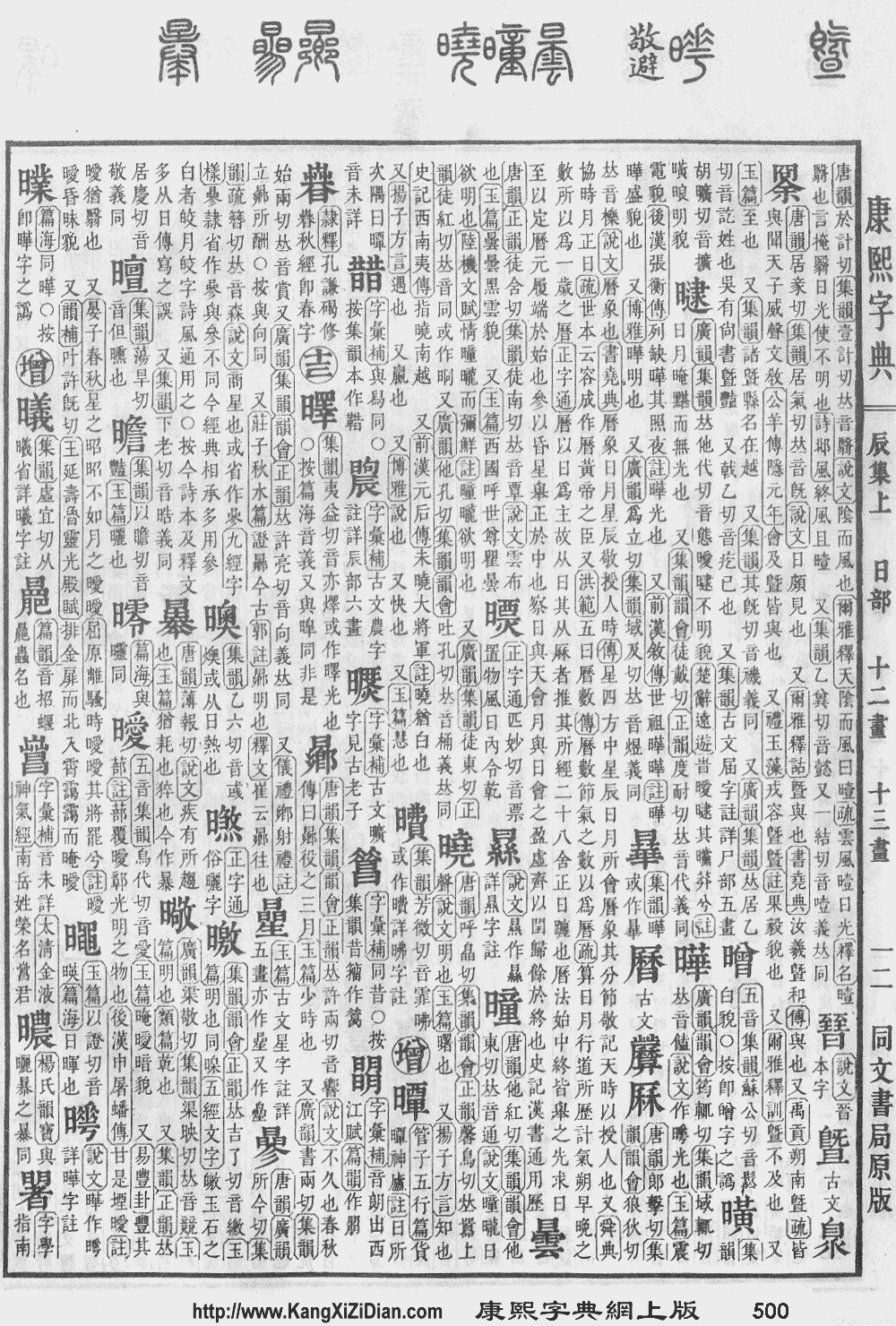
- KangXi: page 500, character 13
- Dai Kanwa Jiten: character 14172
- Dae Jaweon: page 870, character 9
- Hanyu Da Zidian: volume 2, page 1536, character 4
- Unihan data for U+66C7
Chinese
| trad. | 曇 | |
|---|---|---|
| simp. | 昙 | |
Glyph origin
| Characters in the same phonetic series (曇) (Zhengzhang, 2003) | |
|---|---|
| Old Chinese | |
| 曇 | *duːm |
| 壜 | *duːm |
Ideogrammic compound (會意) : 日 + 雲, presumably “sun behind clouds”.
Pronunciation
Definitions
曇
- This term needs a translation to English. Please help out and add a translation, then remove the text
{{rfdef}}.
Compounds
Japanese
Kanji
曇
- cloudy weather
- cloud up
Readings
Derived terms
Derived terms
- 曇らす (kumorasu): to encloud; to make dim or dull
- 曇らせる (kumoraseru): to cloud; to make dim or dull;
- 曇り (kumori), 曇 (kumori): cloudiness; cloudy weather; shadow
- 曇りがち (kumorigachi): broken cloud; mainly cloudy
- 曇りガラス (kumorigarasu): frosted glass
Korean
Hanja
曇 • (dam) (hangeul 담, revised dam, McCune–Reischauer tam, Yale tam)
- This term needs a translation to English. Please help out and add a translation, then remove the text
{{rfdef}}.
Vietnamese
Han character
曇 (đàm)
- This term needs a translation to English. Please help out and add a translation, then remove the text
{{rfdef}}.
This article is issued from
Wiktionary.
The text is licensed under Creative Commons - Attribution - Sharealike.
Additional terms may apply for the media files.