斧
| ||||||||
Translingual
Han character
斧 (radical 69 斤+4, 8 strokes, cangjie input 金大竹一中 (CKHML), four-corner 80221, composition ⿱父斤)
References
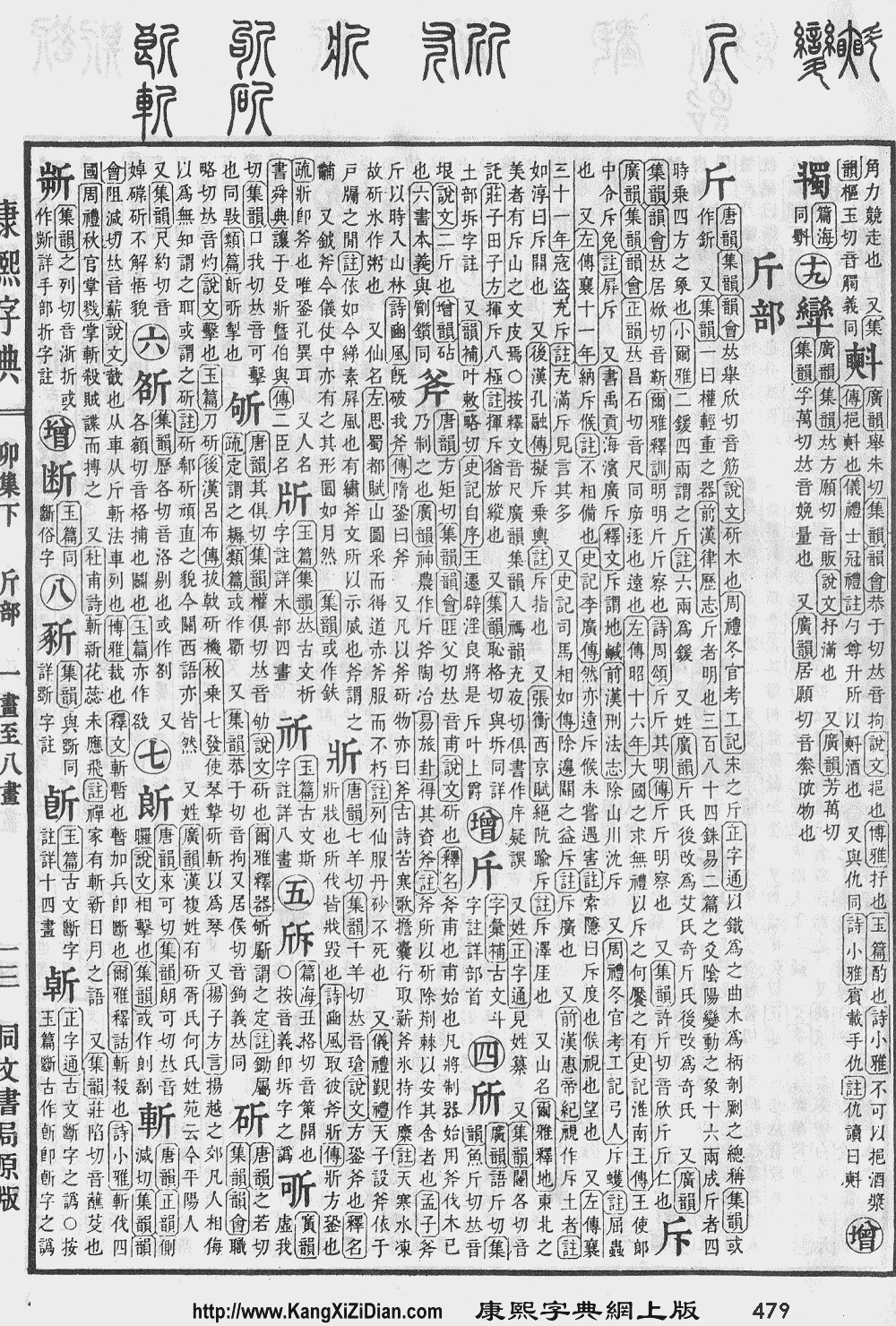
- KangXi: page 479, character 8
- Dai Kanwa Jiten: character 13539
- Dae Jaweon: page 838, character 4
- Hanyu Da Zidian: volume 3, page 2023, character 10
- Unihan data for U+65A7
Chinese
| simp. and trad. |
斧 | |
|---|---|---|
Glyph origin
| Characters in the same phonetic series (父) (Zhengzhang, 2003) | |
|---|---|
| Old Chinese | |
| 抪 | *paː, *paːs |
| 布 | *paːs |
| 佈 | *paːs |
| 怖 | *pʰaːs |
| 斧 | *paʔ |
| 父 | *paʔ, *baʔ |
| 蚥 | *paʔ, *baʔ |
| 滏 | *baʔ |
| 釜 | *baʔ |
Pronunciation
Definitions
斧
Compounds
Japanese
斧
Kanji
斧
(“Jinmeiyō” kanji used for names)
Readings
Compounds
Etymology
Originally pronounced wono.
Pronunciation
- IPA(key): /ono/
Noun
斧 (hiragana おの, rōmaji ono, historical hiragana をの)
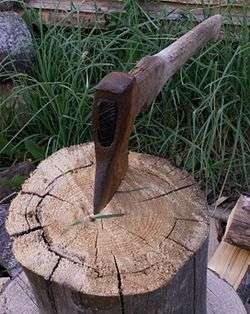
- axe
- 1079, Konkōmyō Saishōōkyō Ongi (page 9 (back))
- 斧 乎乃
- 1079, Konkōmyō Saishōōkyō Ongi (page 9 (back))
References
- Tsukishima, Hiroshi (1079) Kojisho Ongi Shūsei 12: Konkōmyō Saishōōkyō Ongi (in Japanese), Tōkyō: Kyūko Shoin, published 1979, →ISBN.
Korean
Hanja
斧 • (bu) (hangeul 부)
- This term needs a translation to English. Please help out and add a translation, then remove the text
{{rfdef}}.
Vietnamese
Han character
- This term needs a translation to English. Please help out and add a translation, then remove the text
{{rfdef}}.
This article is issued from
Wiktionary.
The text is licensed under Creative Commons - Attribution - Sharealike.
Additional terms may apply for the media files.