戚
See also: 慼
| ||||||||
Translingual
Han character
戚 (radical 62 戈+7, 11 strokes, cangjie input 戈竹卜一火 (IHYMF), four-corner 53200, composition ⿵戊尗)
References
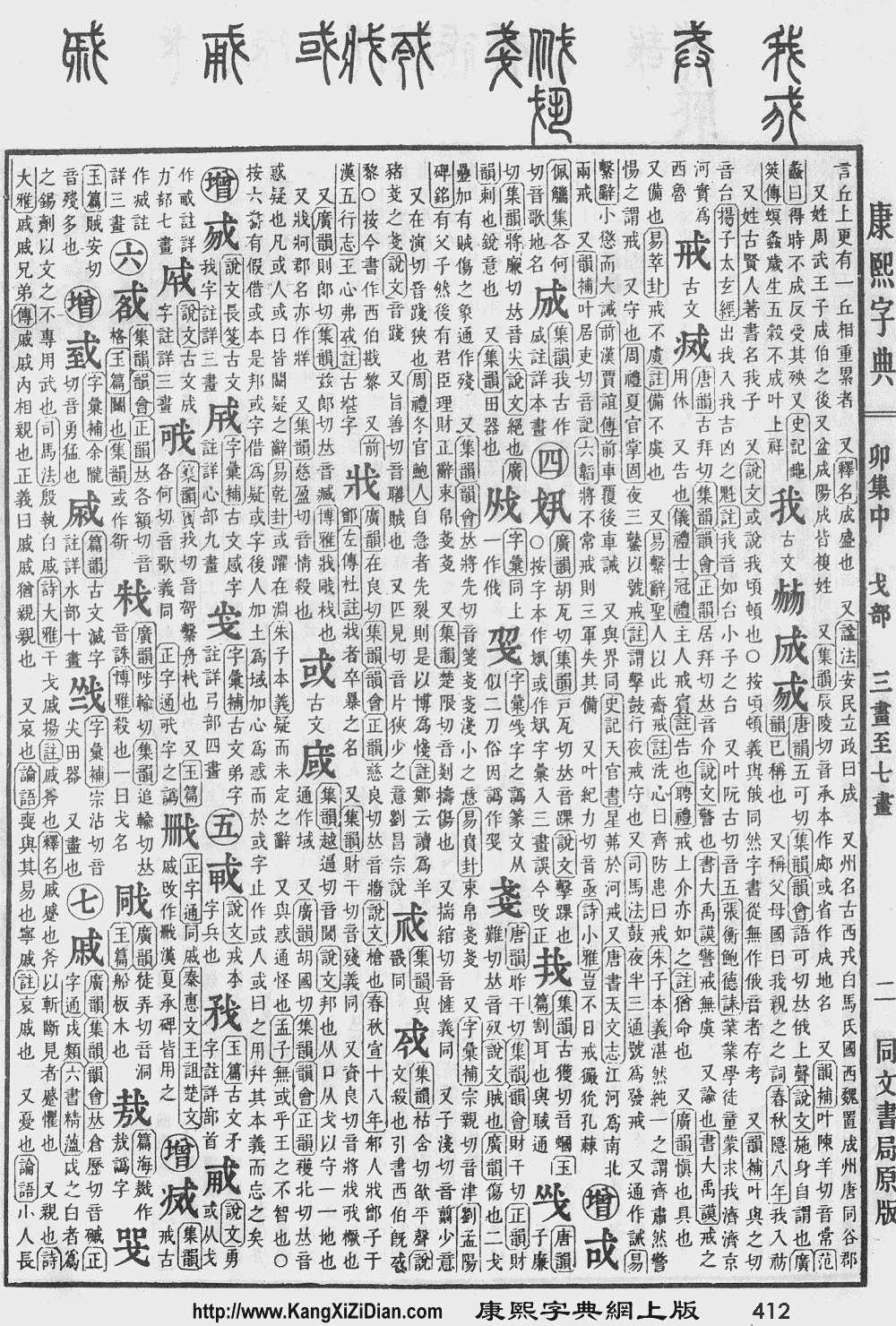
- KangXi: page 412, character 38
- Dai Kanwa Jiten: character 11594
- Dae Jaweon: page 755, character 26
- Hanyu Da Zidian: volume 2, page 1406, character 15
- Unihan data for U+621A
Chinese
| simp. and trad. |
戚 | |
|---|---|---|
Glyph origin
| Characters in the same phonetic series (尗) (Zhengzhang, 2003) | |
|---|---|
| Old Chinese | |
| 椒 | *ʔsliw |
| 茮 | *ʔsliw |
| 踧 | *l'ɯːwɢ, *ʔslɯwɢ |
| 蔋 | *l'ɯːwɢ |
| 惄 | *nɯːwɢ |
| 戚 | *sʰlɯːwɢ |
| 慼 | *sʰlɯːwɢ |
| 鏚 | *sʰlɯːwɢ |
| 慽 | *sʰlɯːwɢ |
| 磩 | *sʰlɯːwɢ |
| 寂 | *zlɯːwɢ |
| 嘁 | *ʔsluːb |
| 墄 | *sʰlɯːɡ |
| 摵 | *srɯːɡ, *ʔslɯwɢ, *srɯwɢ |
| 督 | *ʔl'uːwɢ |
| 錖 | *ʔl'uːwɢ |
| 裻 | *ʔl'uːwɢ, *sluːwɢ |
| 傶 | *ʔslɯːwɢ |
| 蹙 | *ʔslɯwɢ |
| 槭 | *ʔslɯwɢ |
| 縬 | *ʔslɯwɢ, *ʔsrɯwɢ |
| 顣 | *ʔslɯwɢ |
| 敊 | *l̥ʰɯwɢ |
| 琡 | *ʔljɯwɢ, *l̥ʰjɯwɢ |
| 俶 | *l̥ʰjɯwɢ |
| 埱 | *l̥ʰjɯwɢ |
| 淑 | *ɦljɯwɢ |
| 婌 | *ɦljɯwɢ |
| 尗 | *hljɯwɢ |
| 叔 | *hljɯwɢ |
| 掓 | *hljɯwɢ |
| 菽 | *hljɯwɢ |
| 鮛 | *hljɯwɢ |
Phono-semantic compound (形聲, OC *sʰlɯːwɢ) : semantic 戊 (“scythe”) + phonetic 尗 (OC *hljɯwɢ) – in early sense, a battle-axe, a kind of cutting weapon.
Pronunciation
Definitions
戚
Compounds
Japanese
Kanji
戚
- grieve
Readings
- Goon: しゃく (shaku)
- Kan’on: せき (seki, Jōyō)
- On: そく (soku)
- Kun: みうち (miuchi, 戚); いたむ (itamu, 戚む); うれえる (ureeru, 戚える)
Korean
Hanja
戚 • (cheok) (hangeul 척, revised cheok, McCune–Reischauer ch'ŏk, Yale chek)
- This term needs a translation to English. Please help out and add a translation, then remove the text
{{rfdef}}.
Vietnamese
Han character
戚 (thích)
- This term needs a translation to English. Please help out and add a translation, then remove the text
{{rfdef}}.
This article is issued from
Wiktionary.
The text is licensed under Creative Commons - Attribution - Sharealike.
Additional terms may apply for the media files.