徵
| ||||||||
Translingual
| Traditional | 徵 |
|---|---|
| Shinjitai | 徴 |
| Simplified | 征/徵 |
Han character
徵 (radical 60, 彳+12, 15 strokes, cangjie input 竹人山土大 (HOUGK), four-corner 28240, composition ⿲彳⿳山一𡈼攵 or ⿲彳⿳山一壬攵)
Derived characters
Related characters
References
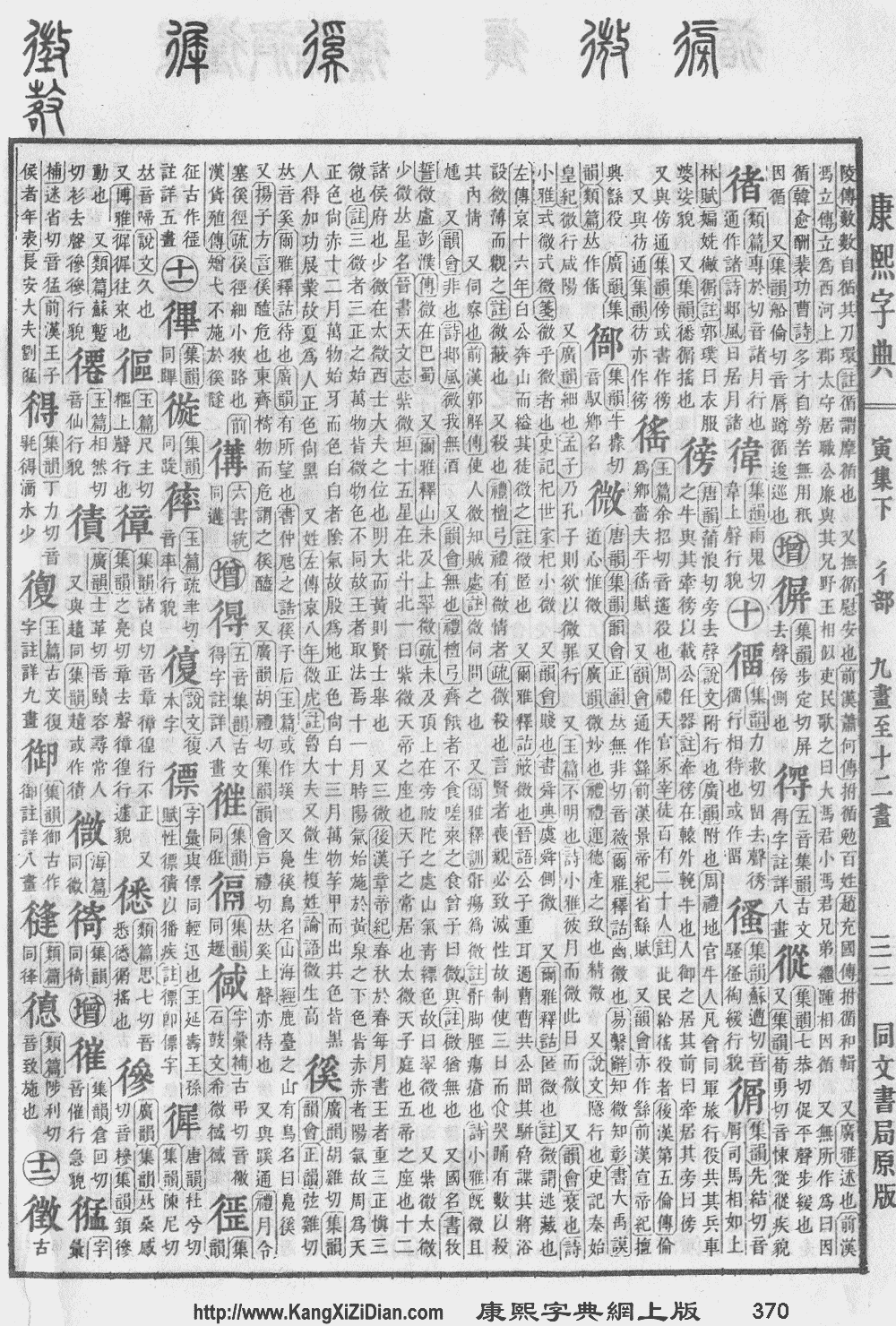
- KangXi: page 370, character 41
- Dai Kanwa Jiten: character 10239
- Dae Jaweon: page 697, character 27
- Hanyu Da Zidian: volume 2, page 842, character 7
- Unihan data for U+5FB5
Chinese
Glyph origin
| Characters in the same phonetic series (徵) (Zhengzhang, 2003) | |
|---|---|
| Old Chinese | |
| 徵 | *tɯʔ, *tɯŋ |
| 癥 | *tɯŋ |
| 澂 | *dɯŋ |
| 懲 | *dɯŋ |
Etymology 1
| trad. | 徵 | |
|---|---|---|
| simp. | 征* | |
Related to 證 (OC *tjɯŋs).
Pronunciation
Definitions
徵
See also
- 症 (zhèng, “symptom”)
Compounds
Derived terms from 徵
|
|
Etymology 2
| simp. and trad. |
徵 | |
|---|---|---|
Pronunciation
Definitions
徵
- (music) the fourth tone in the ancient Chinese pentatonic scale, comparable to sol in the Western solfège system
Coordinate terms
Compounds
|
|
|
Japanese
| 徴 | |
| 徵 |
Kanji
徵
(“Jinmeiyō” kanji used for names, kyūjitai kanji, shinjitai form 徴)
- This term needs a translation to English. Please help out and add a translation, then remove the text
{{rfdef}}.
Readings
Korean
Hanja
徵 • (jing, chi) (hangeul 징, 치, revised jing, chi, McCune–Reischauer ching, ch'i, Yale cing, chi)
- This term needs a translation to English. Please help out and add a translation, then remove the text
{{rfdef}}.
Vietnamese
Han character
徵 (trưng, chưng, chuỷ, rưng, trâng)
- This term needs a translation to English. Please help out and add a translation, then remove the text
{{rfdef}}.
This article is issued from
Wiktionary.
The text is licensed under Creative Commons - Attribution - Sharealike.
Additional terms may apply for the media files.