屍
See also: 尸
| ||||||||
Translingual
Han character
屍 (radical 44, 尸+6, 9 strokes, cangjie input 尸一弓心 (SMNP), four-corner 77211, composition ⿸尸死)
References
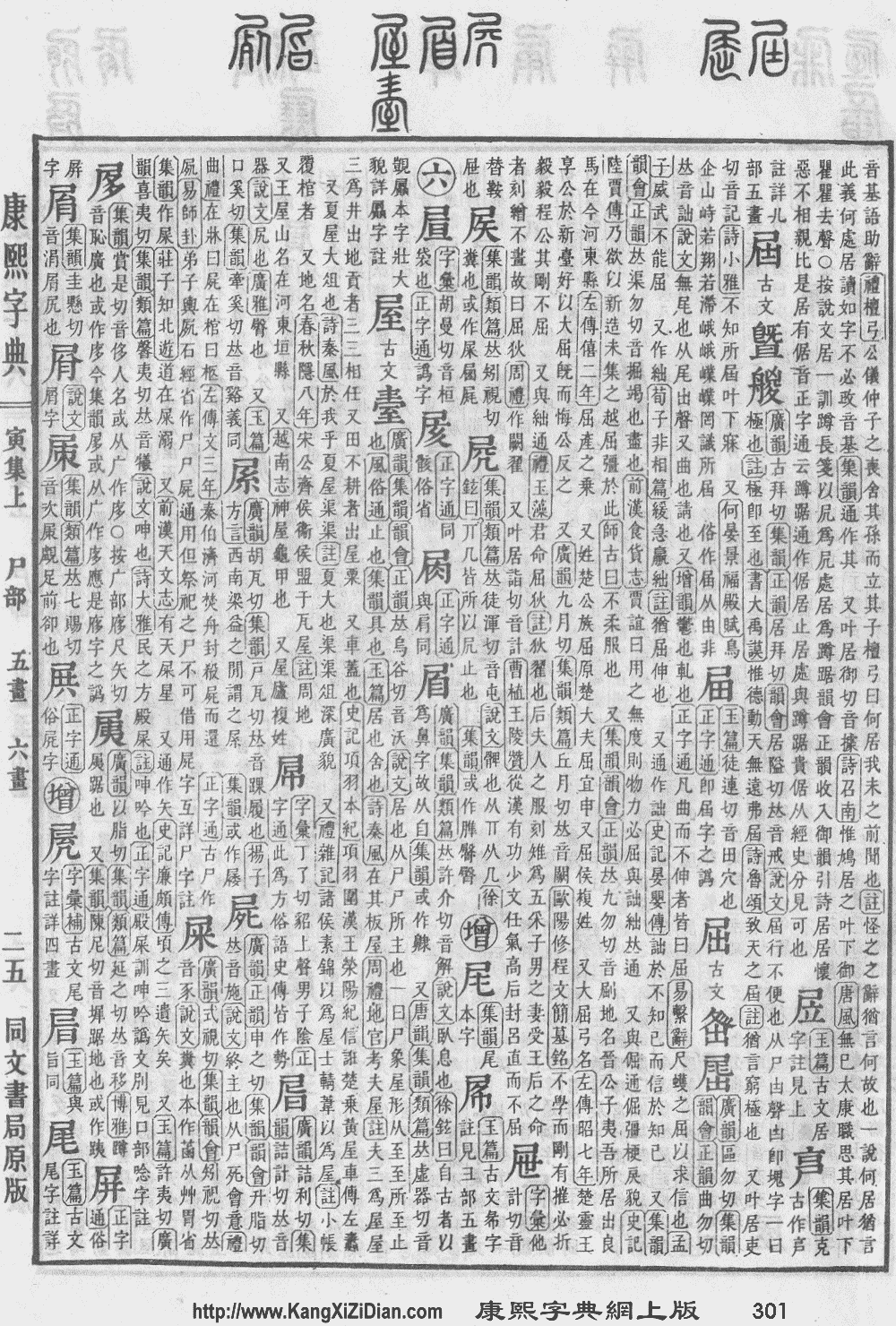
- KangXi: page 301, character 24
- Dai Kanwa Jiten: character 7688
- Dae Jaweon: page 598, character 14
- Hanyu Da Zidian: volume 2, page 971, character 9
- Unihan data for U+5C4D
Chinese
Glyph origin
| Historical forms of the character 屍 | |
|---|---|
| Shuowen Jiezi (compiled in Han) | Liushutong (compiled in Ming) |
| Small seal script | Transcribed ancient scripts |
 |
 |
| Characters in the same phonetic series (尸) (Zhengzhang, 2003) | |
|---|---|
| Old Chinese | |
| 杘 | *l̥ʰis |
| 尸 | *hli |
| 鳲 | *hli |
| 屍 | *hli, *hlis |
| 屎 | *hliʔ, *hri |
Pronunciation 1
| trad. | 屍 | |
|---|---|---|
| simp. | 尸* | |
| alt. forms | 尸 | |
Definitions
屍
Compounds
Pronunciation 2
| trad. | 屍 | |
|---|---|---|
| simp. | 尸* | |
Definitions
屍
- ‡ This term needs a translation to English. Please help out and add a translation, then remove the text
{{rfdef}}.
Japanese
Kanji
屍
Readings
Alternative forms
Etymology 1
| Kanji in this term |
|---|
| 屍 |
| かばね Hyōgaiji |
| kun’yomi |
From Old Japanese. Found in the Man'yōshū, completed some time after 759 CE.[1]
Appears to be a compound. Ultimate derivation unknown.
Pronunciation
Alternative forms
- 尸 (mainly used for compounds, like 尸所 (kabane-dokoro))
Noun
屍 (hiragana かばね, rōmaji kabane)
Etymology 2
| Kanji in this term |
|---|
| 屍 |
| しかばね Hyōgaiji |
| kun’yomi |
Compound of 死 (shi, “death; dead”) + 屍 (kabane, “corpse”).[4][2][5] Not used in the Man'yōshū; appears to be a later development.
Pronunciation
Alternative forms
- 尸 (mainly used for compounds, like 尸冠 (shikabane kanmuri))
Noun
屍 (hiragana しかばね, rōmaji shikabane)
- a corpse, a cadaver
- 2014 July 5, “オベリスクの巨神兵 [Obelisk the Giant God Soldier]”, in 決闘王の記憶 -決闘都市編- [Memories of the Duel King -Battle City Edition-] (in Japanese), Konami:
- その者、降臨せしむれば、灼熱の疾風大地に吹き荒れ、生きとし生ける者すべて屍とならん。
- Sono mono, kōrinseshi mureba, shakunetsu no shippū daichi ni fukiare, ikitoshiikeru mono subete shikabane tonaran.
- Once this being descends with burning winds sweeping over the land, all living things shall turn into corpses.
- その者、降臨せしむれば、灼熱の疾風大地に吹き荒れ、生きとし生ける者すべて屍とならん。
-
Synonyms
- See Thesaurus:屍
References
- ↑ c. 759, Man'yōshū (book 18, poem 4094), text here
- 1 2 3 2006, 大辞林 (Daijirin), Third Edition (in Japanese), Tōkyō: Sanseidō, →ISBN
- 1 2 1998, NHK日本語発音アクセント辞典 (NHK Japanese Pronunciation Accent Dictionary) (in Japanese), Tōkyō: NHK, →ISBN
- ↑ 1988, 国語大辞典(新装版) (Kokugo Dai Jiten, Revised Edition) (in Japanese), Tōkyō: Shogakukan
- ↑ 1995, 大辞泉 (Daijisen) (in Japanese), Tōkyō: Shogakukan, →ISBN
Korean
Hanja
屍 • (si) (hangeul 시, revised si, McCune–Reischauer si)
- This term needs a translation to English. Please help out and add a translation, then remove the text
{{rfdef}}.
Vietnamese
Han character
- This term needs a translation to English. Please help out and add a translation, then remove the text
{{rfdef}}.
This article is issued from
Wiktionary.
The text is licensed under Creative Commons - Attribution - Sharealike.
Additional terms may apply for the media files.