婢
| ||||||||
Translingual
Han character
婢 (radical 38 女+8, 11 strokes, cangjie input 女竹田十 (VHWJ), four-corner 46440, composition ⿰女卑)
References
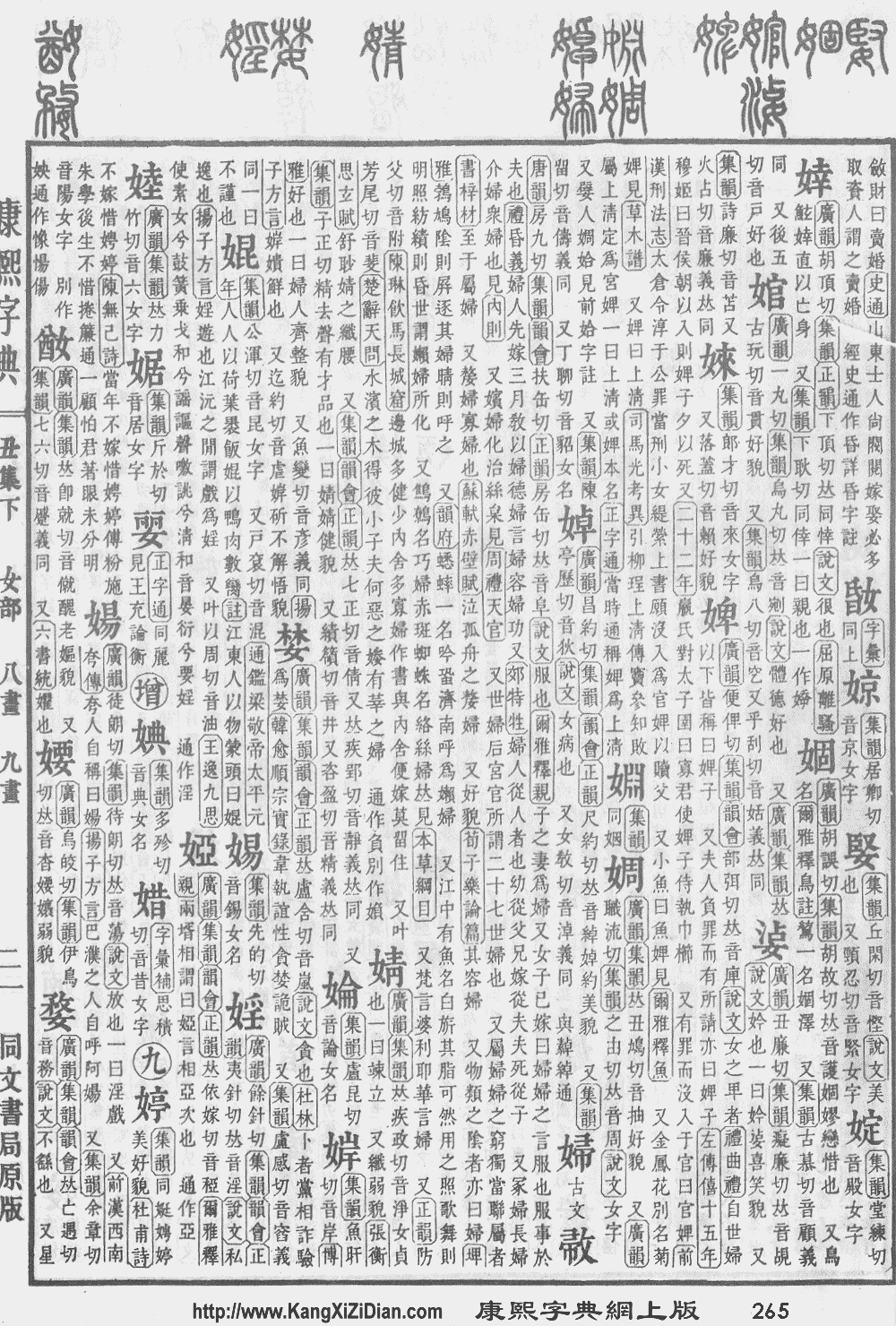
- KangXi: page 265, character 10
- Dai Kanwa Jiten: character 6428
- Dae Jaweon: page 532, character 8
- Hanyu Da Zidian: volume 2, page 1059, character 14
- Unihan data for U+5A62
Chinese
| simp. and trad. |
婢 | |
|---|---|---|
Glyph origin
| Characters in the same phonetic series (卑) (Zhengzhang, 2003) | |
|---|---|
| Old Chinese | |
| 捭 | *preːʔ |
| 牌 | *breː, *breː |
| 郫 | *breː, *bre, *be |
| 蠯 | *breː, *be, *breːŋʔ |
| 猈 | *breːʔ, *breː |
| 稗 | *breːs |
| 粺 | *breːs |
| 𥱼 | *breː |
| 豍 | *peː |
| 箄 | *peː, *pe, *peʔ |
| 錍 | *pʰeː, *pe |
| 睥 | *pʰeːs |
| 渒 | *pʰeːs, *pe |
| 鼙 | *beː |
| 鞞 | *beː, *pe, *peʔ, *peːŋʔ |
| 椑 | *beː, *pe, *beɡ, *beːɡ |
| 崥 | *beː, *peʔ |
| 髀 | *beːʔ, *peʔ, *piʔ |
| 卑 | *pe |
| 鵯 | *pe, *pʰiɡ |
| 裨 | *pe, *be |
| 痺 | *pe |
| 碑 | *pre |
| 婢 | *peʔ, *beʔ |
| 諀 | *pʰeʔ |
| 脾 | *be |
| 埤 | *be |
| 陴 | *be |
| 蜱 | *be, *mbew |
| 焷 | *be |
| 螷 | *be, *breːŋʔ |
| 庳 | *beʔ |
| 琕 | *biːŋ |
| 萆 | *beɡ, *slɯʔ |
| 綼 | *biɡ, *peːɡ |
Pronunciation
Definitions
婢
Coordinate terms
Compounds
|
Japanese
Kanji
婢
- This term needs a translation to English. Please help out and add a translation, then remove the text
{{rfdef}}.
Readings
Compounds
- 僕婢 (bokuhi)
- 厨婢 (chūhi)
- 奴婢 (dohi, nuhi)
- 傅婢 (fuhi)
- 婢僕 (hiboku)
- 婢子 (hishi)
- 婢妾 (hishō)
- 侍婢 (jihi, makatachi)
- 下婢 (kahi)
- 角婢 (kakuhi)
- 官奴婢 (kannuhi)
- 官婢 (kanpi)
- 公奴婢 (kunuhi)
- 賤婢 (senpi)
- 私奴 (shinuhi)
- 老婢 (rōhi)
Korean
Hanja
婢 • (bi) (hangeul 비, revised bi, McCune–Reischauer pi)
- This term needs a translation to English. Please help out and add a translation, then remove the text
{{rfdef}}.
Vietnamese
Han character
婢 (tì)
- This term needs a translation to English. Please help out and add a translation, then remove the text
{{rfdef}}.
This article is issued from
Wiktionary.
The text is licensed under Creative Commons - Attribution - Sharealike.
Additional terms may apply for the media files.