套
See also: 室
| ||||||||
Translingual
Han character
套 (radical 37 大+7, 10 strokes, cangjie input 大尸一戈 (KSMI), four-corner 40731, composition ⿱大镸)
References
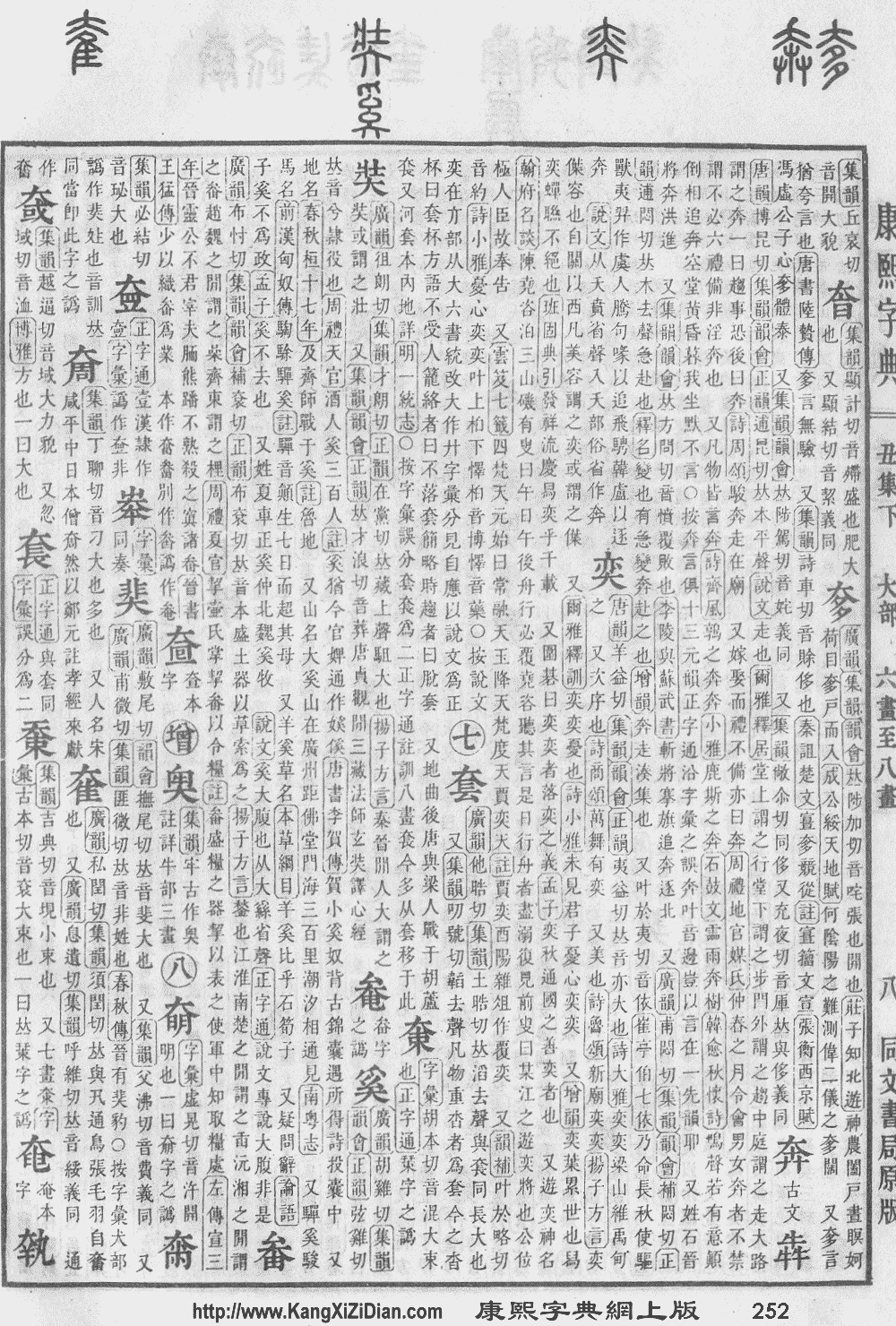
- KangXi: page 252, character 6
- Dai Kanwa Jiten: character 5926
- Dae Jaweon: page 514, character 1
- Hanyu Da Zidian: volume 1, page 540, character 9
- Unihan data for U+5957
Chinese
| simp. and trad. |
套 | |
|---|---|---|
| alt. forms | 㚐 𡘷 | |
Glyph origin
Ideogrammic compound (會意) : 大 (“large”) + 長 (“long”) – long. It is later borrowed for the “cover” sense and has now lost its original meaning.
Etymology 1
Cognate with 韜 (OC *l̥ʰuː); probably cognate with 㧺 and 錔 (OC *tʰuːb).
Pronunciation
Definitions
套
Compounds
Derived terms from 套
|
|
|
Etymology 2
Pronunciation
Definitions
套
- † long
Japanese
Kanji
套
(“Jinmeiyō” kanji used for names)
- This term needs a translation to English. Please help out and add a translation, then remove the text
{{rfdef}}.
Readings
- Goon: とう (tō)←たう (tau, historical)
- Kan’on: とう (tō)←たう (tau, historical)
- Kun: かさねる (kasaneru, 套ねる); おおい (ōi, 套い)
Korean
Hanja
套 • (tu, to) (hangeul 투, 토, revised tu, to, McCune–Reischauer t'u, t'o, Yale thwu, tho)
- This term needs a translation to English. Please help out and add a translation, then remove the text
{{rfdef}}.
Vietnamese
Han character
- This term needs a translation to English. Please help out and add a translation, then remove the text
{{rfdef}}.
This article is issued from
Wiktionary.
The text is licensed under Creative Commons - Attribution - Sharealike.
Additional terms may apply for the media files.