哉
See also: 或
| ||||||||
Translingual
Han character
哉 (radical 30 口+6, 9 strokes, cangjie input 十戈口 (JIR), four-corner 43650, composition ⿹𢦏口)
References
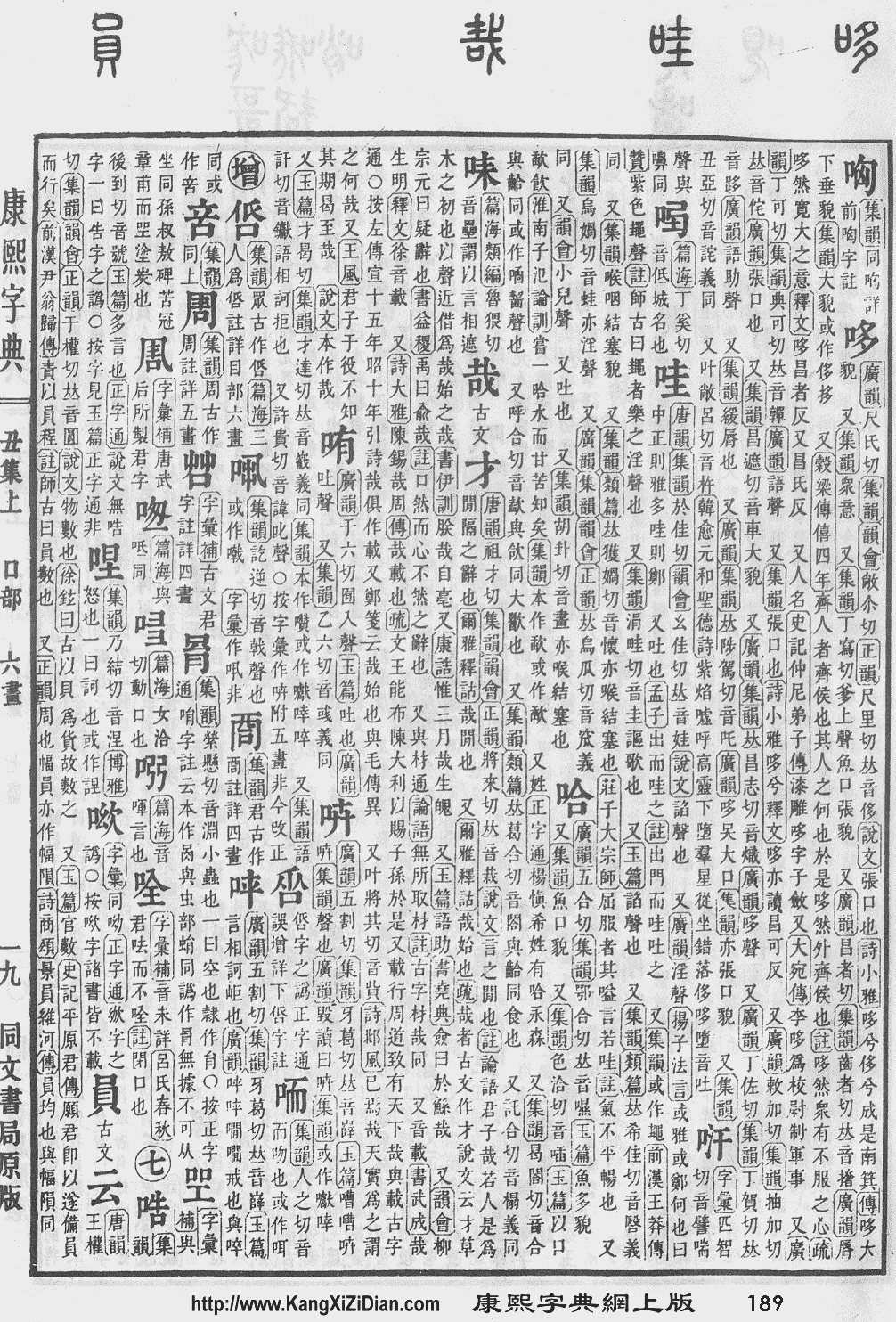
- KangXi: page 189, character 8
- Dai Kanwa Jiten: character 3596
- Dae Jaweon: page 408, character 14
- Hanyu Da Zidian: volume 1, page 611, character 7
- Unihan data for U+54C9
Chinese
| simp. and trad. |
哉 | |
|---|---|---|
Glyph origin
| Characters in the same phonetic series (𢦏) (Zhengzhang, 2003) | |
|---|---|
| Old Chinese | |
| 𢦏 | *ʔslɯː |
| 栽 | *ʔslɯː, *zlɯːs |
| 哉 | *ʔslɯː |
| 烖 | *ʔslɯː |
| 載 | *ʔslɯːʔ, *ʔslɯːs, *zlɯːs |
| 渽 | *ʔsɯː |
| 睵 | *ʔsɯː, *sʰɯː |
| 溨 | *zɯː |
| 裁 | *zlɯː, *zlɯːs |
| 酨 | *l'ɯːs, *zlɯːs |
| 蛓 | *sʰles, *sʰɯs |
| 胾 | *ʔsrɯs |
Phono-semantic compound (形聲, OC *ʔslɯː) : semantic 口 + phonetic 𢦏 (OC *ʔslɯː).
Etymology 1
Pronunciation
Definitions
哉
- † An exclamatory particle.
See also
- 兮 (xī)
Compounds
Etymology 2
Pronunciation
Definitions
哉
Compounds
|
Japanese
Kanji
哉
(“Jinmeiyō” kanji used for names)
- This term needs a translation to English. Please help out and add a translation, then remove the text
{{rfdef}}.
Readings
- Goon: さい (sai); せ (se)
- Kan’on: さい (sai)
- Kun: かな (kana, 哉); や (ya, 哉); か (ka, 哉)
- Nanori: か (ka); すけ (suke); とし (toshi); ちか (chika); はじめ (hajime)
Korean
Hanja
哉 • (jae) (hangeul 재, revised jae, McCune–Reischauer chae, Yale cay)
- This term needs a translation to English. Please help out and add a translation, then remove the text
{{rfdef}}.
Vietnamese
Han character
- This term needs a translation to English. Please help out and add a translation, then remove the text
{{rfdef}}.
This article is issued from
Wiktionary.
The text is licensed under Creative Commons - Attribution - Sharealike.
Additional terms may apply for the media files.