咖
| ||||||||
Translingual
Han character
咖 (radical 30, 口+5, 8 strokes, cangjie input 口大尸口 (RKSR), four-corner 66000, composition ⿰口加)
Derived characters
- 𨔗
References
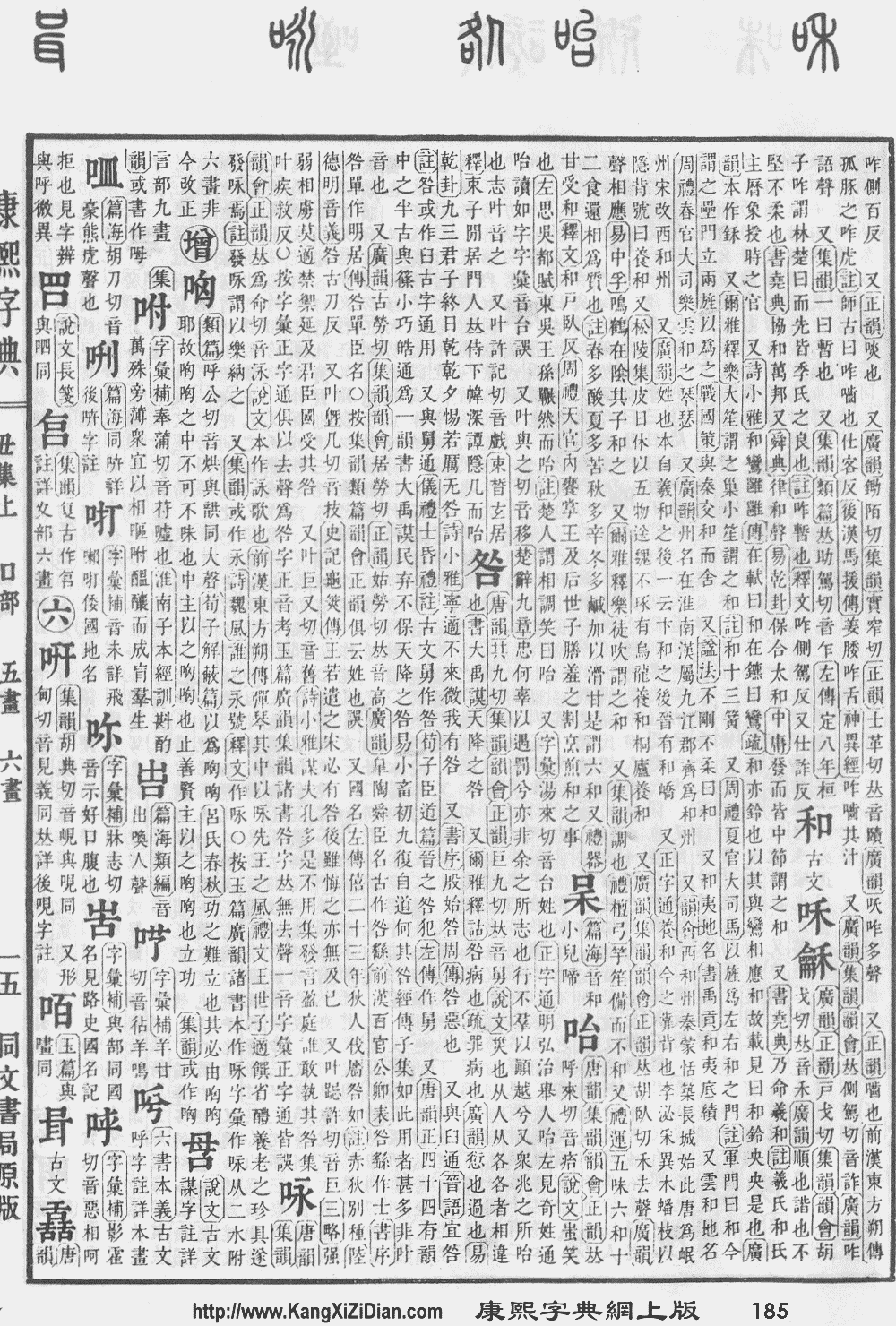
- KangXi: not present, would follow page 185, character 21
- Dai Kanwa Jiten: character 3523
- Hanyu Da Zidian: volume 1, page 610, character 6
- Unihan data for U+5496
Chinese
| simp. and trad. |
咖 | |
|---|---|---|
Etymology 1
Pronunciation
Definitions
咖
- Only used in 咖啡 (kāfēi).
Etymology 2
Pronunciation
Definitions
咖
Etymology 3
From Min Nan 跤 (kha), shortened from 跤數/跤数 (kha-siàu, “character; guy”), probably with influence from Mandarin 腳色/脚色 (juésè, “character”).
Alternatively, from English cast.
Pronunciation
Definitions
咖
Compounds
Etymology 4
Pronunciation
Definitions
咖
- Only used in 咖咖.
Etymology 5
Pronunciation
Definitions
咖
- The meaning of this term is uncertain.
Japanese
Kanji
咖
- This term needs a translation to English. Please help out and add a translation, then remove the text
{{rfdef}}.
Readings
Korean
Hanja
咖 • (ga) (hangeul 가, McCune–Reischauer ka)
- This term needs a translation to English. Please help out and add a translation, then remove the text
{{rfdef}}.
This article is issued from
Wiktionary.
The text is licensed under Creative Commons - Attribution - Sharealike.
Additional terms may apply for the media files.