wynn
English
Etymology 1
From Middle English winne, wenne, wunne, from Old English wynn (“joy, pleasure”), from Proto-Germanic *wunjō, from Proto-Indo-European *wn-yeH₂, from *wenh₁- (“desire, wish, love”).
Alternative forms
Pronunciation
- IPA(key): /wɪn/
- Rhymes: -ɪn
- Homophone: win
Noun
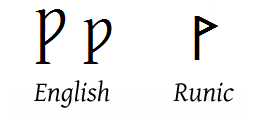
wynn (plural wynns)
See also
Etymology 2
Noun
wynn (plural wynns)
Part or all of this entry has been imported from the 1913 edition of Webster’s Dictionary, which is now free of copyright and hence in the public domain. The imported definitions may be significantly out of date, and any more recent senses may be completely missing.
(See the entry for wynn in Webster’s Revised Unabridged Dictionary, G. & C. Merriam, 1913.)
Demotic
Etymology
A metathesized borrowing from the plural Aramaic 𐡉𐡅𐡍𐡉𐡍 (*Yawnayīn), itself from Ancient Greek Ἰᾱ́ϝων (Iā́wōn, “Ionian”) — compare the later Ancient Greek Ῐ̓ᾱ́ων (Iā́ōn), Ἴων (Íōn).
Noun
wynn m
- Greek (person)
Descendants
References
- Erichsen, Wolja (1954) Demotisches Glossar, Copenhagen: Ejnar Munksgaard, page 80
- Černý, Jaroslav (1976) Coptic Etymological Dictionary, Cambridge: Cambridge University Press, →ISBN, page 213
- Brugsch, F. Chabas and Eug. Revillout (1911) Revue Égyptologique publiée sous la direction de MM. Vol. XIII, page 107, Paris
Old English
Alternative forms
Etymology
From Proto-Germanic *wunjō, from Proto-Indo-European *wenh₁- (“to strive for, wish, desire”). Cognate with Old Saxon wunnia, Old High German wunna (German Wonne). Related to Old English wine (“friend”), wenian (“to accustom, wean”). The Indo-European root is also the source of Latin Venus, Old Irish fine, Welsh gwen) and Albanian uri (“hunger, desire”) arch. 'uni'.
Pronunciation
- IPA(key): /wynn/
Noun
wynn f
Declension
| Case | Singular | Plural |
|---|---|---|
| nominative | wynn | wynna, wynne |
| accusative | wynne | wynna, wynne |
| genitive | wynne | wynna |
| dative | wynne | wynnum |