manga
English
Etymology
Borrowed from Japanese 漫画 (manga), from Middle Chinese 漫 (màn, “free, unrestrained”) + 畫 (ɣwɛ̀, “drawing”) (compare Mandarin 漫画 (mànhuà), Korean 만화 (manhwa)). After an 1814 book by Katsushika Hokusai.
Pronunciation
- (US) IPA(key): /ˈmæŋɡə/, /ˈmɑŋɡə/
- Hyphenation: man‧ga
- Rhymes: -æŋɡə
Noun
manga (countable and uncountable, plural manga or mangas)
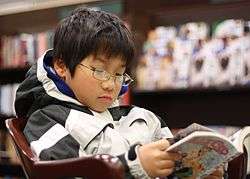
- (countable, comics) A comic originating in Japan.
- 2001, Gilles Poitras, “What makes anime unique”, in Anime Essentials: Every Thing a Fan Needs to Know, page 63:
- English speakers are quick to notice the at times incorrect use of English in anime and manga. Many English words are customarily used in standard Japanese speech, and sometimes they are pronounced and employed in a manner quite different from their native use.
- 2007, Yukako Sunaoshi, “Who reads comics? Manga readership among first-generation Asian immigrants in New Zealand”, in Popular Culture, Globalization and Japan, page 94:
- Manga (Japanese comics) are everywhere. Even here in Auckland. One can find various titles in their original versions as well as in Chinese, Korean and English translations.
- 2012, Jason Thompson, “Introduction”, in Manga: The Complete Guide, page 46:
- Manga-influenced comics by Western authors are frequently sold alongside manga, although in most bookstores the decision is primarily a matter of format and packaging (i.e., whether the book is printed in the compact manga size or the traditionally larger American comic book format).
-
- (uncountable) An artistic style heavily used in, and associated with, Japanese comics, and that has also been adopted by a comparatively low number of comics from other countries.
- (rare, countable, chiefly proscribed by fandom slang) A comic in manga style, regardless of the country of origin.
- Lately I've been reading a Brazilian manga.
Quotations
For quotations of use of this term, see Citations:manga.
Hypernyms
Hyponyms
- doujinshi (“independent or fan-produced manga”)
Coordinate terms
Derived terms
Related terms
- mangaka (manga author/artist)
Translations
|
|
|
|
- The translations below need to be checked and inserted above into the appropriate translation tables, removing any numbers. Numbers do not necessarily match those in definitions. See instructions at Wiktionary:Entry layout#Translations.
|
See also
- anime (“Japanese animation”)
Further reading
Anagrams
Asturian
Etymology
Noun
manga f (plural mangues)
Catalan
Etymology
From Japanese 漫画 (manga), 漫 (man-) "random, uncontrolled" + 画 (-ga) "picture, sketch". After an 1814 book by Katsushika Hokusai.
Noun
manga m (plural mangues)
- manga (Japanese comic book)
Danish
Etymology
Pronunciation
- IPA(key): [ˈmɑŋɡ̊a]
Noun
manga
- (countable) manga
- De har vist læst alt for mange mangaer.
- I believe they have read far too many mangas.
- De har vist læst alt for mange mangaer.
Declension
| common gender |
Singular | Plural | ||
|---|---|---|---|---|
| indefinite | definite | indefinite | definite | |
| nominative | manga | mangaen | mangaer | mangaerne |
| genitive | mangas | mangaens | mangaers | mangaernes |
Dutch
Etymology
From Japanese 漫画 (manga), after an 1814 book by Katsushika Hokusai.
Pronunciation
Audio (file) - Hyphenation: man‧ga
Noun
manga m (plural manga's, diminutive mangaatje n)
French
Etymology
Pronunciation
- IPA(key): /mɑ̃.ɡa/
Noun
manga m (plural mangas)
- a manga (comic originated in Japan)
- 2005 November 1, “Duck Action : 5 mangas inmangables ! [Duck Action: 5 Manga You Can’t Miss!]”, in Picsou Magazine (non-fiction, in French), Disney Hachette Presse, page 27:
- Hiromu Arakawa est une jeune mangaka débutante quand elle envoie son premier projet chez un éditeur. L’histoire courte deviendra FullMetal Alchemist, un des mangas les plus vendus au Japon : 12 millions d’exemplaires !
- Hiromu Arakawa was a young mangaka debuting when she sent her first project to a publisher. That short story became FullMetal Alchemist, one of the best-selling manga in Japan: 12 million copies!
- Hiromu Arakawa est une jeune mangaka débutante quand elle envoie son premier projet chez un éditeur. L’histoire courte deviendra FullMetal Alchemist, un des mangas les plus vendus au Japon : 12 millions d’exemplaires !
- 2005 November 1, “Duck Action : 5 mangas inmangables ! [Duck Action: 5 Manga You Can’t Miss!]”, in Picsou Magazine (non-fiction, in French), Disney Hachette Presse, page 27:
- Osamu Tezuka est le plus grand dessinateur de manga. De 1947 à 1989, il dessine 150000 pages et crée d’innombrable séries : Astro Boy, le roi Léo, Metropolis, BlackJack, Les trois Adolf, Ayako, Phénix…
- Osamu Tezuka was the greatest manga artist. From 1947 to 1989, he drew 150,000 pages and created countless series: Astro Boy, Kimba the White Lion, Metropolis, Black Jack, Message to Adolf, Ayako, Phoenix…
- Osamu Tezuka est le plus grand dessinateur de manga. De 1947 à 1989, il dessine 150000 pages et crée d’innombrable séries : Astro Boy, le roi Léo, Metropolis, BlackJack, Les trois Adolf, Ayako, Phénix…
-
Hypernyms
- bédé / BéDé / BD / bande dessinée
Coordinate terms
Related terms
Galician
Etymology 1
From Old Portuguese manga, from Latin manica.
Noun
manga f (plural mangas)
Etymology 2
Borrowed from Portuguese manga, from Malay mangga, from Tamil மாங்காய் (māṅkāy) from மா (mā, “mango species”) + காய் (kāy, “unripe fruit”).
Noun
manga f (plural mangas)
- mango (fruit)
Related terms
Gamilaraay
Pronunciation
- IPA(key): /manɡa/
Noun
manga
Synonyms
References
- (2003) Gamilaraay Yuwaalaraay Yuwaalayaay Dictionary
Italian
Etymology
Pronunciation
- IPA(key): /ˈman.ɡa/, [ˈmäŋɡä]
- Hyphenation: màn‧ga
Noun
manga m (invariable)
- (manga) manga
Anagrams
Japanese
Romanization
manga
Malay
Etymology
Noun
manga
Hyponyms
Maori
Noun
manga
Polish
Etymology
Pronunciation
- IPA(key): /ˈman.ɡa/
Audio (file)
Noun
manga f
- (manga) manga
Declension
Portuguese
Pronunciation
- (Portugal) IPA(key): /ˈmɐ̃.ɡɐ/
- Hyphenation: man‧ga
Etymology 1
From Old Portuguese manga, from Latin manica. Cognate with Spanish manga, French manche.
Noun
manga f (plural mangas)
Derived terms
Etymology 2
Borrowed from Malay mangga, from Tamil மாங்காய் (māṅkāy) from மா (mā, “mango species”) + காய் (kāy, “unripe fruit”).
Noun
manga f (plural mangas)
Descendants
- → Asturian: mangu
- → English: mango (see there for further descendants)
- → French: mangue
- → Galician: manga
- → Spanish: manga
Synonyms
- (tree): mangueira
Spanish
Pronunciation
- IPA(key): /ˈmanɡa/, [ˈmãŋɡa]
Etymology 1
From Latin manica, cognate with Portuguese manga, French manche.
Noun
manga f (plural mangas)
Related terms
Etymology 2
Borrowed from Japanese.
Noun
manga m (plural mangas)
Etymology 3
Verb
manga
Etymology 4
From Portuguese manga
Noun
manga f (plural mangas)
Further reading
- “manga” in Diccionario de la lengua española, Vigésima tercera edición, Real Academia Española, 2014.
Swedish
Noun
manga c
- (manga) manga
Turkish
Noun
manga
Zazaki
Etymology
Noun
manga