fá
See also: Appendix:Variations of "fa"
Faroese
Pronunciation
- IPA(key): [ˈfɔa]
- Rhymes: -ɔaː
Adjective
fá
Hungarian
Pronunciation
- IPA(key): [ˈfaː]
-
Audio (file)
Noun
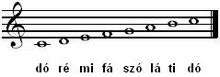
solmisation
fá (plural fák)
See also
Further reading
Icelandic
Etymology
From Old Norse fá, from Proto-Germanic *fanhaną.
Pronunciation
- IPA(key): /fauː/
- Rhymes: -auː
Verb
fá (strong verb, third-person singular past indicative fékk, third-person plural past indicative fengu, supine fengið)
- (transitive, with accusative) to receive, get
- (ditransitive, with dative and accusative objects) to give (someone something)
Conjugation
| infinitive (nafnháttur) |
að fá | ||||
|---|---|---|---|---|---|
| supine (sagnbót) |
fengið | ||||
| present participle (lýsingarháttur nútíðar) |
fándi | ||||
| indicative (framsöguháttur) |
subjunctive (viðtengingarháttur) | ||||
| present (nútíð) |
ég fæ | við fáum | present (nútíð) |
ég fái | við fáum |
| þú færð | þið fáið | þú fáir | þið fáið | ||
| hann, hún, það fær | þeir, þær, þau fá | hann, hún, það fái | þeir, þær, þau fái | ||
| past (þátíð) |
ég fékk | við fengum | past (þátíð) |
ég fengi | við fengjum |
| þú fékkst | þið fenguð | þú fengir | þið fengjuð | ||
| hann, hún, það fékk | þeir, þær, þau fengu | hann, hún, það fengi | þeir, þær, þau fengju | ||
| imperative (boðháttur) |
fá (þú) | fáið (þið) | |||
| Forms with appended personal pronoun | |||||
| fáiði * | |||||
| * Spoken form, usually not written; in writing, the unappended plural form (optionally followed by the full pronoun) is preferred. | |||||
' — mediopassive voice (miðmynd)
| infinitive (nafnháttur) |
að | ||||
|---|---|---|---|---|---|
| supine (sagnbót) |
|||||
| present participle (lýsingarháttur nútíðar) |
fándist ** ** the mediopassive present participle is extremely rare and normally not used; it is never used attributively or predicatively, only for explicatory subclauses | ||||
| indicative (framsöguháttur) |
subjunctive (viðtengingarháttur) | ||||
| present (nútíð) |
ég | við | present (nútíð) |
ég | við |
| þú | þið | þú | þið | ||
| hann, hún, það | þeir, þær, þau | hann, hún, það | þeir, þær, þau | ||
| past (þátíð) |
ég | við | past (þátíð) |
ég | við |
| þú | þið | þú | þið | ||
| hann, hún, það | þeir, þær, þau | hann, hún, það | þeir, þær, þau | ||
| imperative (boðháttur) |
(þú) | (þið) | |||
| Forms with appended personal pronoun | |||||
| u | i * | ||||
| * Spoken form, usually not written; in writing, the unappended plural form (optionally followed by the full pronoun) is preferred. | |||||
' — past participle (lýsingarháttur þátíðar)
| strong declension (sterk beyging) |
singular (eintala) | plural (fleirtala) | |||||
|---|---|---|---|---|---|---|---|
| masculine (karlkyn) |
feminine (kvenkyn) |
neuter (hvorugkyn) |
masculine (karlkyn) |
feminine (kvenkyn) |
neuter (hvorugkyn) | ||
| nominative (nefnifall) |
|||||||
| accusative (þolfall) |
|||||||
| dative (þágufall) |
|||||||
| genitive (eignarfall) |
|||||||
| weak declension (veik beyging) |
singular (eintala) | plural (fleirtala) | |||||
| masculine (karlkyn) |
feminine (kvenkyn) |
neuter (hvorugkyn) |
masculine (karlkyn) |
feminine (kvenkyn) |
neuter (hvorugkyn) | ||
| nominative (nefnifall) |
|||||||
| accusative (þolfall) |
|||||||
| dative (þágufall) |
|||||||
| genitive (eignarfall) |
|||||||
Synonyms
- (to receive): eignast
- (to give): gefa, láta af hendi
Derived terms
Derived terms
- fá allt upp í hendurnar
- fá flugu í hausinn
Irish
Pronunciation
- (Ulster) IPA(key): /fˠæː/
Preposition
fá (plus dative, triggers lenition)
Usage notes
The standard Irish and Connacht form faoi (Munster fé) means both ‘under’ and ‘about, concerning’. In Ulster, these two meanings are split: faoi means ‘under’, while fá means ‘about, concerning’.
Derived terms
- fád (contraction with do (“your sg”))
- fám (contraction with mo (“my”))
- fán corresponding to standard faoin
- fána corresponding to standard faoina
- fánar corresponding to standard faoinar
- fánár corresponding to standard faoinár
- fánarb corresponding to standard faoinarb
- fánarbh corresponding to standard faoinarbh
Mandarin
Romanization
fá (Zhuyin ㄈㄚˊ)
- Pinyin transcription of 乏
- Pinyin transcription of 伐
- Pinyin transcription of 垡
- Pinyin transcription of 姂
- Pinyin transcription of 拨
- Pinyin transcription of 撤
- Pinyin transcription of 栰
- Pinyin transcription of 泚
- Pinyin transcription of 疺
- Pinyin transcription of 瞁
- Pinyin transcription of 砝
- Pinyin transcription of 筏
- Pinyin transcription of 罚
- Pinyin transcription of 罰
- Pinyin transcription of 罸
- Pinyin transcription of 茷
- Pinyin transcription of 藅
- Pinyin transcription of 閥
- Pinyin transcription of 阀
Old Norse
Etymology 1
From Proto-Germanic *fanhaną.
Verb
fá (singular past indicative fekk, plural past indicative fengu, past participle fenginn)
- to get
Conjugation
Conjugation of fá — active (strong class 7)
| infinitive | fá | |
|---|---|---|
| present participle | fáandi | |
| past participle | fenginn, finginn | |
| indicative | present | past |
| 1st-person singular | fæ | fekk |
| 2nd-person singular | fær | fekkt |
| 3rd-person singular | fær | fekk |
| 1st-person plural | fám | fengum, fingum |
| 2nd-person plural | fáið | fenguð, finguð |
| 3rd-person plural | fá | fengu, fingu |
| subjunctive | present | past |
| 1st-person singular | fá | fenga, finga |
| 2nd-person singular | fáir | fengir, fingir |
| 3rd-person singular | fái | fengi, fingi |
| 1st-person plural | fáim | fengim, fingim |
| 2nd-person plural | fáið | fengið, fingið |
| 3rd-person plural | fái | fengi, fingi |
| imperative | present | |
| 2nd-person singular | fá | |
| 1st-person plural | fám | |
| 2nd-person plural | fáið | |
Conjugation of fá — mediopassive (strong class 7)
| infinitive | fásk | |
|---|---|---|
| present participle | fáandisk | |
| past participle | fengizk, fingizk | |
| indicative | present | past |
| 1st-person singular | fámk | fengumk, fingumk |
| 2nd-person singular | fæsk | fekkzk |
| 3rd-person singular | fæsk | fekksk |
| 1st-person plural | fámsk | fengumsk, fingumsk |
| 2nd-person plural | fáizk | fenguzk, finguzk |
| 3rd-person plural | fásk | fengusk, fingusk |
| subjunctive | present | past |
| 1st-person singular | fámk | fengumk, fingumk |
| 2nd-person singular | fáisk | fengisk, fingisk |
| 3rd-person singular | fáisk | fengisk, fingisk |
| 1st-person plural | fáimsk | fengimsk, fingimsk |
| 2nd-person plural | fáizk | fengizk, fingizk |
| 3rd-person plural | fáisk | fengisk, fingisk |
| imperative | present | |
| 2nd-person singular | fásk | |
| 1st-person plural | fámsk | |
| 2nd-person plural | fáizk | |
Descendants
References
- fá in A Concise Dictionary of Old Icelandic, G. T. Zoëga, Clarendon Press, 1910, at Internet Archive.
Etymology 2
Verb
fá
Conjugation
Conjugation of fá — active (weak class 2)
| infinitive | fá | |
|---|---|---|
| present participle | fáandi | |
| past participle | fáðr | |
| indicative | present | past |
| 1st-person singular | fá | fáða |
| 2nd-person singular | fár | fáðir |
| 3rd-person singular | fár | fáði |
| 1st-person plural | fám | fáðum |
| 2nd-person plural | fáið | fáðuð |
| 3rd-person plural | fá | fáðu |
| subjunctive | present | past |
| 1st-person singular | fá | fáða |
| 2nd-person singular | fáir | fáðir |
| 3rd-person singular | fáir | fáði |
| 1st-person plural | fáim | fáðim |
| 2nd-person plural | fáið | fáðið |
| 3rd-person plural | fái | fáði |
| imperative | present | |
| 2nd-person singular | fá | |
| 1st-person plural | fám | |
| 2nd-person plural | fáið | |
Conjugation of fá — mediopassive (weak class 2)
| infinitive | fásk | |
|---|---|---|
| present participle | fándisk | |
| past participle | fázk | |
| indicative | present | past |
| 1st-person singular | fámk | fáðumk |
| 2nd-person singular | fásk | fáðisk |
| 3rd-person singular | fásk | fáðisk |
| 1st-person plural | fámsk | fáðumsk |
| 2nd-person plural | fáizk | fáðuzk |
| 3rd-person plural | fásk | fáðusk |
| subjunctive | present | past |
| 1st-person singular | fámk | fáðumk |
| 2nd-person singular | fáisk | fáðisk |
| 3rd-person singular | fáisk | fáðisk |
| 1st-person plural | fáimsk | fáðimsk |
| 2nd-person plural | fáizk | fáðizk |
| 3rd-person plural | fáisk | fáðisk |
| imperative | present | |
| 2nd-person singular | fásk | |
| 1st-person plural | fámsk | |
| 2nd-person plural | fáizk | |
References
- fá in A Concise Dictionary of Old Icelandic, G. T. Zoëga, Clarendon Press, 1910, at Internet Archive.
Portuguese
Etymology
From Latin fa[muli] in the hymn for St. John the Baptist.
Pronunciation
- IPA(key): /ˈfa/
- Hyphenation: fa
- Rhymes: -a
Noun
fá m (plural fás)
- fa (musical note)
Coordinate terms
Scanian
Etymology
From Old Norse fá, from Proto-Germanic *fanhaną.
Pronunciation
- IPA(key): [fáʊː], [fóː], [fɛ́ɑː]
Verb
fá (preterite singular fikk or fe, preterite plural finge, supine fáeð)
- to get
This article is issued from
Wiktionary.
The text is licensed under Creative Commons - Attribution - Sharealike.
Additional terms may apply for the media files.