casa
English
Etymology
Noun
casa (plural casas)
- (slang) house
- Francis Bret Harte
- I saw that Enriquez had made no attempt to modernize the old casa, and that even the garden was left in its lawless native luxuriance.
- 1991 May 12, "Kidnapped!" Jeeves and Wooster, Series 2, Episode 5:
- Chuffy: WHAT? No, no, no, no, no. My casa is your casa, what?
- Get out of my casa!
- Francis Bret Harte
Anagrams
Aragonese
Etymology
Noun
casa f (plural cases)
Asturian
Etymology
Noun
casa f (plural cases)
Catalan
Etymology
From Old Occitan [Term?], from Latin casa.
Pronunciation
Noun
casa f (plural cases)
Derived terms
Related terms
Verb
casa
- third-person singular present indicative form of casar
- second-person singular imperative form of casar
French
Verb
casa
- third-person singular past historic of caser
Galician
Etymology
Pronunciation
IPA(key): [ˈkas̺ɐ]
Noun
casa f (plural casas)
Interlingua
Pronunciation
- IPA(key): /ˈka.sa/
Noun
casa (plural casas)
Irish
Pronunciation
Adjective
casa
- nominative and vocative and dative and strong genitive plural of cas
Verb
casa
- inflection of cas:
- present subjunctive analytic
- (obsolete) second-person singular present indicative
Mutation
| Irish mutation | ||
|---|---|---|
| Radical | Lenition | Eclipsis |
| casa | chasa | gcasa |
| Note: Some of these forms may be hypothetical. Not every possible mutated form of every word actually occurs. | ||
Italian
Etymology
Pronunciation
- (Northern Italy) IPA(key): /ˈkaː.za/
- (Central and Southern Italy, Sardinia, Standard Italian) IPA(key): /ˈkaː.sa/
Audio (Northern) (file)
Noun
casa f (plural case)
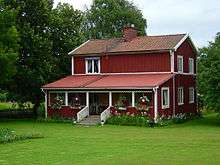
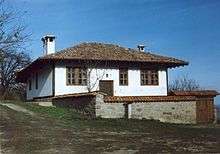
- house
- home
- shop
- (board games) square
- Family, dynasty, descent, extraction, stock, lineage, birth, origin, race (in the sense of the preceding words, not "human race").
- Company, firm.
Synonyms
Derived terms
|
|
Related terms
Further reading

Latin
Etymology 1
Possibly from either Proto-Indo-European *kat- (“to link or weave together; chain, net”) (compare catēna (“chain”)), or Proto-Indo-European *ket- (“hut, shed”) (compare Old English heaþor (“restraint, confinement, enclosure, prison”), Avestan 𐬐𐬀𐬙𐬀 (kata, “chamber”), Mazanderani کَت (kat, “wall”)), likely through borrowing from another Indo-European language rather than inheritance.[1]
Pronunciation
- (Classical) IPA(key): /ˈka.sa/
Noun
casa f (genitive casae); first declension
Inflection
First declension.
| Case | Singular | Plural |
|---|---|---|
| nominative | casa | casae |
| genitive | casae | casārum |
| dative | casae | casīs |
| accusative | casam | casās |
| ablative | casā | casīs |
| vocative | casa | casae |
Descendants
- Aragonese: casa
- Aromanian: casã
- Asturian: casa
- Catalan: casa, ca
- Dalmatian: cuosa
- Emilian: chèṡa, cà
- Friulian: cjase, čhase
- Interlingua: casa
- Istriot: casa
- Istro-Romanian: cåsĕ
- Italian: casa, ca’
- Ladin: cèsa, cesa
- Ligurian: câza
- Lombard: cà
- Mirandese: casa
- Occitan: casa, cò
- Old French: chiese, chese
- Old Portuguese: casa
- Old Spanish: casa
- Piemontese: ca
- Romagnol: ca
- Romanian: casă
- Romansch: chasa
- Sardinian: càsa
- Sicilian: casa
- Venetian: caxa, ca’
Etymology 2
Inflected form of cāsus (“fallen”).
Pronunciation
- (Classical) IPA(key): /ˈkaː.sa/
Participle
cāsa
- nominative feminine singular of cāsus
- nominative neuter plural of cāsus
- accusative neuter plural of cāsus
- vocative feminine singular of cāsus
- vocative neuter plural of cāsus
cāsā
- ablative feminine singular of cāsus
References
- casa in Charlton T. Lewis and Charles Short (1879) A Latin Dictionary, Oxford: Clarendon Press
- casa in Charlton T. Lewis (1891) An Elementary Latin Dictionary, New York: Harper & Brothers
- casa in Charles du Fresne du Cange’s Glossarium Mediæ et Infimæ Latinitatis (augmented edition, 1883–1887)
- casa in Gaffiot, Félix (1934) Dictionnaire Illustré Latin-Français, Hachette
- casa in Harry Thurston Peck, editor (1898) Harper's Dictionary of Classical Antiquities, New York: Harper & Brothers
- ↑ De Vaan, Michiel (2008) Etymological Dictionary of Latin and the other Italic Languages (Leiden Indo-European Etymological Dictionary Series; 7), Leiden, Boston: Brill
Lower Sorbian
Pronunciation
- IPA(key): /ˈt͡sasa/
Noun
casa
- inflection of cas:
- genitive singular
- nominative and accusative dual
Occitan
Etymology
From Old Occitan [Term?], from Latin casa.
Noun
casa f (plural cases)
Old Spanish
Etymology
Pronunciation
- IPA(key): [ˈka.za]
Noun
casa f (plural casas)
- house
- c. 1200: Almeric, Fazienda de Ultramar, f. 80r. col. 1.
- […] dixo nuestro sennor a ieremias, ve a casa del orcero e yo fablaré contigo.
- […] Our Lord said to Jeremiah, go to the potter's house, and I will speak to you there.
- […] dixo nuestro sennor a ieremias, ve a casa del orcero e yo fablaré contigo.
- c. 1200: Almeric, Fazienda de Ultramar, f. 80r. col. 1.
Descendants
- Spanish: casa
Portuguese
Alternative forms
- caza (obsolete)
Etymology
From Old Portuguese casa, from Latin casa (“cottage”), possibly from Proto-Indo-European *kat- (“to link or weave together; chain, net; hut, shed”).
Pronunciation
Noun
casa f (plural casas)
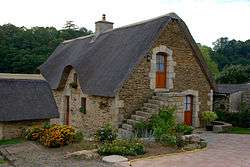
- house (structure serving as an abode of human beings)
- 2005, Lya Wyler (translator), J. K. Rowling (English author), Harry Potter e o Enigma do Príncipe (Harry Potter and the Half-Blood Prince), Rocco, page 135:
- Ele agora tem uma casa nas montanhas, foi Dumbledore que arranjou, uma bela caverna.
- He now has a house in the mountains, Dumbledore is who provided it, a beautiful cave.
- Ele agora tem uma casa nas montanhas, foi Dumbledore que arranjou, uma bela caverna.
- Aquela casa é grande. ― That house is big.
- 2005, Lya Wyler (translator), J. K. Rowling (English author), Harry Potter e o Enigma do Príncipe (Harry Potter and the Half-Blood Prince), Rocco, page 135:
- home (one’s own dwelling place)
- Synonym: lar
- Estou em casa. ― I'm at home.
- (in compounds) shop (establishment that sells goods or service)
- Synonym: loja
- Casa de carnes. ― Butcher’s shop.
- (board games) a cell which may be occupied by a piece (such as a square in a chessboard)
- a digit position
- No número 12345, o algarismo 3 ocupa a casa das centenas.
- In the number 12345, the digit 3 is in the hundreds’ place.
- house (noble family)
Derived terms
- casinha, casebre, casita, casucha, casinhola, casinholo, casinhota, casinhoto (diminutives)
- casão, casona, casarão, casaréu (augmentatives)
- casa civil
- casa da mãe joana
- casa de banho
- casa de câmara e cadeia
- casa de campo
- casa de cômodos
- casa de correção
- casa de despejo
- casa de orates
- casa noturna
- casa onde não há pão, todos ralham e ninguém tem razão (“In a house without bread, everyone argues and no one is right.”)
- casa roubada, trancas à porta (“Robbed house, locked doors.”)
- caseiro
- em casa de ferreiro, o espeto é de pau (“At a blacksmith’s house, wooden skewer.”)
- ô de casa
- quem casa quer casa (“Those who marry want a house.”)
- santa casa
- sentir-se em casa
- ser de casa
Verb
casa
- Third-person singular (ele, ela, also used with tu and você?) present indicative of casar
- Second-person singular (tu) affirmative imperative of casar
Quotations
For quotations of use of this term, see Citations:casar.
Descendants
- Kabuverdianu: kasa
Romanian
Noun
casa f
- definite singular nominative and accusative form of casă.
Romansch
Alternative forms
Etymology
Noun
casa f (plural casas)
- (Sursilvan) house
Sicilian
Etymology
Noun
casa f (plural casi)
Spanish
Etymology
Pronunciation
- (z-s distinction, seseo merger) IPA(key): /ˈkasa/
Audio (Bolivia) (file) - (ceceo merger) IPA(key): /ˈkaθa/
Audio (Latin America) (file) - Homophone: caza (seseo and ceceo dialects)
- IPA(key): /ˈkasa/
Noun
casa f (plural casas)
Derived terms
- casa de bolsa
- casa de cambio
- casa de citas
- casa de empeño
- casa mía, casa mía, por pequeña que tú seas, me pareces una abadía
- casar
- casino
- casería
- caserío
- casero
- caseta
- el casado casa quiere
- en casa de herrero, cuchara de palo
- mi casa es su casa, mi casa es tu casa
Verb
casa
See also
Further reading
- “casa” in Diccionario de la lengua española, Vigésima tercera edición, Real Academia Española, 2014.
Venetian
Etymology
Compare Italian cassa
Noun
casa f (plural case)