髟
| ||||||||
Translingual
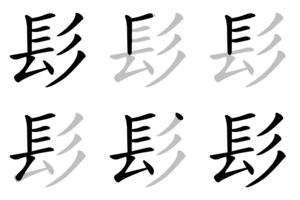
| Stroke order | |||
|---|---|---|---|
 | |||
Glyph origin
| Historical forms of the character 髟 |
|---|
| Shuowen Jiezi (compiled in Han) |
| Small seal script |
 |
| Characters in the same phonetic series (彡) (Zhengzhang, 2003) | |
|---|---|
| Old Chinese | |
| 杉 | *sreːm |
| 彡 | *sroːm, *slom |
| 衫 | *sroːm |
| 髟 | *priw, *piw, *sroːm |
| 釤 | *sraːms |
| 䑣 | *l̥ʰun |
| 彤 | *l'uːŋ |
| 浵 | *l'uːŋ |
| 肜 | *luŋ |
Han character
髟 (radical 190, 髟+0, 10 strokes, cangjie input 尸戈竹竹竹 (SIHHH), four-corner 72722, composition ⿰镸彡)
- Kangxi radical #190, ⾽.
Descendants
- Index:Chinese radical/髟
References
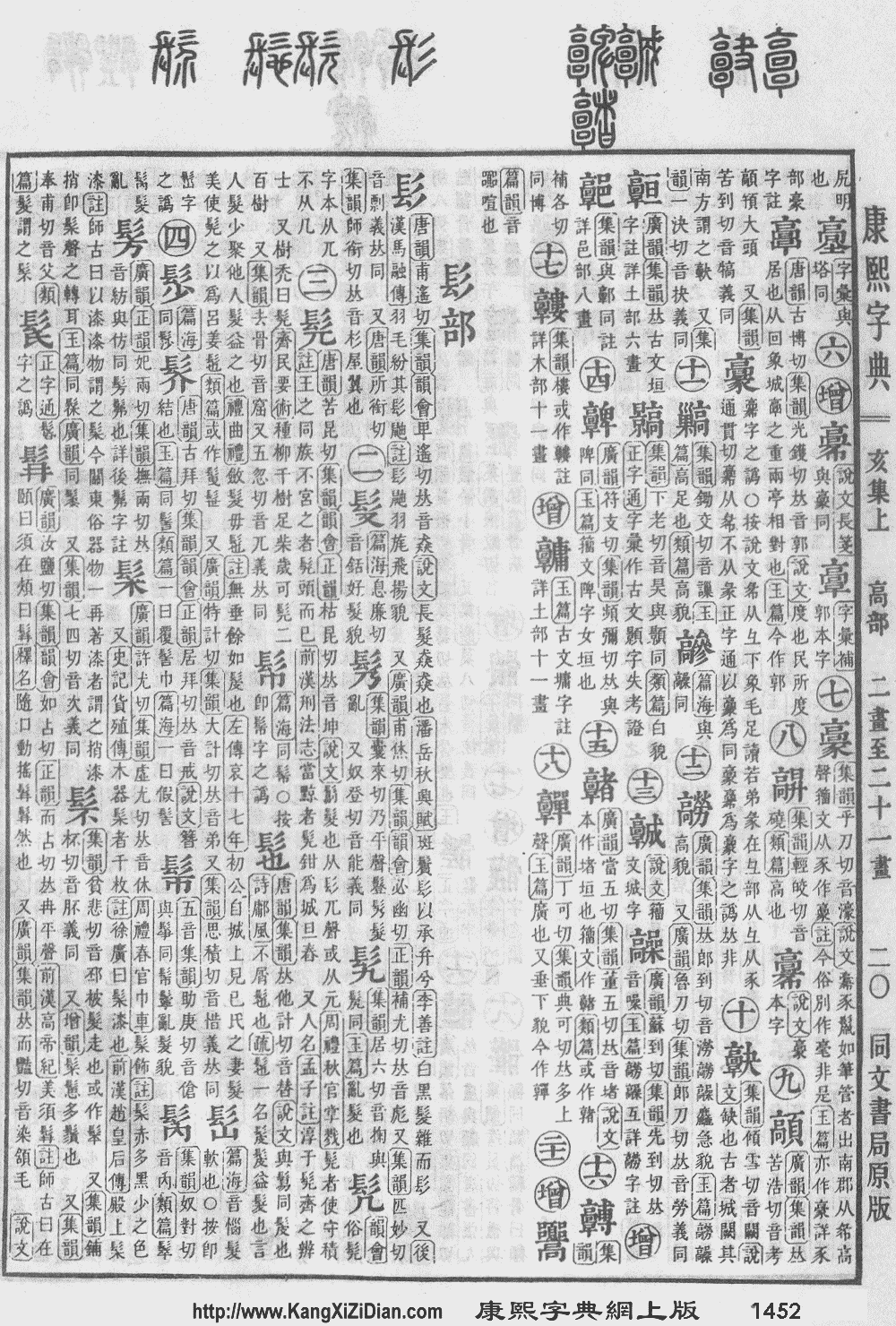
- KangXi: page 1452, character 26
- Dai Kanwa Jiten: character 45355
- Dae Jaweon: page 1983, character 1
- Hanyu Da Zidian: volume 7, page 4518, character 1
- Unihan data for U+9ADF
Chinese
| simp. and trad. |
髟 | |
|---|---|---|
Etymology 1
Pronunciation
Definitions
髟
Etymology 2
Pronunciation
Definitions
髟
Japanese
Kanji
髟
Readings
- Goon: せん (sen)←せん (sen, historical)←せむ (semu, ancient); ひょう (hyō)←ひう (fiu, historical); ひゅう (hyū)←へう (feu, historical)
- Kan’on: さん (san)←さん (san, historical)←さむ (samu, ancient); ひょう (hyō)←ひう (fiu, historical); ひゅう (hyū)←へう (feu, historical)
Korean
Hanja
髟 • (pyo, sam) (hangeul 표, 삼, McCune–Reischauer p'yo, sam, Yale phyo, sam)
- This term needs a translation to English. Please help out and add a translation, then remove the text
{{rfdef}}.
Vietnamese
Han character
- This term needs a translation to English. Please help out and add a translation, then remove the text
{{rfdef}}.
This article is issued from
Wiktionary.
The text is licensed under Creative Commons - Attribution - Sharealike.
Additional terms may apply for the media files.