隷
| ||||||||
| ||||||||
| ||||||||
Translingual
| Traditional | 隸 |
|---|---|
| Shinjitai | 隷 |
| Simplified | 隶 |
Han character
隷 (radical 171, 隶+8, 16 strokes, cangjie input 土火中水 (GFLE), composition ⿰⿱士示隶)
- be subservient to
- servant
References
- KangXi: page 1363, character 26
- Dai Kanwa Jiten: character 41928
- Dae Jaweon: page 1867, character 14
- Hanyu Da Zidian: volume 7, page 4323, character 6
- Unihan data for U+96B7
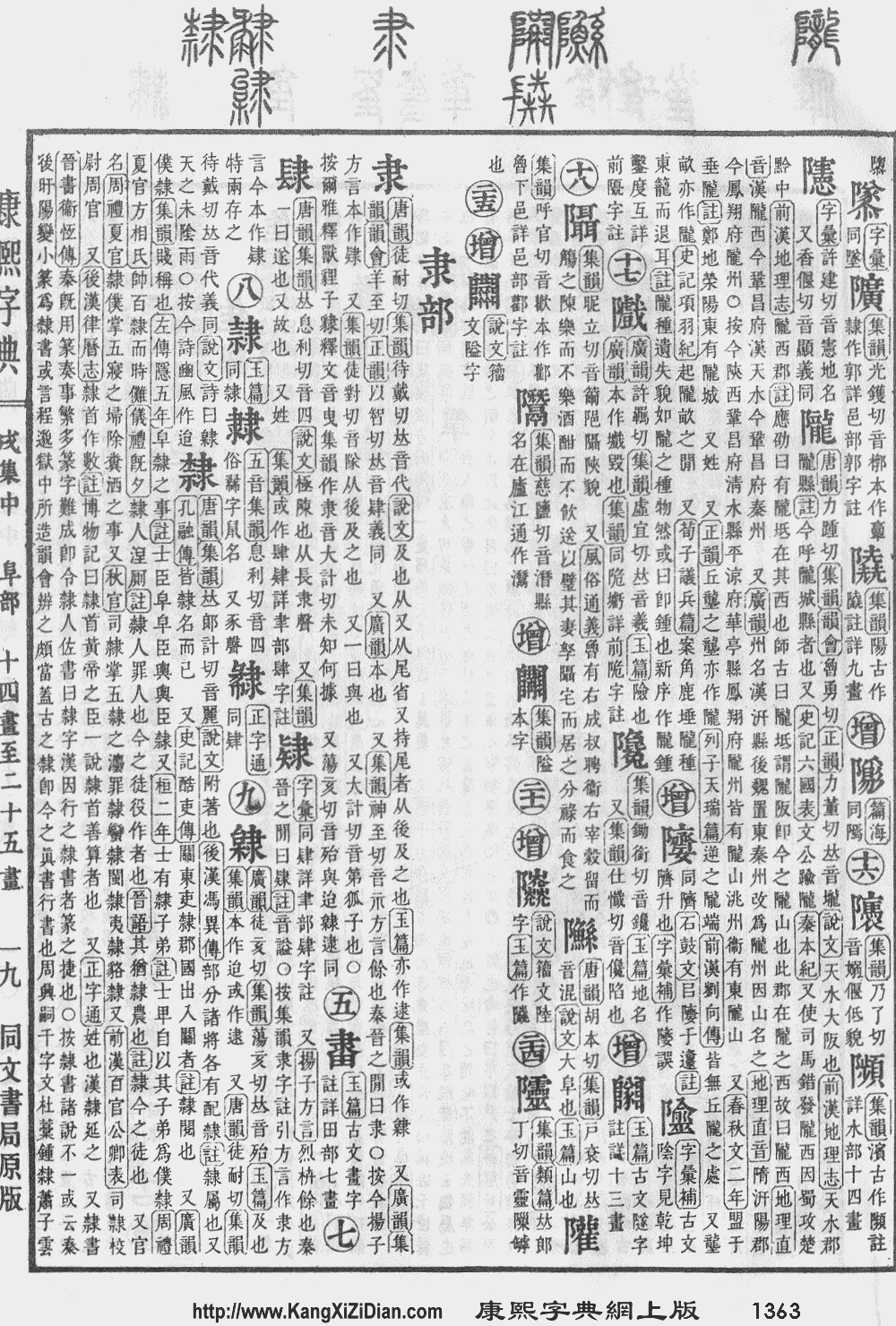
Usage notes
The Kangxi dictionary lists this character 隷 as equivalent to 隸. This character is used mainly in Japan.
Chinese
| For pronunciation and definitions of 隷 – see 隸 (“be subservient to; servant”). (This character, 隷, is a variant form of 隸.) |
Japanese
Kanji
隷
Readings
Compounds
- 隷従
- 隷書
- 隷属
Usage notes
This character 隷 is equivalent to 隸 (U+96B8). However, the latter is not used in Japan.
This article is issued from
Wiktionary.
The text is licensed under Creative Commons - Attribution - Sharealike.
Additional terms may apply for the media files.