隶
| ||||||||
Translingual
| Stroke order | |||
|---|---|---|---|
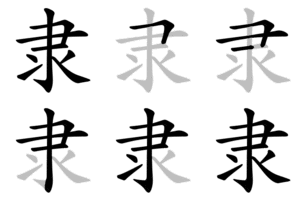 | |||
| Traditional | 隸 |
|---|---|
| Shinjitai | 隷 |
| Simplified | 隶 |
Glyph origin
| Historical forms of the character 隶 |
|---|
| Shuowen Jiezi (compiled in Han) |
| Small seal script |
 |
| Characters in the same phonetic series (隶) (Zhengzhang, 2003) | |
|---|---|
| Old Chinese | |
| 曃 | *l̥ʰɯːds |
| 埭 | *l'ɯːds |
| 逮 | *l'ɯːds, *l'ɯːds |
| 靆 | *l'ɯːds |
| 齂 | *hmrɯːds, *hmrɯds, *mrɯːd |
| 棣 | *l'ɯːds |
| 隸 | *rɯːds |
| 肆 | *hljɯds |
| 蕼 | *hljɯds |
| 肂 | *hljɯds |
| 殔 | *lɯds |
| 隶 | *lɯds |
Han character
隶 (radical 171, 隶+0, 8 strokes, cangjie input 中水 (LE), composition ⿱肀氺)
- Kangxi radical #171, ⾪.
Derived characters
- Index:Chinese radical/隶
See also
References
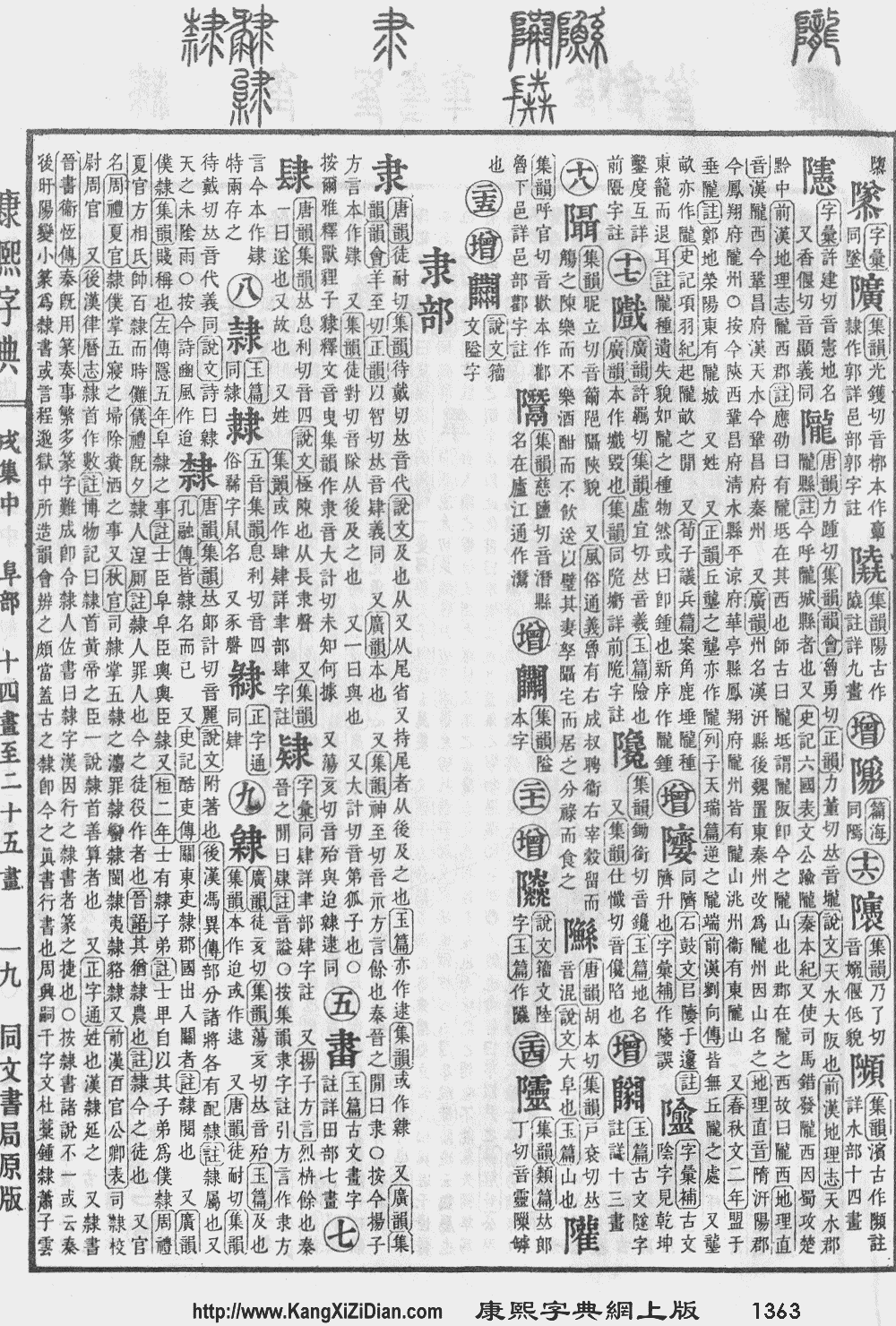
- KangXi: page 1363, character 22
- Dai Kanwa Jiten: character 41923
- Dae Jaweon: page 1867, character 10
- Hanyu Da Zidian: volume 7, page 4323, character 1
- Unihan data for U+96B6
Chinese
Etymology 1
Glyph origin
Simplified from 隸 (elimination of 柰).
| For pronunciation and definitions of 隶 – see 隸 (“be subservient to; servant”). (This character, 隶, is the simplified form of 隸.) |
Notes:
|
Etymology 2
| For pronunciation and definitions of 隶 – see 逮 (“to catch; to seize”). (This character, 隶, is a variant form of 逮.) |
Japanese
Kanji
隶
- This term needs a translation to English. Please help out and add a translation, then remove the text
{{rfdef}}.
Readings
Korean
Hanja
隶 • (i, si, je, dae, tae) (hangeul 이, 시, 제, 대, 태, revised i, si, je, dae, tae, McCune–Reischauer i, si, che, tae, t'ae, Yale i, si, cey, tay, thay)
- This term needs a translation to English. Please help out and add a translation, then remove the text
{{rfdef}}.
Vietnamese
Han character
- This term needs a translation to English. Please help out and add a translation, then remove the text
{{rfdef}}.
References
This article is issued from
Wiktionary.
The text is licensed under Creative Commons - Attribution - Sharealike.
Additional terms may apply for the media files.