遲
| ||||||||
Translingual
| Traditional | 遲 |
|---|---|
| Shinjitai | 遅 |
| Simplified | 迟 |
Han character
遲 (radical 162, 辵+12, 16 strokes, cangjie input 卜尸卜手 (YSYQ), four-corner 37304, composition ⿺辶犀)
Descendants
References
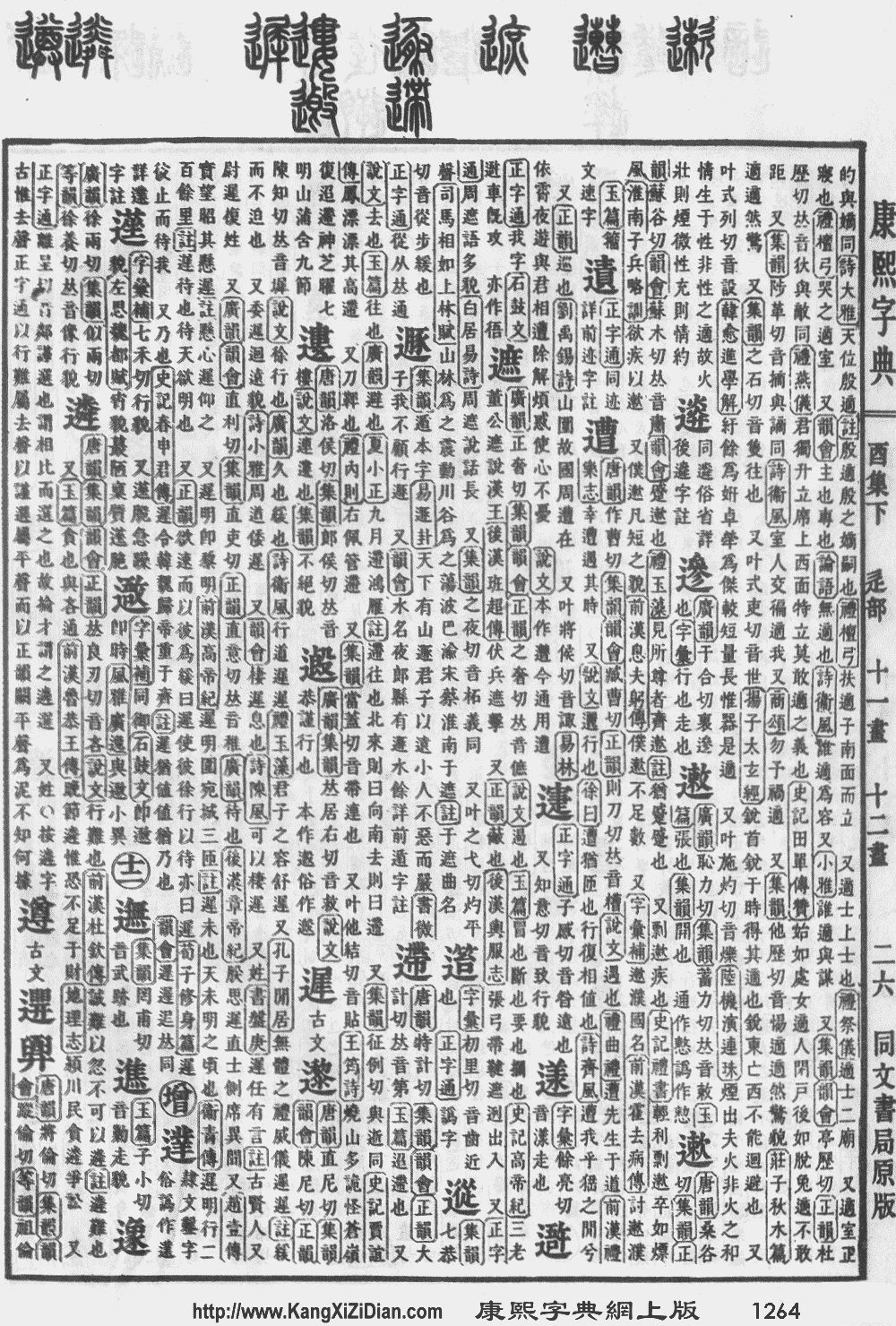
- KangXi: page 1264, character 17
- Dai Kanwa Jiten: character 39113
- Dae Jaweon: page 1760, character 19
- Hanyu Da Zidian: volume 6, page 3885, character 5
- Unihan data for U+9072
Chinese
| trad. | 遲 | |
|---|---|---|
| simp. | 迟 | |
| alt. forms | 遟 𨒈 迡 遅 | |
Glyph origin
| Characters in the same phonetic series (犀) (Zhengzhang, 2003) | |
|---|---|
| Old Chinese | |
| 摨 | *rniːd |
| 犀 | *sliːl |
| 遲 | *l'il |
| 墀 | *l'il |
Phono-semantic compound (形聲, OC *l'il) : semantic 辶 (“motion”) + phonetic 犀 (OC *sliːl) – to move slowly, to be late.
Pronunciation
Definitions
遲
Compounds
Japanese
| 遅 | |
| 遲 |
Kanji
遲
(uncommon “Hyōgai” kanji, kyūjitai kanji, shinjitai form 遅)
Readings
- Goon: じ (ji)←ぢ (di, historical)
- Kan’on: ち (chi)
- Kun: おそい (osoi, 遲い); おくらす (okurasu, 遲らす); おくれる (okureru, 遲れる)
Korean
Hanja
遲 • (ji, chi) (hangeul 지, 치, revised ji, chi, McCune–Reischauer chi, ch'i, Yale ci, chi)
- This term needs a translation to English. Please help out and add a translation, then remove the text
{{rfdef}}.
Vietnamese
Character
Readings
References
This article is issued from
Wiktionary.
The text is licensed under Creative Commons - Attribution - Sharealike.
Additional terms may apply for the media files.