轍
See also: 辙
| ||||||||
Translingual
Han character
轍 (radical 159 車+12, 19 strokes, cangjie input 十十卜月大 (JJYBK), four-corner 58040, composition ⿲車育攵)
Related characters
References
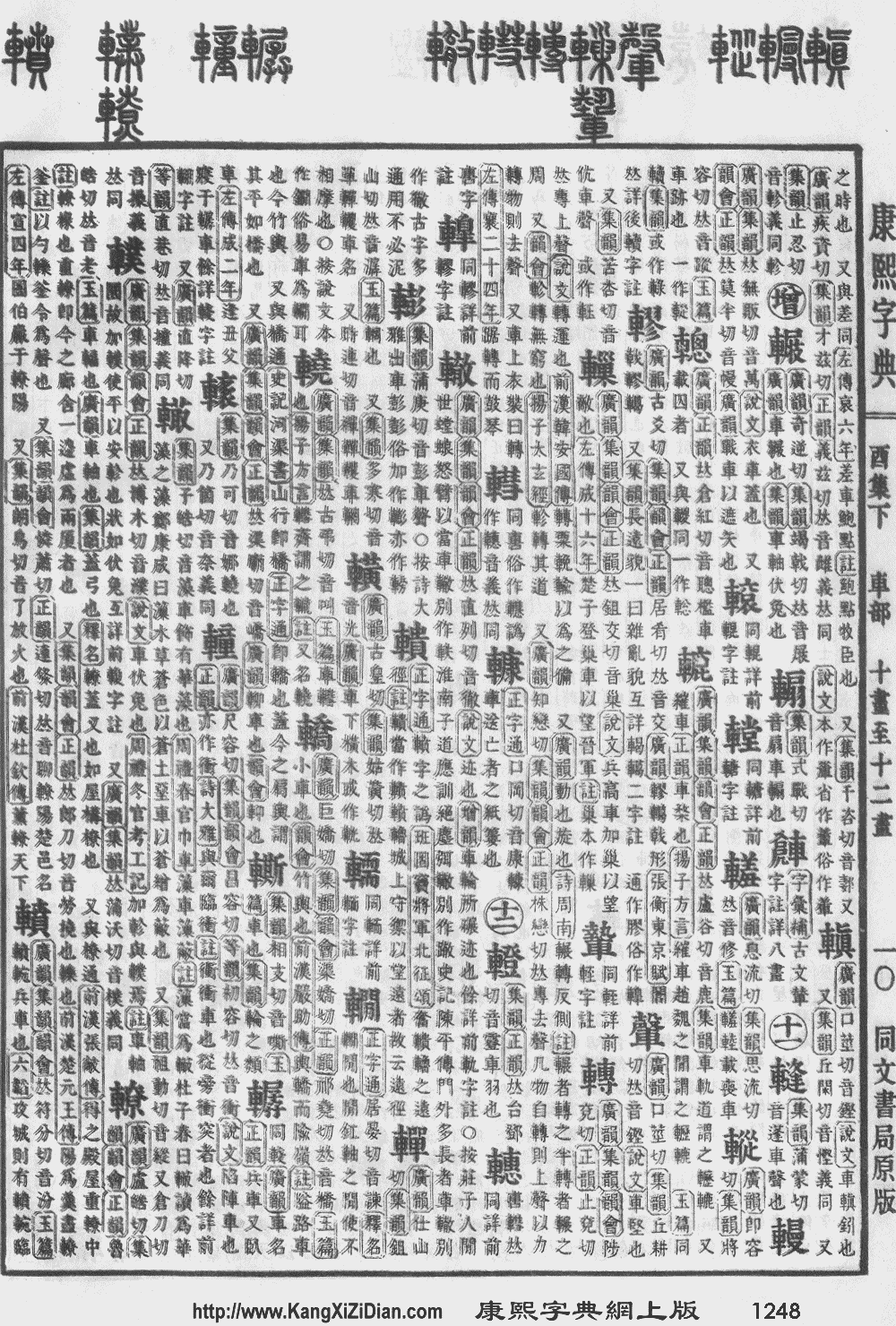
- KangXi: page 1248, character 23
- Dai Kanwa Jiten: character 38524
- Dae Jaweon: page 1727, character 10
- Hanyu Da Zidian: volume 5, page 3557, character 1
- Unihan data for U+8F4D
Chinese
| trad. | 轍 | |
|---|---|---|
| simp. | 辙 | |
Glyph origin
| Characters in the same phonetic series (徹) (Zhengzhang, 2003) | |
|---|---|
| Old Chinese | |
| 徹 | *tʰed |
| 撤 | *tʰed, *ded |
| 澈 | *ded |
| 轍 | *ded |
Phono-semantic compound (形聲, OC *ded) : semantic 車 (“wagon”) + phonetic 徹 (OC *tʰed) (彳 removed from phonetic) – wagon tracks.
Pronunciation
Definitions
轍
Compounds
Japanese
Kanji
轍
Readings
Etymology 1
| Kanji in this term |
|---|
| 轍 |
| わだち Hyōgaiji |
| kun’yomi |
Compound of 輪 (wa, “wheel”) + 立ち (tachi, “standing”, the 連用形 (ren'yōkei, “continuative or stem form”) of verb 立つ tatsu, “to stand”, here in reference to the shape of the rut left standing after the passage of the wheel).[1][2] The tachi changes to dachi as an instance of rendaku (連濁).
Pronunciation
Noun
Etymology 2
| Kanji in this term |
|---|
| 轍 |
| てつ Hyōgaiji |
| on’yomi |
From Middle Chinese 轍 (MC ɖˠiᴇt̚, “wagon rut, wheel track”). The kan'on reading, so likely a later borrowing. Compare modern Min Nan reading tia̍t.
Pronunciation
Noun
References
Korean
Hanja
轍 • (cheol) (hangeul 철, revised cheol, McCune–Reischauer ch'ŏl, Yale chel)
- This term needs a translation to English. Please help out and add a translation, then remove the text
{{rfdef}}.
Vietnamese
Han character
轍 (triệt)
- This term needs a translation to English. Please help out and add a translation, then remove the text
{{rfdef}}.
This article is issued from
Wiktionary.
The text is licensed under Creative Commons - Attribution - Sharealike.
Additional terms may apply for the media files.