袴
| ||||||||
Translingual
| Traditional | 褲 |
|---|---|
| Shinjitai (extended) |
袴 |
| Simplified | 裤 |
Han character
袴 (radical 145, 衣+6, 12 strokes, cangjie input 中大一尸 (LKMS), composition ⿰衤夸)
References
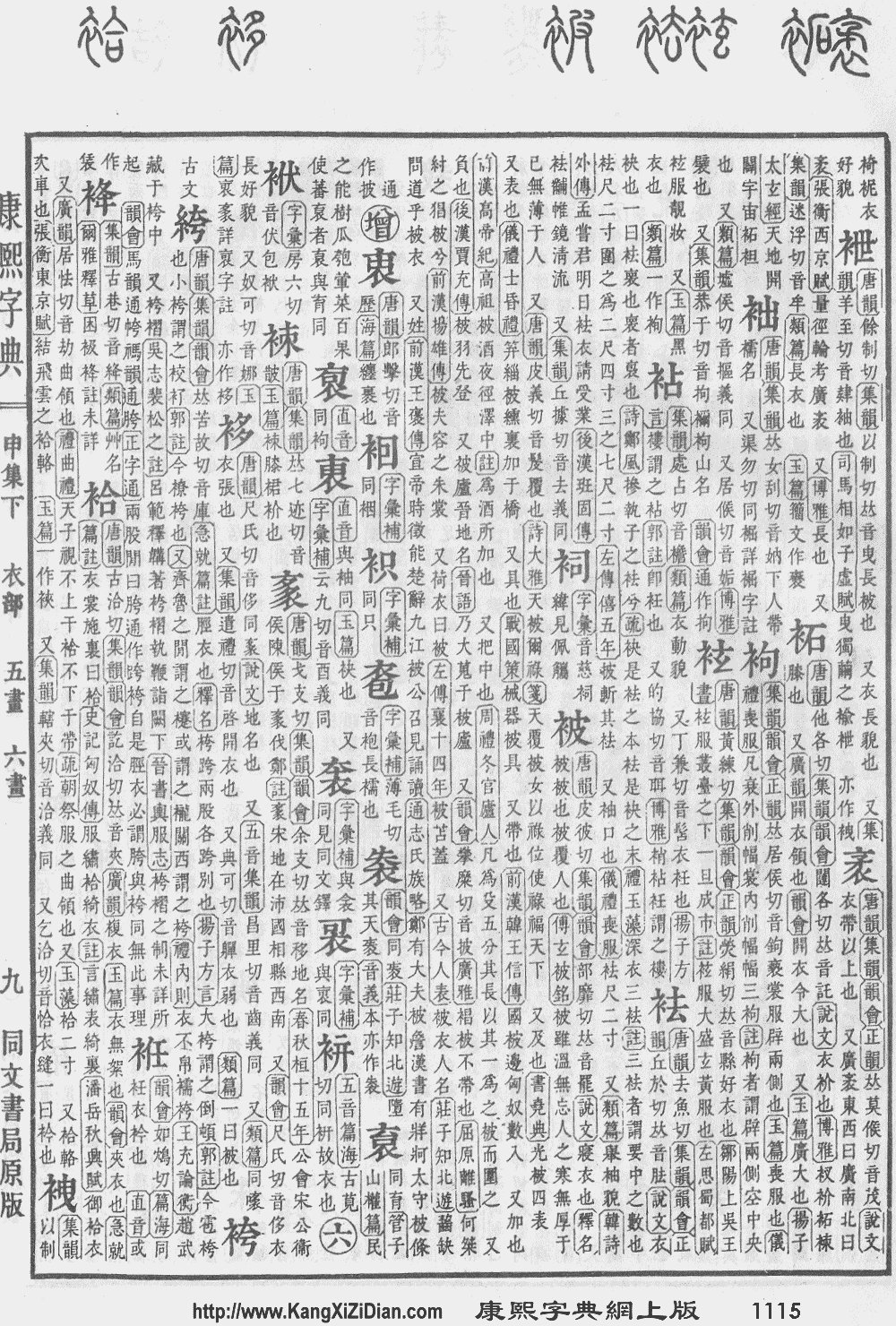
- KangXi: page 1115, character 26
- Dai Kanwa Jiten: character 34236
- Dae Jaweon: page 1581, character 5
- Hanyu Da Zidian: volume 5, page 3088, character 7
- Unihan data for U+88B4
Chinese
Glyph origin
| Characters in the same phonetic series (于) (Zhengzhang, 2003) | |
|---|---|
| Old Chinese | |
| 侉 | *qaːls |
| 夸 | *kʰʷraː |
| 姱 | *kʰʷraː |
| 胯 | *kʰʷraː, *kʰʷraːs, *kʰʷaːs |
| 跨 | *kʰʷraː, *kʰʷraːʔ, *kʰʷraːs, *kʰʷaːs |
| 誇 | *kʰʷraː |
| 垮 | *kʰʷraːʔ |
| 銙 | *kʰʷraːʔ |
| 骻 | *kʰʷraːʔ |
| 咵 | *kʰʷraːʔ |
| 釫 | *ɢʷraː, *qʷaː |
| 摦 | *ɡʷraːs |
| 鮬 | *pɢʷaː, *kʰʷaː |
| 嶀 | *qʰʷl'aː |
| 扝 | *kʰʷaː, *qʷaː |
| 刳 | *kʰʷaː |
| 郀 | *kʰʷaː |
| 挎 | *kʰʷaː |
| 袴 | *kʰʷaːs |
| 絝 | *kʰʷaːs |
| 褲 | *kʰʷaːs |
| 恗 | *qʰaː |
| 洿 | *ɡʷaːʔ, *qʷaː |
| 瓠 | *ɡʷlaː, *ɡʷlaːs |
| 鄠 | *ɢʷlaːʔ |
| 污 | *qʷaː, *qʷaːs |
| 杇 | *qʷaː |
| 圬 | *qʷaː |
| 鴮 | *qʷaː |
| 盓 | *qʷaː |
| 汙 | *qʷaːs, *ɢʷa |
| 樗 | *qʰʷl'a |
| 摴 | *qʰʷl'a |
| 荂 | *pqʰʷa, *qʰʷa |
| 雩 | *qʰʷla, *ɢʷla |
| 吁 | *qʰʷa, *ɢʷas |
| 盱 | *qʰʷa |
| 訏 | *qʰʷa |
| 扜 | *qʰʷa, *qʷa |
| 旴 | *qʰʷa |
| 冔 | *qʰʷaʔ |
| 紆 | *qʷa |
| 陓 | *qʷa |
| 迂 | *qʷa, *qʷaʔ, *ɢʷa |
| 虶 | *qʷa |
| 于 | *ɢʷa |
| 盂 | *ɢʷa |
| 竽 | *ɢʷa |
| 邘 | *ɢʷa |
| 玗 | *ɢʷa |
| 芋 | *ɢʷa, *ɢʷas |
| 杅 | *ɢʷa |
| 釪 | *ɢʷa |
| 骬 | *ɢʷa |
| 謣 | *ɢʷla |
| 宇 | *ɢʷaʔ |
Phono-semantic compound (形聲, OC *kʰʷaːs) : semantic 衤 (“cloth”) + phonetic 夸 (OC *kʰʷraː) – a type of clothing.
Etymology 1
| For pronunciation and definitions of 袴 – see 褲 (“pants; trousers”). (This character, 袴, is a variant form of 褲.) |
Etymology 2
| For pronunciation and definitions of 袴 – see 胯 (“hip; groin”). (This character, 袴, is an ancient variant form of 胯.) |
Japanese
Kanji
(“Jinmeiyō” kanji used for names, shinjitai kanji, kyūjitai form 褲)
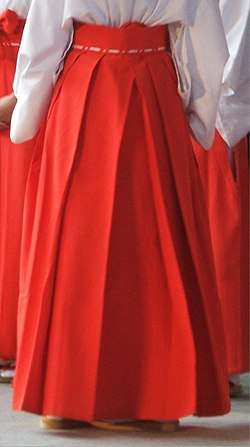
- traditional Japanese loose trousers
Readings
Compounds
- 袴下 (koshita)
- 着袴 (chakko)
Etymology 1
| Kanji in this term |
|---|
| 袴 |
| はかま Jinmeiyō |
| kun’yomi |
From Old Japanese. Attested in the Man'yōshū, completed some time after 759 CE.
Appears to be a compound deriving ultimately from 穿か (haka, the 未然形 (mizenkei, “incomplete form”) or a sound shift from some other conjugation of verb 穿く (haku, “to pull onto the lower body (such as trousers)”)) + 裳 (ma, “robes”, sound shift from expected reading mo).[1]
The loincloth sense is attested earlier in the Nihon Shoki, finished in 720 CE.[2] Other sources[1] also cite the Nihon Shoki for the trousers sense, possibly suggesting confusion regarding the meaning of the term as used in that text.
Pronunciation
Noun
袴 (hiragana はかま, rōmaji hakama)
- a type of traditional Japanese trousers
- (botany) a leaf sheath
- a holder for a heated bottle of saké
- (rare, possibly obsolete) a kind of traditional Japanese loincloth
Synonyms
- (loincloth): 褌 (fundoshi)
Derived terms
- 袴着 (hakamagi)
- 袴地 (hakamaji)
- 袴能 (hakama-nō)
- 行灯袴 (andon-bakama)
- 女袴 (onna-bakama)
- 御袴料 (ohakama-ryō), 御袴料 (onhakama-ryō)
- 紺屋の白袴 (kōya no shirobakama)
- 猿袴 (saru-bakama)
- 猩々袴 (shōjō-bakama)
- 長袴 (nagabakama)
- 羽織袴 (haori-hakama)
- 張袴 (haribakama)
- 緋袴 (hibakama), 緋の袴 (hi no hakama)
- 藤袴 (fujibakama)
- 山袴 (yamabakama)
- 雪袴 (yuki-bakama)
Etymology 2
| Kanji in this term |
|---|
| 袴 |
| こ Jinmeiyō |
| on’yomi |
From Middle Chinese 袴 (MC kʰuoH).
Pronunciation
Noun
- (rare) hakama: a type of traditional Japanese trousers
- (rare) momohiki: traditional Japanese closefitting workman's trousers
- (historical, military): prior to World War Two, the general term for trousers in the Japanese army
Synonyms
- (momohiki): 股引き
- (trousers in general): ズボン
References
Korean
Hanja
袴 • (go, gwa)