蝕
| ||||||||
Translingual
Han character
蝕 (radical 142 虫+9, 15 strokes, cangjie input 人戈中一戈 (OILMI), four-corner 85736, composition ⿰飠虫)
References
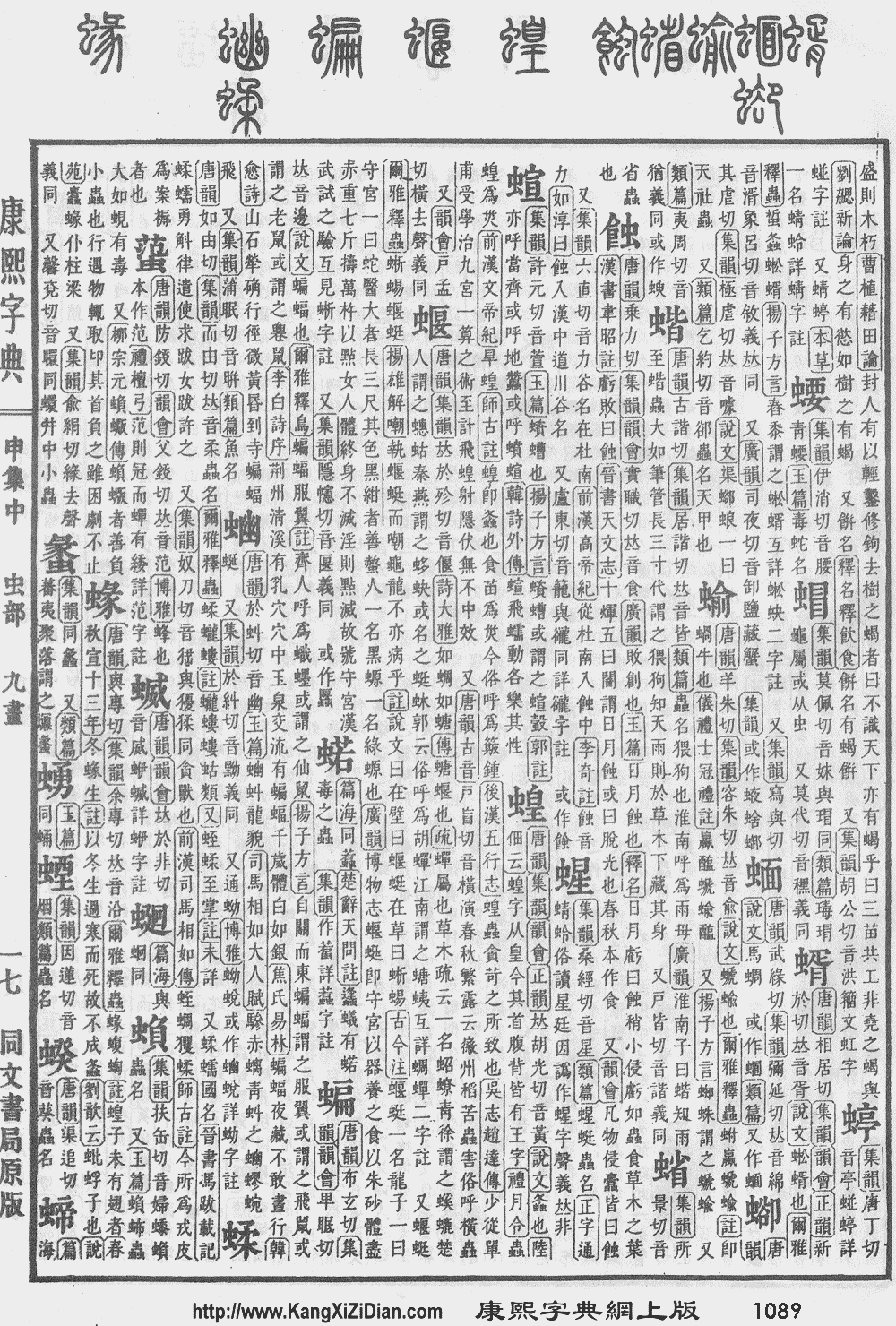
- KangXi: page 1089, character 10
- Dai Kanwa Jiten: character 33264
- Dae Jaweon: page 1555, character 20
- Hanyu Da Zidian: volume 4, page 2864, character 8
- Unihan data for U+8755
Chinese
| trad. | 蝕 | |
|---|---|---|
| simp. | 蚀 | |
Glyph origin
| Characters in the same phonetic series (食) (Zhengzhang, 2003) | |
|---|---|
| Old Chinese | |
| 飤 | *ljɯɡs |
| 食 | *lɯɡs, *ɦljɯɡ |
| 蝕 | *ɦljɯɡ |
| 飾 | *hljɯɡ |
| 飭 | *l̥ʰɯɡ |
Pronunciation
Definitions
蝕
Compounds
References
Japanese

蝕
Noun
Kanji
蝕
Readings
Compounds
- 皆既蝕 (kaikishoku): total eclipse
- 月蝕 (gesshoku): lunar eclipse
- 蝕甚 (shokujin): maximum eclipse
- 侵蝕 (shinshoku): erosion, corrosion
- 浸蝕 (shinshoku): erosion, corrosion (by water)
- 日蝕 (nisshoku): solar eclipse
- 腐蝕 (fushoku): corrosion
Korean
Hanja
蝕 • (sik) (hangeul 식, revised sik, McCune–Reischauer sik, Yale sik)
- This term needs a translation to English. Please help out and add a translation, then remove the text
{{rfdef}}.
Vietnamese
Han character
蝕 (thực)
- This term needs a translation to English. Please help out and add a translation, then remove the text
{{rfdef}}.
This article is issued from
Wiktionary.
The text is licensed under Creative Commons - Attribution - Sharealike.
Additional terms may apply for the media files.