蚤
| ||||||||
Translingual
Han character
蚤 (radical 142 虫+4, 10 strokes, cangjie input 水戈中一戈 (EILMI), four-corner 17136, composition ⿱㕚虫)
Derived characters
References
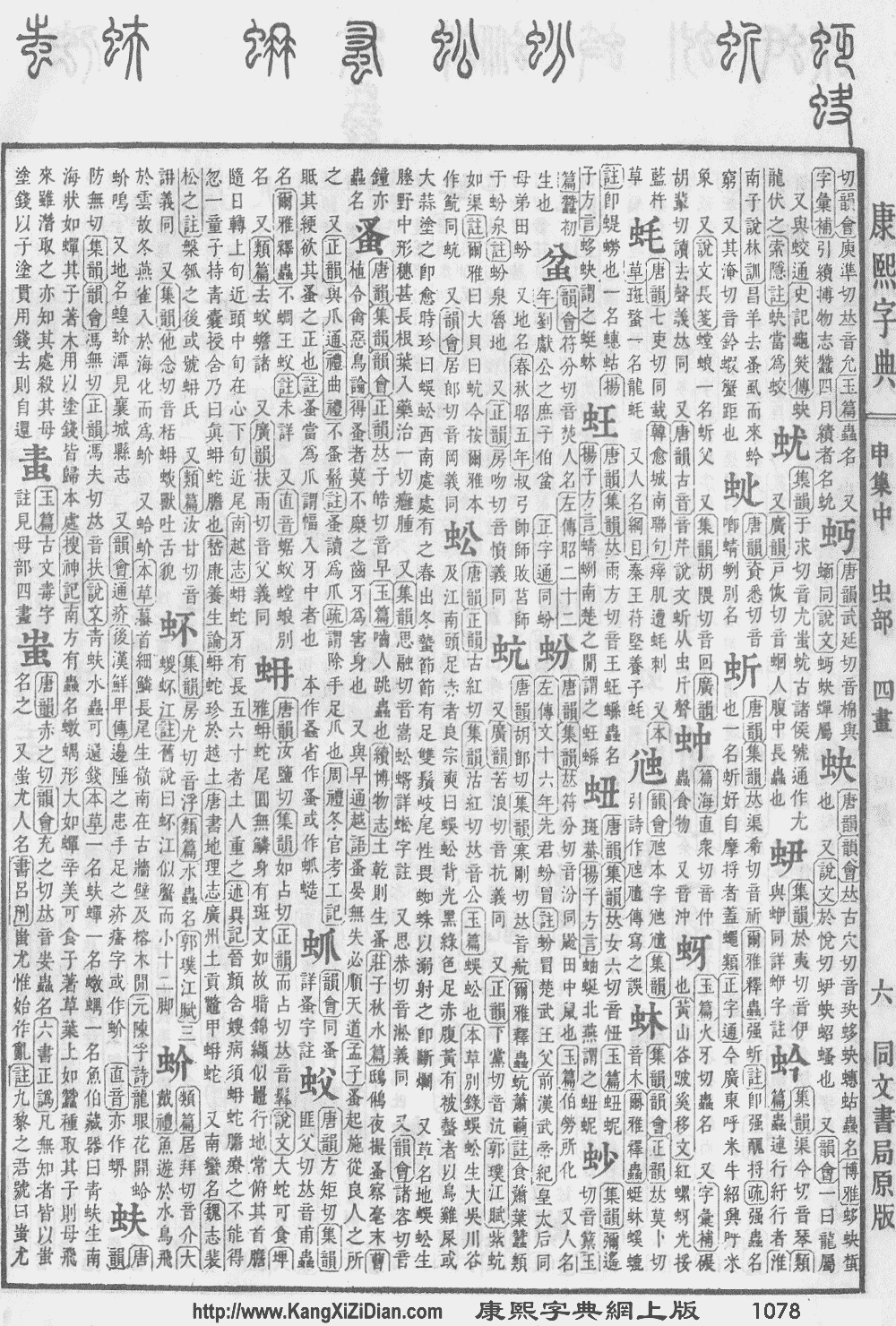
- KangXi: page 1078, character 20
- Dai Kanwa Jiten: character 32893
- Dae Jaweon: page 1547, character 19
- Hanyu Da Zidian: volume 4, page 2836, character 3
- Unihan data for U+86A4
Chinese
| simp. and trad. |
蚤 | |
|---|---|---|
Glyph origin
| Historical forms of the character 蚤 | ||
|---|---|---|
| Warring States | Shuowen Jiezi (compiled in Han) | Liushutong (compiled in Ming) |
| Chu Slip and silk script | Small seal script | Transcribed ancient scripts |
 |
 |
 |
| Characters in the same phonetic series (蚤) (Zhengzhang, 2003) | |
|---|---|
| Old Chinese | |
| 蚤 | *ʔsuːʔ |
| 慅 | *sʰuːʔ, *suː |
| 騷 | *suː |
| 搔 | *suː |
| 鰠 | *suː |
| 溞 | *suː |
| 颾 | *suː |
| 瘙 | *suːs |
| 瑵 | *ʔsruːʔ |
| 糔 | *suʔ |
| 鼜 | *sʰɯːwɢ |
Ideogrammic compound (會意) : 虫 (“insect”) + 㕚 (“claw”) – a scratching insect/pest.
Pronunciation
Definitions
蚤
Synonyms
| Dialectal synonyms of 跳蚤 (“flea”) [map] | ||
|---|---|---|
| Variety | Location | Words |
| Classical Chinese | 蚤 | |
| Formal (Written Standard Chinese) | 跳蚤 | |
| Mandarin | Beijing | 虼子、跳蚤 |
| Taiwan | 跳蚤 | |
| Jinan | 虼蚤 | |
| Xi'an | 虼蚤 | |
| Wuhan | 虼蚤 | |
| Chengdu | 虼蚤 | |
| Yangzhou | 虼蚤 | |
| Hefei | 虼蚤 | |
| Cantonese | Guangzhou | 狗蝨 |
| Hong Kong | 狗蝨 | |
| Taishan | 狗蝨 | |
| Yangjiang | 狗蝨 | |
| Gan | Nanchang | 虼蚤 |
| Hakka | Meixian | 狗蝨 |
| Miaoli (N. Sixian) | 跳蚤 | |
| Liudui (S. Sixian) | 跳蚤 | |
| Hsinchu (Hailu) | 跳蚤 | |
| Dongshi (Dabu) | 跳蚤 | |
| Zhuolan (Raoping) | 跳蚤 | |
| Yunlin (Zhao'an) | 蝨嫲 | |
| Jin | Taiyuan | 圪蚤 |
| Min Bei | Jian'ou | 狗蚤 |
| Min Dong | Fuzhou | 虼蚤 |
| Min Nan | Xiamen | 虼蚤 |
| Quanzhou | 虼蚤 | |
| Zhangzhou | 虼蚤 | |
| Taipei | 虼蚤 | |
| Kaohsiung | 虼蚤 | |
| Chaozhou | 虼蚤 | |
| Wu | Suzhou | 跳蝨 |
| Wenzhou | 跳蚤、蚤 | |
| Xiang | Changsha | 虼蚤、狗蝨 |
| Shuangfeng | 狗子 | |
Compounds
Japanese
Kanji
蚤
Readings
Etymology
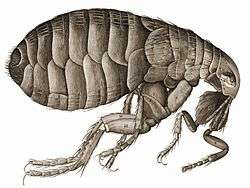
蚤 (nomi): an illustration of a flea.
| Kanji in this term |
|---|
| 蚤 |
| のみ Hyōgaiji |
| kun’yomi |
Possibly derived from 飲み (nomi), the nominalized 連用形 (ren'yōkei, “continuative or stem form”) of verb 飲む (nomu, “to drink”), from the way that fleas drink the host's blood.
Pronunciation
Noun
蚤 (hiragana のみ, katakana ノミ, rōmaji nomi)
- a flea (parasitic insect)
Usage notes
As with many terms that name organisms, this term is often spelled in katakana, especially in biological contexts, as ノミ.
Derived terms
Derived terms
- 蚤の市 (nomi no ichi): a flea market
Idioms
Idioms
- 蚤が茶臼 (nomi ga chausu): “[like] a flea [carrying] a tea mortar” → a metaphor for an unreasonable or infeasible hope
References
Korean
Hanja
蚤 • (jo) (hangeul 조, revised jo, McCune–Reischauer cho, Yale co)
- This term needs a translation to English. Please help out and add a translation, then remove the text
{{rfdef}}.
Okinawan
Etymology
Kanji
Noun
Vietnamese
Han character
蚤 (tao)
- This term needs a translation to English. Please help out and add a translation, then remove the text
{{rfdef}}.
This article is issued from
Wiktionary.
The text is licensed under Creative Commons - Attribution - Sharealike.
Additional terms may apply for the media files.