搔
See also: 掻
| ||||||||
Translingual
| Japanese | 掻 |
|---|---|
| Simplified | 搔 |
| Traditional | 搔 |
Han character
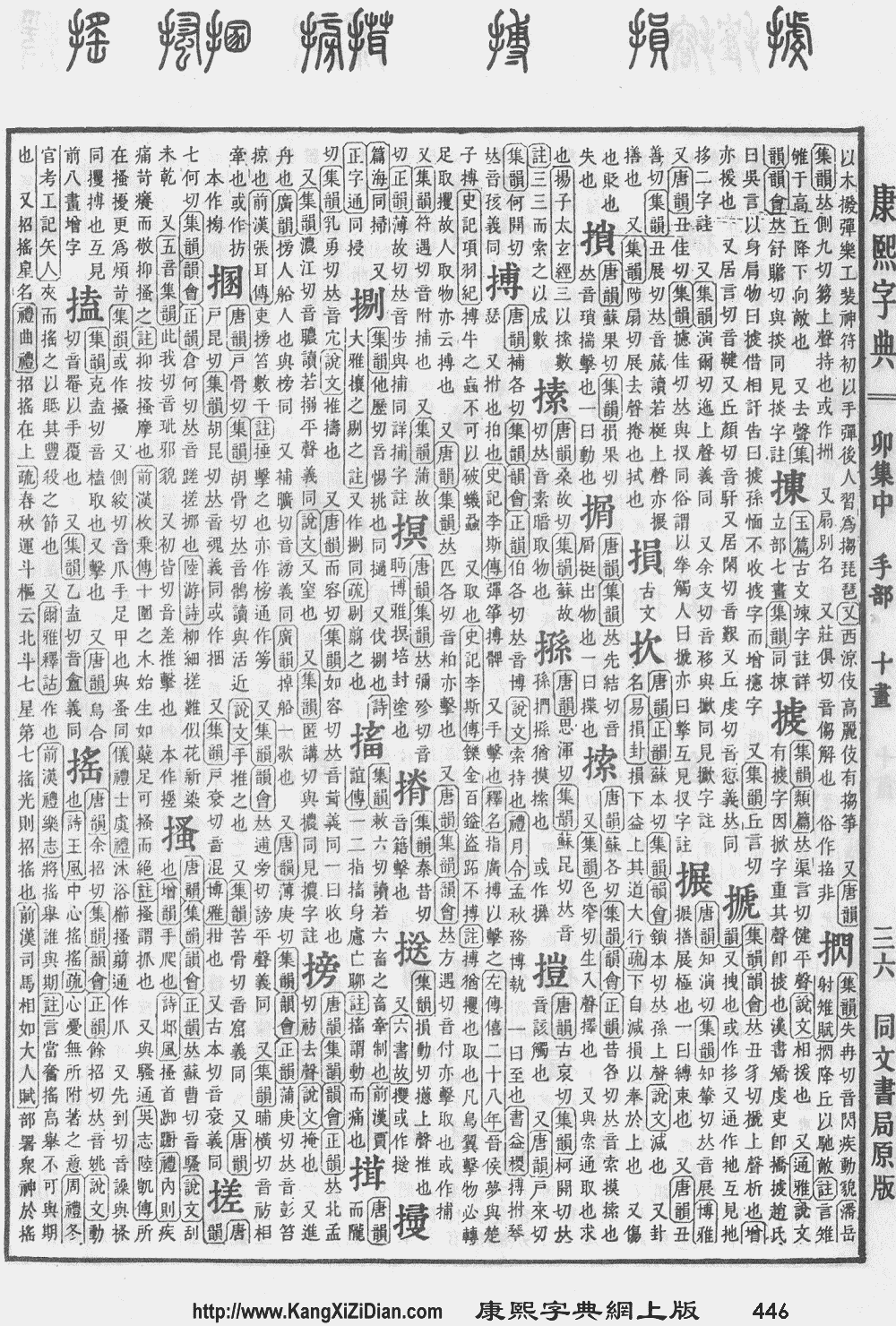
搔 (radical 64 手+10, 13 strokes, cangjie input 手水戈戈 (QEII), four-corner 57036, composition ⿰扌蚤)
- to scratch
Descendants
References
- KangXi: page 446, character 25
- Dai Kanwa Jiten: character 12477
- Dae Jaweon: page 797, character 9
- Hanyu Da Zidian: volume 3, page 1939, character 6
- Unihan data for U+6414
Chinese
| simp. and trad. |
搔 | |
|---|---|---|
Glyph origin
| Historical forms of the character 搔 |
|---|
| Shuowen Jiezi (compiled in Han) |
| Small seal script |
 |
| Characters in the same phonetic series (蚤) (Zhengzhang, 2003) | |
|---|---|
| Old Chinese | |
| 蚤 | *ʔsuːʔ |
| 慅 | *sʰuːʔ, *suː |
| 騷 | *suː |
| 搔 | *suː |
| 鰠 | *suː |
| 溞 | *suː |
| 颾 | *suː |
| 瘙 | *suːs |
| 瑵 | *ʔsruːʔ |
| 糔 | *suʔ |
| 鼜 | *sʰɯːwɢ |
Phono-semantic compound (形聲, OC *suː) : semantic 扌 (“hand”) + phonetic 蚤 (OC *ʔsuːʔ, “flea, louse”), with semantic use – to scratch (a flea 蚤) with the hand 扌.
Pronunciation
Definitions
搔
- to scratch
Synonyms
| Dialectal synonyms of 搔 (“to scratch (an itch)”) [map] | ||
|---|---|---|
| Variety | Location | Words |
| Formal (Written Standard Chinese) | 搔 | |
| Mandarin | Beijing | 搔、抓 |
| Cantonese | Guangzhou | 𢯎、搲 |
| Hong Kong | 𢯎、搲 | |
| Taishan | 搲 | |
| Min Nan | Shantou | 扒 |
| Wu | Wenzhou | 抓 |
Japanese
Kanji
搔
(uncommon “Hyōgai” kanji, kyūjitai kanji, shinjitai form 掻)
- This term needs a translation to English. Please help out and add a translation, then remove the text
{{rfdef}}.
Readings
Korean
Hanja
搔 • (so) (hangeul 소, revised so, McCune–Reischauer so, Yale so)
- This term needs a translation to English. Please help out and add a translation, then remove the text
{{rfdef}}.
Vietnamese
Han character
- This term needs a translation to English. Please help out and add a translation, then remove the text
{{rfdef}}.
This article is issued from
Wiktionary.
The text is licensed under Creative Commons - Attribution - Sharealike.
Additional terms may apply for the media files.