竈
| ||||||||
Translingual
Han character
竈 (radical 116 穴+16, 21 strokes, cangjie input 十金土口山 (JCGRU), composition ⿳穴土黽)
Derived characters
- 𢥼
Descendants
References
- KangXi: page 869, character 26
- Dai Kanwa Jiten: character 25703
- Dae Jaweon: page 1298, character 34
- Hanyu Da Zidian: volume 4, page 2746, character 11
- Unihan data for U+7AC8
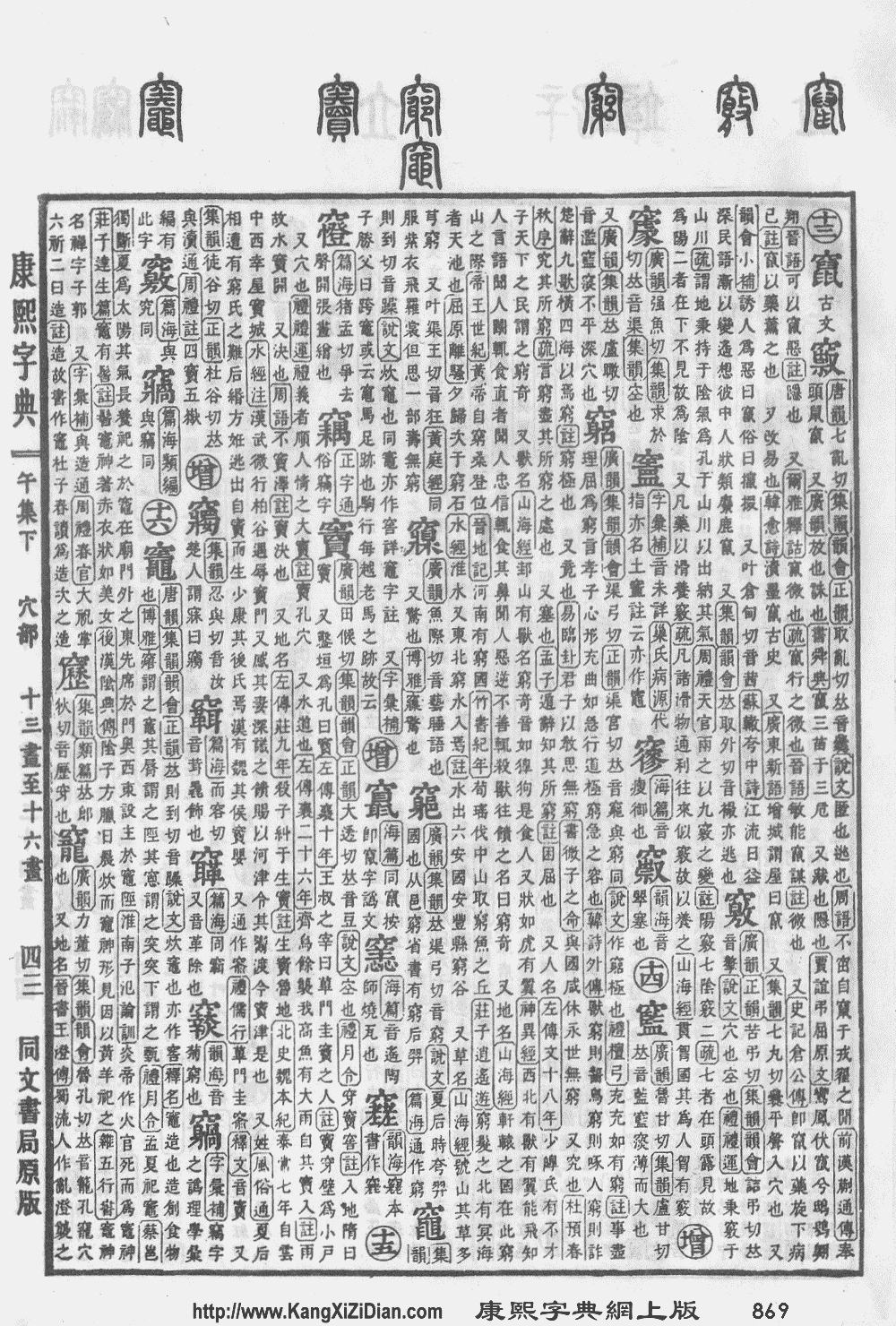
Chinese
Glyph origin
| Characters in the same phonetic series (圥) (Zhengzhang, 2003) | |
|---|---|
| Old Chinese | |
| 灶 | *ʔsluːɡs |
| 竈 | *ʔsluːɡs |
| 鼀 | *sʰluɡ |
Definitions
| For pronunciation and definitions of 竈 – see 灶 (“kitchen range; kitchen; etc.”). (This character, 竈, is a variant traditional form of 灶.) |
Usage notes
- This variant form is the name of the forty-fourth tetragram of the Taixuanjing, as listed in the ancient text.
- In the first batch of simplified Chinese characters (1935), it was proposed for this character to be simplified as 灶. The simplification of 竈 to 灶 was finally approved in 1965 in mainland China. Note that in traditional Chinese (Taiwan), this character is classified as a variant form of 灶.
Japanese
| 竃 | |
| 竈 |
Kanji
竈
(uncommon “Hyōgai” kanji, kyūjitai kanji, shinjitai form 竃)
Readings
Usage notes
竃 (U+7AC3) which is an extended shinjitai character that was added to JIS X 0208 in 1990, is the preferred form for this character.
Korean
Hanja
竈 • (jo) (hangeul 조, revised jo, McCune–Reischauer cho, Yale co)
- This term needs a translation to English. Please help out and add a translation, then remove the text
{{rfdef}}.
This article is issued from
Wiktionary.
The text is licensed under Creative Commons - Attribution - Sharealike.
Additional terms may apply for the media files.