畳
See also: 疊
| ||||||||
Translingual
| Traditional | 疊 |
|---|---|
| Shinjitai | 畳 |
| Simplified | 叠 |
Etymology
Japanese shinjitai Simplified from 疊 (畾 → 田). In current form 田 + 冝.
Han character
畳 (radical 102, 田+7, 12 strokes, cangjie input 田月月一 (WBBM), four-corner 60107, composition ⿱田冝)
References
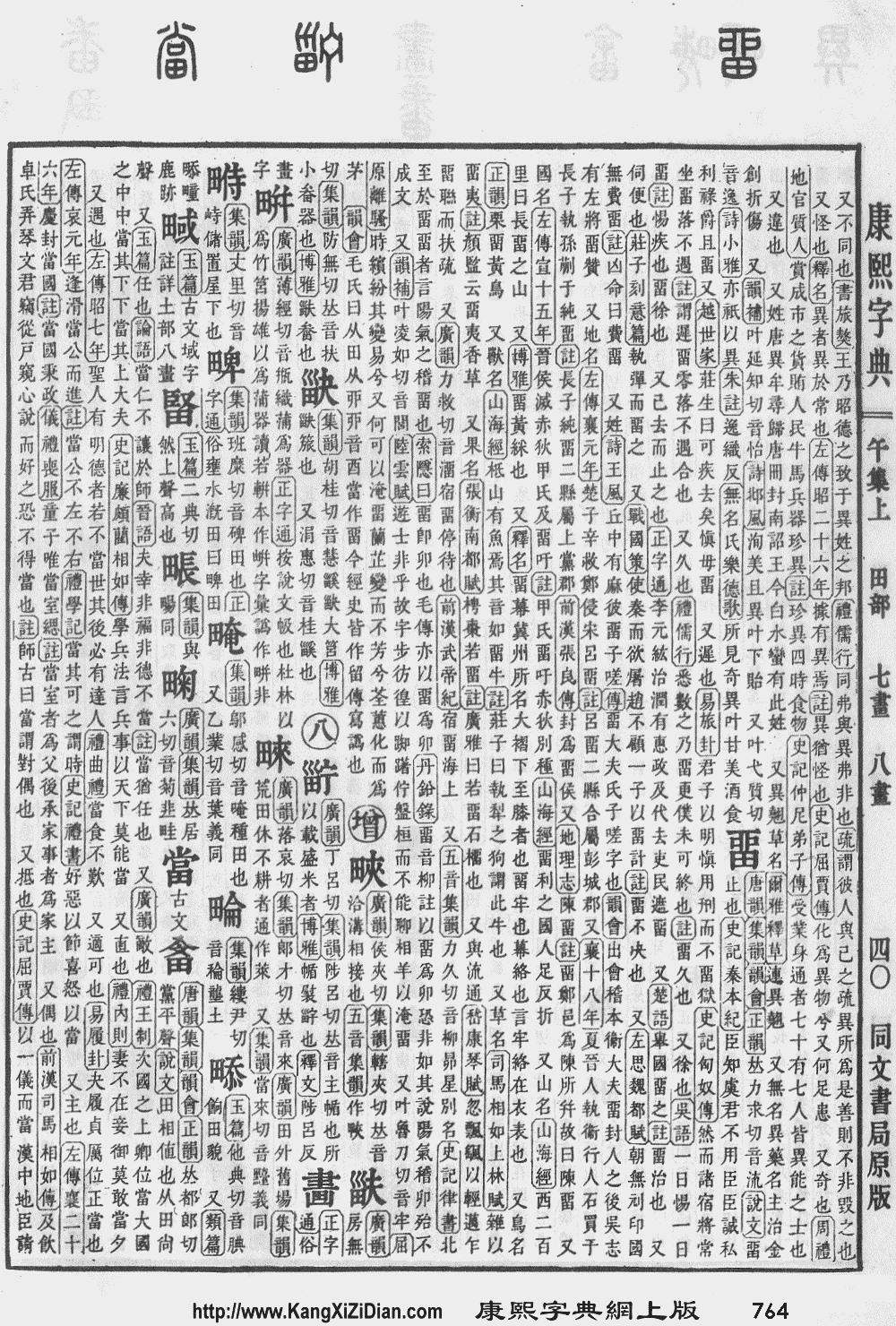
- KangXi: not present, would follow page 764, character 4
- Dai Kanwa Jiten: character 21875
- Hanyu Da Zidian: not present, would follow volume 4, page 2544, character 1
- Unihan data for U+7573
Chinese
| For pronunciation and definitions of 畳 – see 疊 (“to fold; to fold up; to fold over in layers; to pile up; to be piled up; etc.”). (This character, 畳, is a variant form of 疊.) |
Japanese
| 畳 | |
| 疊 |
Kanji
畳
(common “Jōyō” kanji, shinjitai kanji, kyūjitai form 疊)
Readings
Etymology 1
| Kanji in this term |
|---|
| 畳 |
| たた(み) Grade: S |
| kun’yomi |
From 畳む (tatamu, “to fold”, verb)
Pronunciation
Noun
畳 (shinjitai kanji, kyūjitai kanji 疊, hiragana たたみ, rōmaji tatami)
- tatami; a tatami mat
- repeat, duplicate
- repetitious
Etymology 2
| Kanji in this term |
|---|
| 畳 |
| じょう Grade: S |
| on’yomi |
From Middle Chinese 疊 (dep, “to fold”)
Counter
畳 (shinjitai kanji, kyūjitai kanji 疊, hiragana じょう, rōmaji -jō, historical hiragana でふ)
Etymology 3
| Kanji in this term |
|---|
| 畳 |
| たとう Grade: S |
| Irregular |
Pronunciation
Noun
畳 (shinjitai kanji, kyūjitai kanji 疊, hiragana たとう, rōmaji tatō, historical hiragana たたう)
- Clipping of 畳紙 (tatōgami).
See also
This article is issued from
Wiktionary.
The text is licensed under Creative Commons - Attribution - Sharealike.
Additional terms may apply for the media files.