敬
See also: 茍
| ||||||||
| ||||||||
Translingual
Han character
敬 (radical 66, 攴+8, 12 strokes, cangjie input 廿口人大 (TROK), four-corner 48640, composition ⿰苟攵(GJKV) or ⿰茍攵(HT))
Derived characters
References
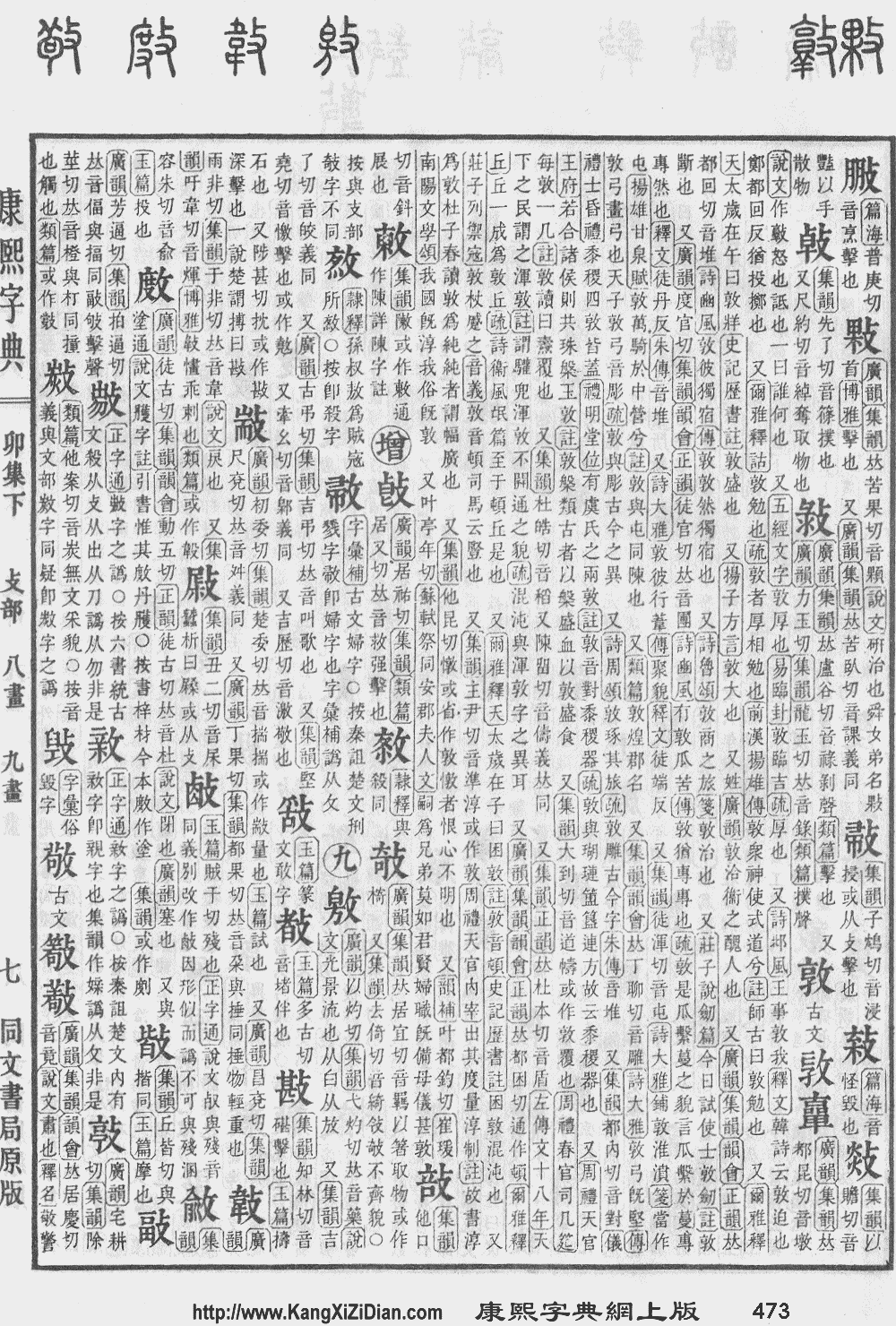
- KangXi: page 473, character 35
- Dai Kanwa Jiten: character 13285
- Dae Jaweon: page 826, character 17
- Hanyu Da Zidian: volume 2, page 1466, character 2
- Unihan data for U+656C
Chinese
| simp. and trad. |
敬 | |
|---|---|---|
Glyph origin
| Historical forms of the character 敬 | |||
|---|---|---|---|
| Western Zhou | Warring States | Shuowen Jiezi (compiled in Han) | Liushutong (compiled in Ming) |
| Bronze inscriptions | Chu Slip and silk script | Small seal script | Transcribed ancient scripts |
 |
 |
 |
 |
| Characters in the same phonetic series (敬) (Zhengzhang, 2003) | |
|---|---|
| Old Chinese | |
| 蟼 | *kraː, *kreŋ, *kreŋʔ |
| 憼 | *kaŋʔ, *kreŋʔ |
| 驚 | *kreŋ |
| 警 | *kreŋʔ |
| 儆 | *kreŋʔ, *ɡreŋs |
| 璥 | *keŋʔ |
| 檠 | *kreŋʔ, *ɡreŋ, *ɡreŋs |
| 敬 | *kreŋs |
| 擎 | *ɡreŋ |
| 曔 | *ɡreŋs |
Pronunciation
Definitions
敬
Synonyms
- 尊 (zūn)
Antonyms
- 鄙 (bǐ, “to scorn”)
Compounds
Derived terms from 敬
|
|
|
Japanese
Kanji
敬
Readings
Compounds
Compounds
- 敬畏 (keii): reverence, holding in awe, fear
- 敬意 (keii): respect
- 敬愛 (keiai): respect and affection
- 敬遠 (keien): keeping at a distance
- 敬具 (keigu): a respectful closing statement
- 敬虔 (keiken): pious
- 敬語 (keigo): honorifics
- 敬神 (keishin): piety
- 敬称 (keishō): title of honor
- 敬体 (keitai): distal style
- 敬白 (keihaku): Yours Sincerely
- 敬服 (keifuku): admiration
- 敬慕 (keibo): love and respect
- 敬礼 (keirei): salute, bow
- 敬老 (keirō): respect for elders
- 敬譲語 (keijōgo): polite speech
- 敬天愛人 (keiten aijin): "Revere heaven, love people."
- 失敬 (shikkei): rude
- 尊敬 (sonkei): respect
Archaic
- 敬啓 (keikei): salutation at end of formal letter
- 敬呈 (keitei): salutation in a formal letter
Etymology 1
| Kanji in this term |
|---|
| 敬 |
| けい Grade: 6 |
| on’yomi |
From Middle Chinese 敬 (kjængH, “respectful”).
Pronunciation
Affix
Usage notes
Used in kanji compounds. Not used in isolation except as a suru verb.[1][2] See 敬する.
Derived terms
Etymology 2
| Kanji in this term |
|---|
| 敬 |
| うやまい Grade: 6 |
| kun’yomi |
The 連用形 (ren'yōkei, “continuative or stem form”) of verb 敬う (uyamau, “to respect, to esteem”).[1][2]
Pronunciation
Alternative forms
- 敬い
Noun
敬 (hiragana うやまい, rōmaji uyamai)
Usage notes
More commonly spelled as 敬い with the okurigana.
Etymology 3
Used as ateji in various names.
Proper noun
敬 (hiragana たかし, rōmaji Takashi)
- A male given name
References
Korean
Hanja
敬 • (gyeong) (hangeul 경, revised gyeong, McCune–Reischauer kyŏng, Yale kyeng)
Vietnamese
Han character
敬 (kính)
- This term needs a translation to English. Please help out and add a translation, then remove the text
{{rfdef}}.
This article is issued from
Wiktionary.
The text is licensed under Creative Commons - Attribution - Sharealike.
Additional terms may apply for the media files.