尉
| ||||||||
Translingual
Han character
尉 (radical 41, 寸+8, 11 strokes, cangjie input 尸火木戈 (SFDI), four-corner 74200, composition ⿰⿸尸示寸)
References
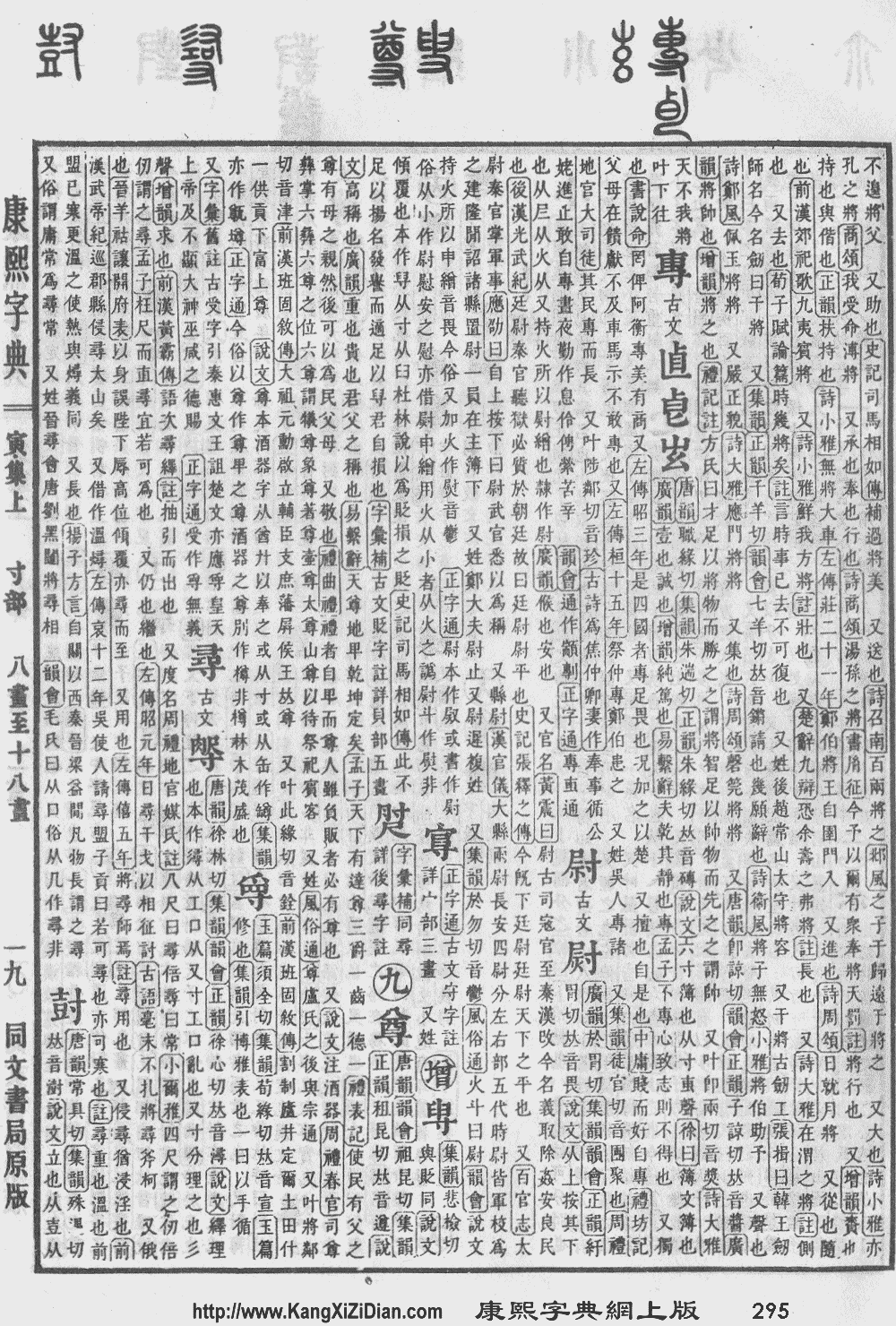
- KangXi: page 295, character 5
- Dai Kanwa Jiten: character 7440
- Dae Jaweon: page 584, character 2
- Hanyu Da Zidian: volume 1, page 508, character 5
- Unihan data for U+5C09
Chinese
| simp. and trad. |
尉 | |
|---|---|---|
Glyph origin
| Characters in the same phonetic series (尉) (Zhengzhang, 2003) | |
|---|---|
| Old Chinese | |
| 尉 | *quds, *qud |
| 熨 | *quds, *quns, *qud |
| 慰 | *quds |
| 罻 | *quds |
| 犚 | *quds |
| 蔚 | *quds, *qud |
| 螱 | *quds |
| 褽 | *quds |
| 鳚 | |
Etymology 1
Pronunciation 1
Definitions
尉
Compounds
Pronunciation 2
Definitions
尉
References
Etymology 2
| For pronunciation and definitions of 尉 – see 熨 (“to iron; to press; to be closely appressed to; to abut; etc.”). (This character, 尉, is a variant form of 熨.) |
Etymology 3
| For pronunciation and definitions of 尉 – see 慰 (“to comfort; to console; to calm; to be relieved; glad”). (This character, 尉, is the second-round simplified and variant form of 慰.) |
Notes:
|
Japanese
Kanji
尉
- military officer
- jailer
- old man
- rank
Readings
Compounds
Korean
Hanja
尉 • (wi; ul) (hangeul 위; 울, revised wi, ul, McCune–Reischauer wi, ul)
- This term needs a translation to English. Please help out and add a translation, then remove the text
{{rfdef}}.
Vietnamese
Han character
- This term needs a translation to English. Please help out and add a translation, then remove the text
{{rfdef}}.
This article is issued from
Wiktionary.
The text is licensed under Creative Commons - Attribution - Sharealike.
Additional terms may apply for the media files.