姬
See also: 姫
| ||||||||
Translingual
| 姬 | |
| 姬 | |
| 姫 | |
| 姬 |
Alternative forms
The character commonly used in Japanese is 姫 (U+59EB). Note that the Korean form is written with 𦣝 as the right component, which is the historical form found in the Kangxi Dictionary.
Han character
姬 (radical 38 女+7, 10 strokes, cangjie input 女尸中中 (VSLL), four-corner 41417, composition ⿰女𦣞(GHT) or ⿰女𦣝(K))
Derived characters
- 𩠯
References
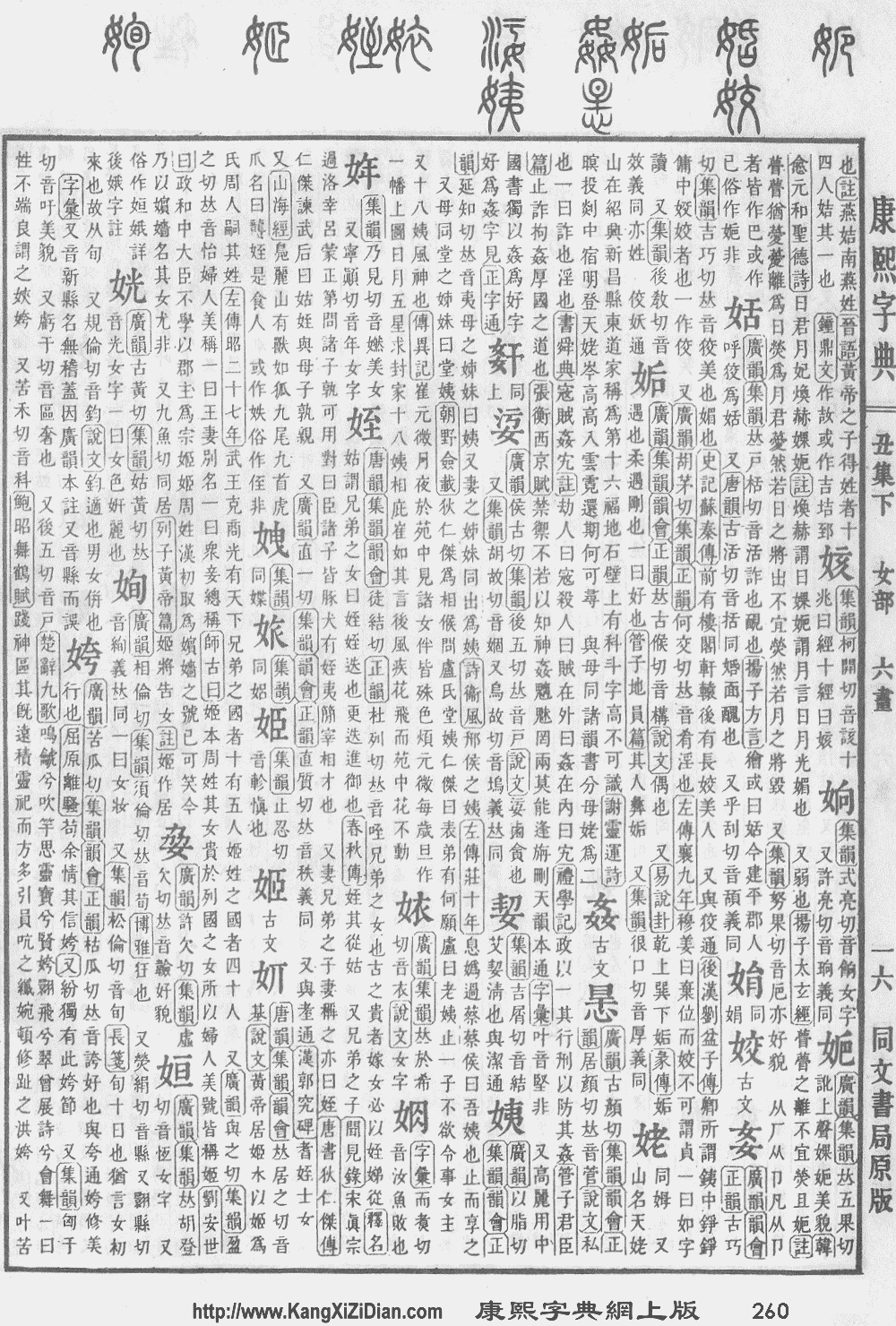
- KangXi: page 260, character 23
- Dai Kanwa Jiten: character 6230
- Dae Jaweon: page 526, character 24
- Hanyu Da Zidian: volume 2, page 1049, character 15
- Unihan data for U+59EC
Chinese
| simp. and trad. |
姬 | |
|---|---|---|
| alt. forms | 姫 | |
Glyph origin
| Characters in the same phonetic series (頤) (Zhengzhang, 2003) | |
|---|---|
| Old Chinese | |
| 茝 | *kʰljɯːʔ, *kljɯʔ |
| 洍 | *ljɯʔ, *lɯ |
| 姬 | *klɯ, *lɯ |
| 宧 | *lɯ |
| 頤 | *lɯ |
| 弬 | *lɯ |
Pronunciation
Definitions
姬
Compounds
Japanese
Kanji
姬
- Alternative form of 姫.
Readings
Noun
- 姫: princess; woman; prostitute; a kind of glue
Korean
Hanja
姬 • (hui) (hangeul 희, revised hui, McCune–Reischauer hŭi, Yale huy)
- This term needs a translation to English. Please help out and add a translation, then remove the text
{{rfdef}}.
Vietnamese
Han character
姬 (cơ)
- This term needs a translation to English. Please help out and add a translation, then remove the text
{{rfdef}}.
This article is issued from
Wiktionary.
The text is licensed under Creative Commons - Attribution - Sharealike.
Additional terms may apply for the media files.