See also: and
U+58FA, 壺
CJK UNIFIED IDEOGRAPH-58FA

[U+58F9]
CJK Unified Ideographs
[U+58FB]

Translingual

Traditional
Shinjitai
(extended)
Simplified

Han character

(radical 33, +9, 12 strokes, cangjie input 土月中一 (GBLM), four-corner 40107)

References

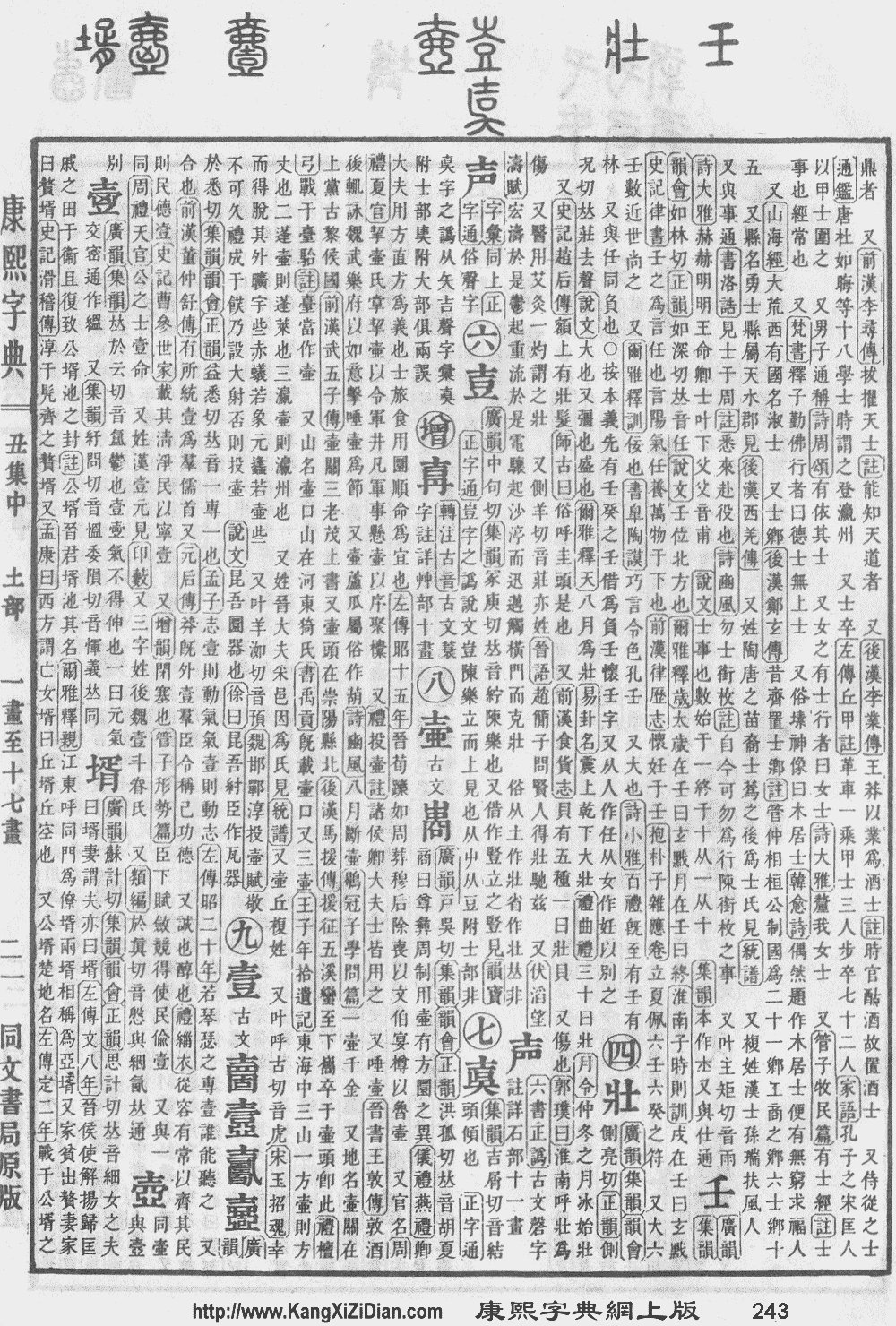
  • KangXi: page 243, character 15
  • Dai Kanwa Jiten: character 5657
  • Dae Jaweon: page 484, character 1
  • Hanyu Da Zidian: volume 1, page 468, character 1
  • Unihan data for U+58FA

Chinese

trad.
simp.

Pronunciation


Note:
  • hô͘ - literary;
  • ô͘ - vernacular.

Rime
Character
Reading # 1/1
Initial () (33)
Final () (23)
Tone (調) Level (Ø)
Openness (開合) Open
Division () I
Fanqie
Reconstructions
Zhengzhang
Shangfang
/ɦuo/
Pan
Wuyun
/ɦuo/
Shao
Rongfen
/ɣo/
Edwin
Pulleyblank
/ɦɔ/
Li
Rong
/ɣo/
Wang
Li
/ɣu/
Bernard
Karlgren
/ɣuo/
Expected
Mandarin
Reflex
BaxterSagart system 1.1 (2014)
Character
Reading # 1/1
Modern
Beijing
(Pinyin)
Middle
Chinese
‹ hu ›
Old
Chinese
/*[ɡ](ʷ)ˤa/
English flask

Notes for Old Chinese notations in the Baxter–Sagart system:

* Parentheses "()" indicate uncertain presence;
* Square brackets "[]" indicate uncertain identity, e.g. *[t] as coda may in fact be *-t or *-p;
* Angle brackets "<>" indicate infix;
* Hyphen "-" indicates morpheme boundary;

* Period "." indicates syllable boundary.
Zhengzhang system (2003)
Character
Reading # 1/1
No. 5286
Phonetic
component
Rime
group
Rime
subdivision
0
Corresponding
MC rime
Old
Chinese
/*ɡʷlaː/

Definitions

  1. vase, jar, pot, jug
  2. A kettle (vessel used when boiling liquid).
  3. Classifier for pots of liquid.
    / [Cantonese]   jat1 wu4 seoi2 [Jyutping]   a pot of water
  4. A surname.

Compounds

  • 一壺千金一壶千金
  • 便壺便壶 (biànhú)
  • 冰壺冰壶 (bīnghú)
  • 冰壺玉尺冰壶玉尺
  • 冰壺秋月冰壶秋月
  • 唾壺唾壶 (tuòhú)
  • 噴壺喷壶 (pēnhú)
  • 執壺执壶
  • 壺中天地壶中天地
  • 壺中日月壶中日月
  • 壺中物壶中物
  • 壺公壶公
  • 壺口瀑布壶口瀑布
  • 壺天壶天
  • 壺天日月壶天日月
  • 壺漏壶漏
  • 壺漿壶浆
  • 壺漿塞道壶浆塞道
  • 壺狀花冠壶状花冠
  • 壺穴壶穴
  • 壺蘆壶芦
  • 壺裡乾坤壶里干坤
  • 壺飧壶飧
  • 夜壺夜壶 (yèhú)
  • 大彬壺大彬壶
  • 大茶壺大茶壶
  • 宜興壺宜兴壶
  • 尿壺尿壶 (niàohú)
  • 懸壺悬壶
  • 懸壺濟世悬壶济世
  • 扳壺扳壶
  • 投壺投壶 (tóuhú)
  • 挈壺挈壶
  • 挈榼提壺挈榼提壶
  • 提壺提壶 (tíhú)
  • 提壺蘆提壶芦
  • 擊碎唾壺击碎唾壶
  • 方壺方壶
  • 暖壺暖壶 (nuǎnhú)
  • 水壺水壶 (shuǐhú)
  • 沙壺沙壶
  • 漏壺漏壶
  • 玉壺玉壶
  • 玉女投壺玉女投壶
  • 王敦擊壺王敦击壶
  • 畫壺画壶
  • 硯水壺兒砚水壶儿
  • 碰壺碰壶
  • 箭壺箭壶
  • 簞食壺漿箪食壶浆
  • 茶壺茶壶 (cháhú)
  • 蓬壺蓬壶
  • 藤壺藤壶 (ténghú)
  • 藥壺药壶
  • 負壺灌區负壶灌区
  • 酒壺酒壶
  • 金壺金壶
  • 銅壺铜壶 (tónghú)
  • 銅壺滴漏铜壶滴漏
  • 電壺电壶
  • 鼻煙壺鼻烟壶 (bíyānhú)

References


Japanese

Kanji

(uncommon “Hyōgai” kanji, kyūjitai kanji, shinjitai form )

Readings

Etymology

Cognate with (tsubo). Likely shares its origin with (tsubu), in expressing the idea of something round and bulging outward.

Noun

(hiragana つぼ, rōmaji tsubo)

  1. container or depression:
    1. A pot or jar; a vessel or bottle.
    2. A basin, as at the base of a waterfall.
    3. A pressure point in acupressure or acupuncture.
  2. The core or heart of an issue.

Usage notes

In acupuncture and acupressure contexts, this word is most often spelled either in hiragana as つぼ or in katakana as ツボ.


Korean

Hanja

(ho) (hangeul , revised ho, McCuneReischauer ho)

  1. This term needs a translation to English. Please help out and add a translation, then remove the text {{rfdef}}.

Vietnamese

Han character

  1. This term needs a translation to English. Please help out and add a translation, then remove the text {{rfdef}}.
This article is issued from Wiktionary. The text is licensed under Creative Commons - Attribution - Sharealike. Additional terms may apply for the media files.