vase
English
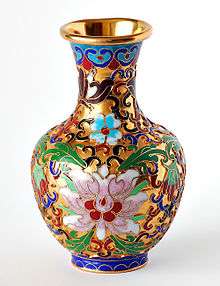
A Chinese vase.
Etymology
From Middle French vase, from Latin vas.
Pronunciation
Noun
vase (plural vases)
- A container used mainly for displaying fresh, dried, or artificial flowers.
Translations
container used mainly for displaying flowers
|
|
Anagrams
Danish
Etymology
Pronunciation
- IPA(key): /vaːsə/, [ˈvæːsə]
Noun
vase c (singular definite vasen, plural indefinite vaser)
Declension
References
- “vase” in Den Danske Ordbog
French
Pronunciation
- IPA(key): /vaz/, /vɑz/
-
audio (un vase) (file)
Etymology 1
From Middle French, from Middle Dutch wase (“mud, silt, wet ground, clod of dirt, grass”), from *Old Dutch waso, from Proto-Germanic *wasô (“moisture, ground”), from Proto-Indo-European *wes- (“moist, wet”). More at ouze.
Noun
vase f (plural vases)
Derived terms
Etymology 2
Noun
vase m (plural vases)
Further reading
- “vase” in le Trésor de la langue française informatisé (The Digitized Treasury of the French Language).
Latin
Noun
vāse
- ablative singular of vāsis
Norman
Etymology
Noun
vase m (plural vases)
Norwegian Bokmål
Etymology
Noun
vase m (definite singular vasen, indefinite plural vaser, definite plural vasene)
- a vase
References
- “vase” in The Bokmål Dictionary.
Norwegian Nynorsk
Etymology
Noun
vase m (definite singular vasen, indefinite plural vasar, definite plural vasane)
- a vase
References
- “vase” in The Nynorsk Dictionary.
This article is issued from
Wiktionary.
The text is licensed under Creative Commons - Attribution - Sharealike.
Additional terms may apply for the media files.