儞
| ||||||||
Translingual
Han character
儞 (radical 9 人+14, 16 strokes, cangjie input 人一火月 (OMFB), composition ⿰亻爾)
References
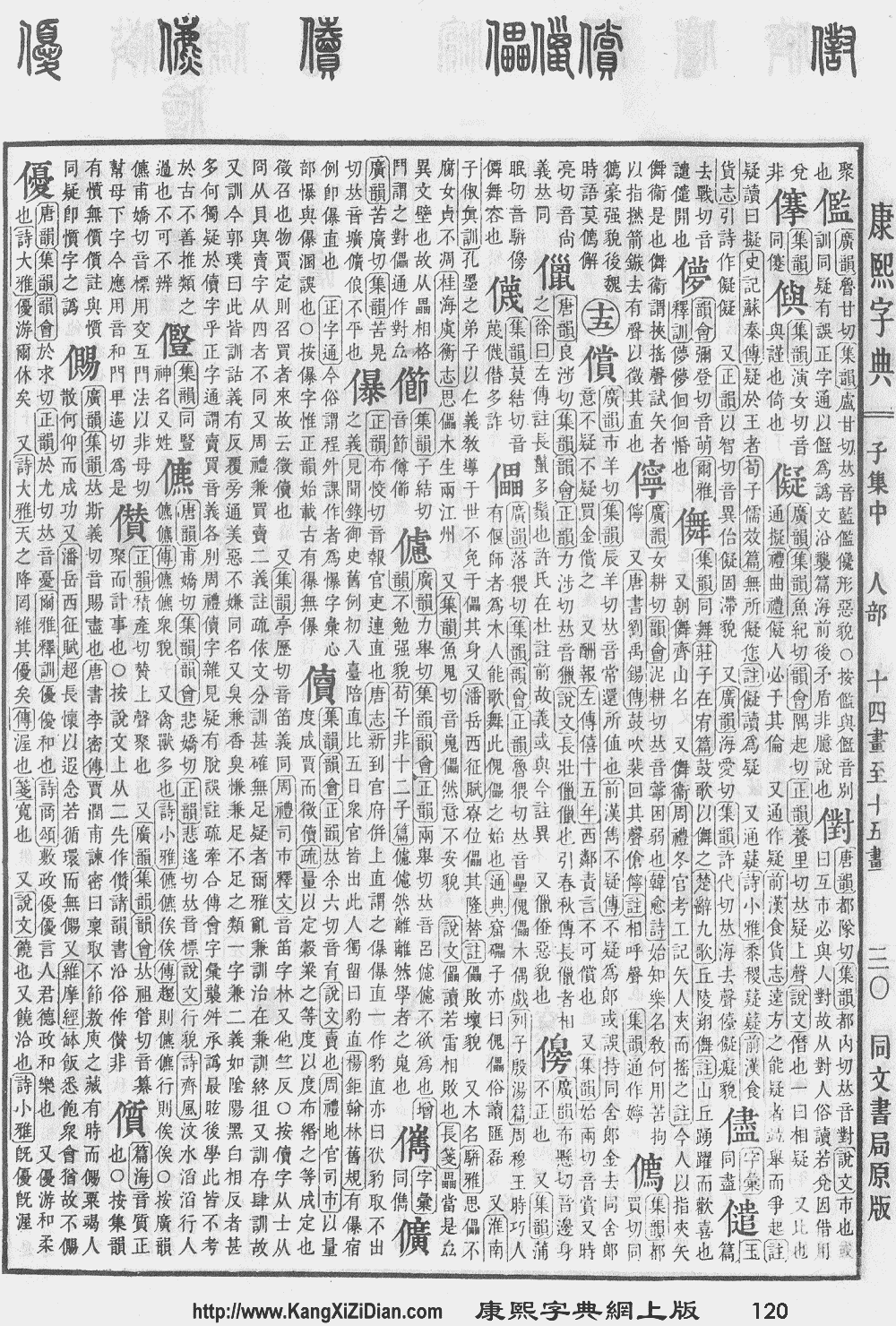
- KangXi: not present, would follow page 120, character 11
- Dai Kanwa Jiten: character 1244
- Hanyu Da Zidian: volume 1, page 230, character 8
- Unihan data for U+511E
Chinese
| For pronunciation and definitions of 儞 – see 你 (“you”). (This character, 儞, is a variant form of 你.) |
Japanese
Kanji
儞
Readings
Etymology
| Kanji in this term |
|---|
| 儞 |
| おれ Hyōgaiji |
| kun’yomi |
From Old Japanese. Found in use mostly from ancient times until roughly the Heian period,[1] used to refer in the second person to social inferiors or to insult.[1][2][3]
The second person sense of you appears to be obsolete in modern Japanese.
Not to be confused with the modern term 俺 (ore) with the first person sense of I, me. See 俺 for that sense.
Pronunciation
Alternative forms
Pronoun
References
Korean
Hanja
儞 • (i>ni) (hangeul 이>니, revised i>ni, McCune–Reischauer i>ni, Yale i>ni)
- you
- (be) so, such, right
This article is issued from
Wiktionary.
The text is licensed under Creative Commons - Attribution - Sharealike.
Additional terms may apply for the media files.