wat
English

Etymology 1
Pronunciation
- (UK) IPA(key): /wat/
Noun
wat (plural wats)
- A Buddhist temple in Southeast Asia.
- There are two wats near this village.
- Angkor Wat
- 1857, Sir John Bowring, The kingdom and people of Siam, volume 1, page 165:
- Having at last got past the crowd of boats, we advanced rapidly for two hours more, when we stopped at a wat, in order to give the men a rest.
- 1982, Carlo Caldarola, Religions and societies, Asia and the Middle East, page 379:
- Aside from its religious function in the community, the wat also performs a large variety of social functions.
- 1996, James Bissett Pratt, The Pilgrimage of Buddhism and a Buddhist Pilgrimage, page 194:
- It would be a mistake, however, to emphasize the Hindu element in Cambodian Buddhism and Cambodian temples. At its greatest it is always a subordinate element and in most of the wats or temples it hardly appears at all, […]
- 1999, Steve Van Beek; Luca Invernizzi, The arts of Thailand, page 15:
- It is often possible to discern the motivation or importance of a wat by examining its name
- 2003, Joshua Eliot; Jane Bickersteth, Thailand handbook, page 268:
- The ubosoth is in a small enclosure just before the main entrance to the wat, on the right, which has fine gilded doors. The wat has a small museum.
Translations
See also
Etymology 2
Borrowing from Amharic ወጥ (wäṭ).
Noun
wat
Etymology 3
Variation of what.
Pronunciation
Pronoun
wat
- (informal, Internet, text messaging) Alternative spelling of what
Adverb
wat (not comparable)
- (informal, Internet, text messaging) Alternative spelling of what
Determiner
wat
- (informal, Internet, text messaging) Alternative spelling of what
Etymology 4
Origin unclear; possibly from what.
Adverb
wat (not comparable)
- (Singlish) Used to contradict an underlying assumption held by the interlocutor.
Anagrams
Afrikaans
Etymology
From Dutch wat, from Middle Dutch wat, from Old Dutch wat, from Proto-Germanic *hwat, from Proto-Indo-European *kʷód, *kʷod.
Pronunciation
- IPA(key): /vat/
Pronoun
wat
- what (interrogative pronoun)
- what (relative pronoun)
- which (interrogative pronoun)
- which (relative pronoun)
- that (relative pronoun)
Dutch
Etymology
From Middle Dutch wat, from Old Dutch wat, from Proto-Germanic *hwat, from Proto-Indo-European *kʷód, *kʷod, compare West Frisian wat, English what, German was, Danish hvad.
Pronunciation
- IPA(key): /ʋɑt/
audio (file) - Rhymes: -ɑt
Pronoun
wat
- (interrogative) what: e.g. (1) asking for a subject complement; (2) asking for a sentence object
- (1) Wat is dat? — What is that?
- (2) Wat wil je doen? — What do you want to do?
- (relative) what: e.g. (1) as the object of a sentence; (2) ditto
- (1) Ik weet niet wat ik wil doen. — I don't know what I want to do.
- (2) Jij moet afblijven van wat jij daar ziet. — You must not touch what you see there.
- (relative) that: e.g. (1) modifying an indefinite pronoun like iets, niets, alles or het enige; (2) modifying an adjective that is used as a noun, usually a superlative
- (1) Geef mij maar alles wat eetbaar is. — Please give me everything that is edible.
- (2) Het duurste wat er was. — The most expensive that there was.
- (relative) which: e.g. (1) modifying the demonstrative pronouns dat and datgene; (2) referring back to an entire sentence
- (1) Hij nam precies datgene wat ik had gewild — He took exactly that which I had wanted.
- (2) Jantje deed het in z’n broek, wat zijn moeder in verlegenheid bracht. — John did it in his pants, which embarrassed his mother
- (indefinite) something: e.g. (1) as subject; (2) as subject complement
- (1) Daar loopt wat rond. — Something there is walking around.
- (2) Dat is aardig wat! — That is quite something! [i.e. "That is quite a lot!"]
Usage notes
This pronoun can combine with a preposition to form a pronominal adverb. When this occurs, it is changed into its adverbial/locative counterpart waar. See also Category:Dutch pronominal adverbs.
A subclause following the relative pronoun wat is in SOV order.
Determiner
wat
- some
- Ik wil graag wat kersen.
- I want some cherries please.
- Ik wil graag wat kersen.
Adverb
wat
German
Etymology
A regional form adopted into colloquial standard German. In western Germany from Central Franconian wat, from northern Middle High German wat, from northern Old High German hwat, an unshifted relict form possibly due to Frankish influence. In northern Germany from German Low German wat, from Middle Low German wat, from Old Saxon hwat.
Pronunciation
- IPA(key): /vat/
- Homophone: Watt
- Rhymes: -aːt
Pronoun
wat
- (colloquial, regional) Alternative form of was
- Wat überlegste?
- What are you thinking?
- Wat überlegste?
Usage notes
- Although found in the native dialects throughout northern and western Germany, the use of wat in colloquial standard German is most typical of the West (chiefly North Rhine-Westphalia and Rhineland-Palatinate). It is also heard in some parts of northern and north-eastern Germany, e.g. in and around Berlin. In all these regions, the forms wat and was are used in free variation.
References
Luxembourgish
Pronunciation
Pronoun
wat
- (interrogative) what
- Wat ass däin Numm?
- What is your name?
- Wat ass däin Numm?
- (relative) what
- Ech weess net, wat ech maache soll.
- I don't know what I should do.
- Ech weess net, wat ech maache soll.
Middle Dutch
Etymology
From Old Dutch wat, from Proto-Germanic *hwat.
Pronunciation
- IPA(key): /wat/
Pronoun
wat
Descendants
Further reading
- “wat (II)”, in Vroegmiddelnederlands Woordenboek, 2000
- “wat (I)”, in Middelnederlandsch Woordenboek, 1929
Middle English
Etymology 1
Uncertain; possibly from wight.
Noun
wāt
- A person.
Etymology 2
Uncertain.
Noun
wat
Etymology 3
See entries.
Verb
wat
References
- Middle English Dictionary, "wāt n.1", "wat n.2", & "wat".
Middle Low German
Etymology
From Old Saxon hwat, from Proto-Germanic *hwat.
Pronunciation
- IPA(key): /wat/
Pronoun
wat (accusative wēne or wen, dative wēme or wem, genitive wes)
- (interrogative, neuter) what
Old Dutch
Etymology
From Proto-Germanic *hwat, from Proto-Indo-European *kʷód.
Pronoun
wat
Descendants
Old High German
Etymology
From Proto-Germanic *wadą, whence also Old English wæd, Old Norse vað (Icelandic vað).
Noun
wat n
Polish
Noun
wat m inan
Declension
Portuguese
Noun
wat m (plural wats)
- wat (a type of Buddhist temple common in Southeast Asia)
Transylvanian Saxon
Adverb
wat
- what (interrogative)
Vilamovian
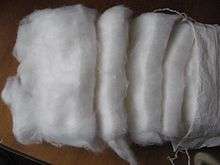
Etymology
Dutch watten
Noun
wat f
West Frisian
Etymology
From Old Frisian hwet, from Proto-Germanic *hwat, from Proto-Indo-European *kʷód.
Pronunciation
- IPA(key): /vɔt/
Adverb
wat
- what (interrogative only)
- Wat sizze hja?
- What are they saying?