primate
See also: Primate
English
WOTD – 29 March 2016
Pronunciation
- IPA(key): /ˈpɹaɪmeɪt/
-
Audio (US) (file) - Hyphenation: pri‧mate
Etymology 1
Noun
primate (plural primates)
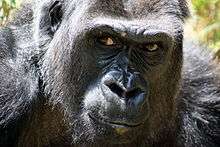
- (zoology) A mammal of the order Primates, including simians and prosimians.
- Primates range from lemurs to gorillas.
-
- (informal) A simian anthropoid; an ape, human or monkey.
Hyponyms
- See also Thesaurus:primate
Translations
mammal
|
Etymology 2
From Old French primat, from a noun use of Latin primat-, from primus (“prime, first rank”). Compare English primus, of similar derivation and meaning. [circa 1200]
Noun
primate (plural primates)
- (ecclesiastical) In the Catholic Church, a rare title conferred to or claimed by the sees of certain archbishops, or the highest-ranking bishop of a present or historical, usually political circumscription.
- (ecclesiastical) In the Anglican Church, an archbishop, or the highest-ranking bishop of an ecclesiastic province.
Derived terms
Derived terms
- Primate of All England
- Primate of England
- Primate of the Gauls
Related terms
Translations
archbishop or bishop
See also
French
Pronunciation
- IPA(key): /pʁi.mat/
Noun
primate m (plural primates)
- primate (mammal)
See also
Further reading
- “primate” in le Trésor de la langue française informatisé (The Digitized Treasury of the French Language).
Anagrams
Galician
Noun
primate m (plural primates)
- primate (animal)
Italian
Noun
primate m (plural primati)
- primate (ecclesiastical title)
Related terms
- primati (mammals) (plurale tantum)
- primato (primacy)
Anagrams
Spanish
Noun
primate m (plural primates)
- primate (animal)
This article is issued from
Wiktionary.
The text is licensed under Creative Commons - Attribution - Sharealike.
Additional terms may apply for the media files.