pose
English
Pronunciation
- (General American) IPA(key): /poʊz/
- (Received Pronunciation) IPA(key): /pəʊz/
Audio (US) (file) - Rhymes: -əʊz
Etymology 1
From Middle English pose, from Old English ġeposu (“cold in the head; catarrh”, plural, literally “(the) sneezes; (the) snorts”), from Old English ġepos (“sneeze, snort”), from Proto-Germanic *pusą (“sneeze, snort”), from Proto-Germanic *pusōną, *pusjaną (“to snort, blow”), from Proto-Indo-European *bew- (“to blow, swell”). Compare Low German pusten (“to blow, puff”), German dialectal pfausen (“to sneeze, snort”), Norwegian dialectal pysa (“to blow”).
Noun
pose (plural poses)
- (archaic) Common cold, head cold; catarrh.
- 1586, W. Harrison
- Now […] have we many chimnies, and yet our tenderlings complain of rheums, catarrhs, and poses.
- 1825, Robert Herrick, The poetical works of Robert Herrick:
- Megg yesterday was troubled with a pose, Which, this night hardned, sodders up her nose.
- 1903, Thomas Heywood, Lucian (of Samosata.), Desiderius Erasmus, Pleasant Dialogues and Dramma's:
- The Ague, Cough, the Pyony, the Pose. Aches within, and accidents without, [...]
- 2009, Eucharius Rösslin, Thomas Raynalde, Elaine Hobby, The Birth of Mankind:
- And whereas some say, that they which use oft washing of their heads shall be very prone to headache, that is not true, but only in such that, after they have been washed, roll up their hair (being yet wet) about their heads; the cold whereof is dangerous to bring them to catarrhs and poses, with other inconveniences.
- 1586, W. Harrison
Etymology 2
From Middle English posen, from Old French poser (“to put, place, stell, settle, lodge”), from Vulgar Latin pausāre (“to blin, cease, pause”), from Latin pausa (“pause”), from Ancient Greek παῦσις (paûsis); influenced by Latin pōnere.
Verb
pose (third-person singular simple present poses, present participle posing, simple past and past participle posed)

- (transitive) To place in an attitude or fixed position, for the sake of effect.
- To pose a model for a picture.
- (transitive) To ask; to set (a test, quiz, riddle, etc.).
- (transitive) To constitute (a danger, a threat, a risk, etc.).
- 2010, Noam Chomsky, The Iranian threat, Z Magazine, vol 23, number 7:
- Rather, they are concerned with the threat Iran poses to the region and the world.
- 2014, Ian Black, "Courts kept busy as Jordan works to crush support for Isis", The Guardian, 27 November 2014:
- The threat the most radical of them pose is evidently far greater at home than abroad: in one characteristically slick and chilling Isis video – entitled “a message to the Jordanian tyrant” – a smiling, long-haired young man in black pats the explosive belt round his waist as he burns his passport and his fellow fighters praise the memory of Zarqawi, who was killed in Iraq in 2006.
- 2010, Noam Chomsky, The Iranian threat, Z Magazine, vol 23, number 7:
- (intransitive) To assume or maintain a pose; to strike an attitude.
- Thackeray
- He […] posed before her as a hero.
- Thackeray
- (intransitive) To behave affectedly in order to attract interest or admiration.
- 2002, Charles Hebbert, Dan Richardson, The Rough Guide to Budapest, 2nd edition, London: Rough Guides, →ISBN, page 73:
- During the 1980s, its vivid streetlife became a symbol of the “consumer socialism” that distinguished Hungary from other Eastern Bloc states, but Budapesters today are rather less enamoured of Váci: dressed-to-kill babes and their sugar daddies would rather pose in malls, and teenagers can find McDonald's anywhere, leaving Váci utterly dependent on tourists for its livelihood and bustle.
-
- (obsolete, transitive) To interrogate; to question.
- Francis Bacon
- She […] posed him and sifted him.
- Francis Bacon
- (obsolete, transitive) To question with a view to puzzling; to embarrass by questioning or scrutiny; to bring to a stand.
- Barrow
- A question wherewith a learned Pharisee thought to pose and puzzle him.
- Barrow
Translations
|
|
|
Noun
pose (plural poses)
- Position, posture, arrangement (especially of the human body).
- Please adopt a more graceful pose for my camera.
- 1898, Winston Churchill, chapter 5, in The Celebrity:
- Then came a maid with hand-bag and shawls, and after her a tall young lady. She stood for a moment holding her skirt above the grimy steps, with something of the stately pose which Richter has given his Queen Louise on the stairway, […] .
- Affectation.
Derived terms
Related terms
Translations
Etymology 3
From Middle English posen, a combination of aphetic forms of Middle English aposen and opposen. More at appose, oppose.
Alternative forms
Verb
pose (third-person singular simple present poses, present participle posing, simple past and past participle posed)
- (obsolete) To ask (someone) questions; to interrogate.
- 1526, William Tyndale, trans. Bible, Luke II:
- And hit fortuned that after .iii. dayes, they founde hym in the temple sittinge in the middes of the doctours, both hearynge them, and posinge them.
- 1643, Thomas Browne, Religio Medici, I.9:
- 'Tis my solitary recreation to pose my apprehension with those involved Ænigmas and riddles of the Trinity, with Incarnation and Resurrection.
- 1526, William Tyndale, trans. Bible, Luke II:
- (now rare) to puzzle, non-plus, or embarrass with difficult questions.
- (now rare) To perplex or confuse (someone).
Derived terms
Further reading
Anagrams
Danish
Etymology
Noun
pose
Usage notes
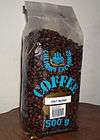
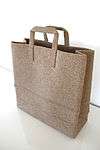
Do not fail to perceive the distinction between this, being a simple, one-room container open or openable in the top, and a taske.
Declension
References
- “pose” in Den Danske Ordbog
Dutch
Etymology
Pronunciation
Audio (file)
Hyphenation: po‧se
Noun
Anagrams
Finnish
Noun
pose
- (slang) jail
Declension
| Inflection of pose (Kotus type 8/nalle, no gradation) | |||
|---|---|---|---|
| nominative | pose | poset | |
| genitive | posen | posejen | |
| partitive | posea | poseja | |
| illative | poseen | poseihin | |
| singular | plural | ||
| nominative | pose | poset | |
| accusative | nom. | pose | poset |
| gen. | posen | ||
| genitive | posen | posejen poseinrare | |
| partitive | posea | poseja | |
| inessive | posessa | poseissa | |
| elative | posesta | poseista | |
| illative | poseen | poseihin | |
| adessive | posella | poseilla | |
| ablative | poselta | poseilta | |
| allative | poselle | poseille | |
| essive | posena | poseina | |
| translative | poseksi | poseiksi | |
| instructive | — | posein | |
| abessive | posetta | poseitta | |
| comitative | — | poseineen | |
Anagrams
French
Etymology
Derived from the verb poser. Compare also Italian posa, Latin pausa.
Noun
pose f (plural poses)
Noun
pose m (plural poses)
- extension (in telecommunications)
Verb
pose
Further reading
- “pose” in le Trésor de la langue française informatisé (The Digitized Treasury of the French Language).
Ido
Adverb
pose
Italian
Pronunciation
- póse, IPA(key): /ˈpose/
Verb
pose
- third-person singular past historic of porre
Anagrams
Norwegian Bokmål
Etymology
Noun
pose m (definite singular posen, indefinite plural poser, definite plural posene)
Derived terms
References
- “pose” in The Bokmål Dictionary.
Norwegian Nynorsk
Etymology
Noun
pose m (definite singular posen, indefinite plural posar, definite plural posane)
Derived terms
References
- “pose” in The Nynorsk Dictionary.
Spanish
Verb
pose