locomotive
English
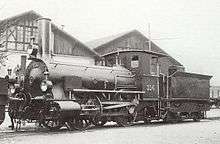
A steam locomotive.
Etymology
From French locomotive, from Latin locō (literally “from a place”) (ablative of locus (“place”)) + Vulgar Latin mōtivus (“moving”) (see motive).
Pronunciation
- (Gen) IPA(key): /ˌloʊkəˈmoʊtiv/
- (Received Pronunciation) IPA(key): /ˌləʊkəʊˈməʊtiv/
-
Audio (US) (file)
Noun
locomotive (plural locomotives)
- (rail transport) The power unit of a train that pulls the coaches or wagons.
- (rare) A traction engine
- (slang) A cheer characterized by a slow beginning and a progressive increase in speed
- (economics) A country which drives the world economy by having a high level of imports. (i.e. The United States).
Usage notes
Translations
self-propelled vehicle that runs on rails
|
|
Adjective
locomotive (comparative more locomotive, superlative most locomotive)
- of or relating to locomotion
- of or relating to the power unit of a train which does not carry passengers or freight itself
Translations
relating to locomotion
French
Pronunciation
- IPA(key): /lɔ.kɔ.mɔ.tiv/
-
Audio (file) -
Audio (Paris) (file) - Homophone: locomotives
Adjective
locomotive
- feminine singular of locomotif
Noun
locomotive f (plural locomotives)
Further reading
- “locomotive” in le Trésor de la langue française informatisé (The Digitized Treasury of the French Language).
Italian
Noun
locomotive f
- plural of locomotiva
This article is issued from
Wiktionary.
The text is licensed under Creative Commons - Attribution - Sharealike.
Additional terms may apply for the media files.