ae
English
Etymology 1
From Scottish Middle English a-, from Old English ān (“one”); see also a.
Pronunciation
IPA(key): /i/, /e(ː)/, /ə/
Adjective
ae (not comparable)
(Can we add an example for this sense?)
Etymology 2
Variant form of æ.
Pronunciation
IPA(key): /iː/, /eɪ/, /ə/
Symbol
ae
- Variant of æ.
See also
References
- “ae” in The American Heritage Dictionary of the English Language, 4th edition, Boston, Mass.: Houghton Mifflin, 2000, →ISBN.
- “ae” in Dictionary.com Unabridged, Dictionary.com, LLC, 1995–present.
Anagrams
Aore
Noun
ae
Further reading
- Darrell T. Tryon, New Hebrides languages: an internal classification (1976)
- ABVD
Danish
Pronunciation
- IPA(key): /aːə/, [ˈæːæ]
- Rhymes: -aːə
Verb
ae (imperative a, infinitive at ae, present tense aer, past tense aede, perfect tense har aet)
Eastern Ngad'a
Noun
ae
References
- Greenhill, S.J., Blust. R, & Gray, R.D. (2008). The Austronesian Basic Vocabulary Database: From Bioinformatics to Lexomics. Evolutionary Bioinformatics, 4:271-283.
Ende
Etymology
From Proto-Central-Eastern Malayo-Polynesian *waiʀ, from Proto-Malayo-Polynesian *wahiʀ.
Noun
ae
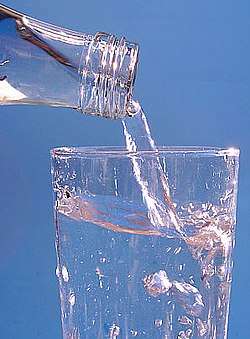
- water (clear liquid H₂O)
References
- Bradley J. McDonnell, Possessive Structures in Ende: a Language of Eastern Indonesia
Irish
Pronunciation
- IPA(key): [eː]
Etymology 1
From Middle Irish áe (“liver”), from Old Irish óa.
Noun
ae m (genitive singular ae, nominative plural aenna)
Declension
Derived terms
|
|
|
|
Etymology 2
Noun
ae m (genitive singular ae)
- Alternative form of aoi (“metrical composition”)
Declension
Fourth declension
|
Bare forms (no plural of this noun)
|
Forms with the definite article
|
Mutation
| Irish mutation | |||
|---|---|---|---|
| Radical | Eclipsis | with h-prothesis | with t-prothesis |
| ae | n-ae | hae | t-ae |
| Note: Some of these forms may be hypothetical. Not every possible mutated form of every word actually occurs. | |||
Further reading
- "ae" in Foclóir Gaeilge-Béarla, An Gúm, 1977, by Niall Ó Dónaill.
- “1 áe ("liver")” in Dictionary of the Irish Language, Royal Irish Academy, 1913–76.
- Entries containing “ae” in English-Irish Dictionary, An Gúm, 1959, by Tomás de Bhaldraithe.
- Entries containing “ae” in New English-Irish Dictionary by Foras na Gaeilge.
Kala
Pronunciation
- IPA(key): /ɑe/
Noun
ae
Further reading
- Malcolm Ross, Proto Oceanic and the Austronesian Languages of Western Melanesia, Pacific Linguistics, series C-98 (1988) (ai)
- Morris Johnson, Kela Organized Phonology Data (1994) (ae)
Latin
Participle
ae
References
- ae in Charlton T. Lewis and Charles Short (1879) A Latin Dictionary, Oxford: Clarendon Press
- ae in Charles du Fresne du Cange’s Glossarium Mediæ et Infimæ Latinitatis (augmented edition, 1883–1887)
Lavukaleve
Verb
ae
Li'o
Etymology
From Proto-Malayo-Polynesian *wahiʀ.
Noun
ae
- water (clear liquid H₂O)
References
- P. Sawardo, Struktur bahasa Lio (1987)
- Louise Baird, A Grammar of Kéo: An Austronesian Language of East Nusantara (2002) ('aé)
Middle Welsh
Pronunciation
- IPA(key): /aɨ̯/
Conjunction
ae ... ae
- either ... or
- Pwyll Pendeuic Dyuet:
- Sef kyfryw chware a wneynt, taraw a wnai pob un dyrnawt ar y got, ae a’e droet ae a throssawl;
- In this manner they played the game, each of them striking the bag, either with his foot or with a staff.
- Sef kyfryw chware a wneynt, taraw a wnai pob un dyrnawt ar y got, ae a’e droet ae a throssawl;
- Pwyll Pendeuic Dyuet:
Descendants
- Welsh: ai
Portuguese
Etymology
Corruption of aí.
Interjection
ae
- (Internet slang, Brazil) oh yeah (expression of joy or approvement)
Scots
Etymology
From Scottish Middle English a-, from Old English ān (“one”); see also a.
Pronunciation
Adjective
ae (not comparable)