鳳梨
Chinese
| male fenghuang | pear | ||
|---|---|---|---|
| trad. (鳳梨) | 鳳 | 梨 | |
| simp. (凤梨) | 凤 | 梨 | |
Pronunciation
Noun
鳳梨
Synonyms
Derived terms
Japanese
| Kanji in this term | |
|---|---|
| 鳳 | 梨 |
| ほう Jinmeiyō |
り Grade: S |
| on’yomi | |
Etymology
From Chinese 鳳梨,[1][2], probably more specifically Cantonese, given that it was the Portuguese who first brought this fruit to East Asia, and the Portuguese were more active in southern China.
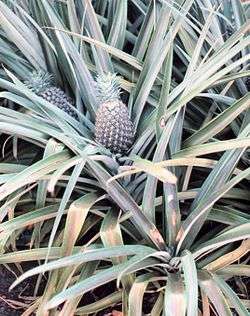
The pineapple was introduced to Japan relatively recently, with the earliest mentions around 1830.
The reading is the regular Japanese on'yomi (kan'on) for the Chinese spelling. Compare the modern Cantonese reading fung6 lei4.
Pronunciation
Noun
鳳梨 (hiragana ほうり, rōmaji hōri)
Usage notes
In modern Japanese, the term パイナップル (painappuru) is much more common.
Synonyms
- パイナップル (painappuru)
References
This article is issued from
Wiktionary.
The text is licensed under Creative Commons - Attribution - Sharealike.
Additional terms may apply for the media files.