馬鈴薯
See also: 马铃薯
Chinese
| bell tied to a horse; sleigh bell; jingle bell | potato; yam | ||
|---|---|---|---|
| trad. (馬鈴薯) | 馬鈴 | 薯 | |
| simp. (马铃薯) | 马铃 | 薯 | |
Pronunciation
Noun
馬鈴薯
Synonyms
Derived terms
Descendants
- → Zhuang: majlingzsuz
Japanese
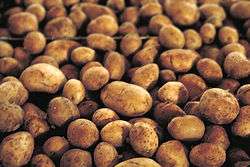
馬鈴薯 (bareisho): a pile of potatoes.
| Kanji in this term | ||
|---|---|---|
| 馬 | 鈴 | 薯 |
| ば Grade: 2 |
れい Grade: S |
しょ Hyōgaiji |
| on’yomi | ||
Etymology
Origin unclear. Attributed to noted Edo-period botanist and scholar of Chinese medicine Ono Ranzan (see Wikipedia:ja:小野蘭山) in the late 1700s. May be from Sinitic 馬鈴薯, or may be a Japanese coinage later borrowed into Chinese.
According to one theory, this word is a compound of 馬鈴 (barei, “horse bell”) + 薯 (sho, “potato”), from the way the potato looks a bit like the bells used in the tack for stage horses.[1] In another theory, 馬鈴 (barei) is an example of ateji for Malay, since potatoes were introduced to Japan via the Dutch East Indies.
Pronunciation
Noun
馬鈴薯 (hiragana ばれいしょ, rōmaji bareisho)
Synonyms
Derived terms
References
This article is issued from
Wiktionary.
The text is licensed under Creative Commons - Attribution - Sharealike.
Additional terms may apply for the media files.