逞
| ||||||||
Translingual
Han character
逞 (radical 162 辵+7, 11 strokes, cangjie input 卜口竹土 (YRHG) or 卜口一土 (YRMG), four-corner 36301, composition ⿺辶呈)
References
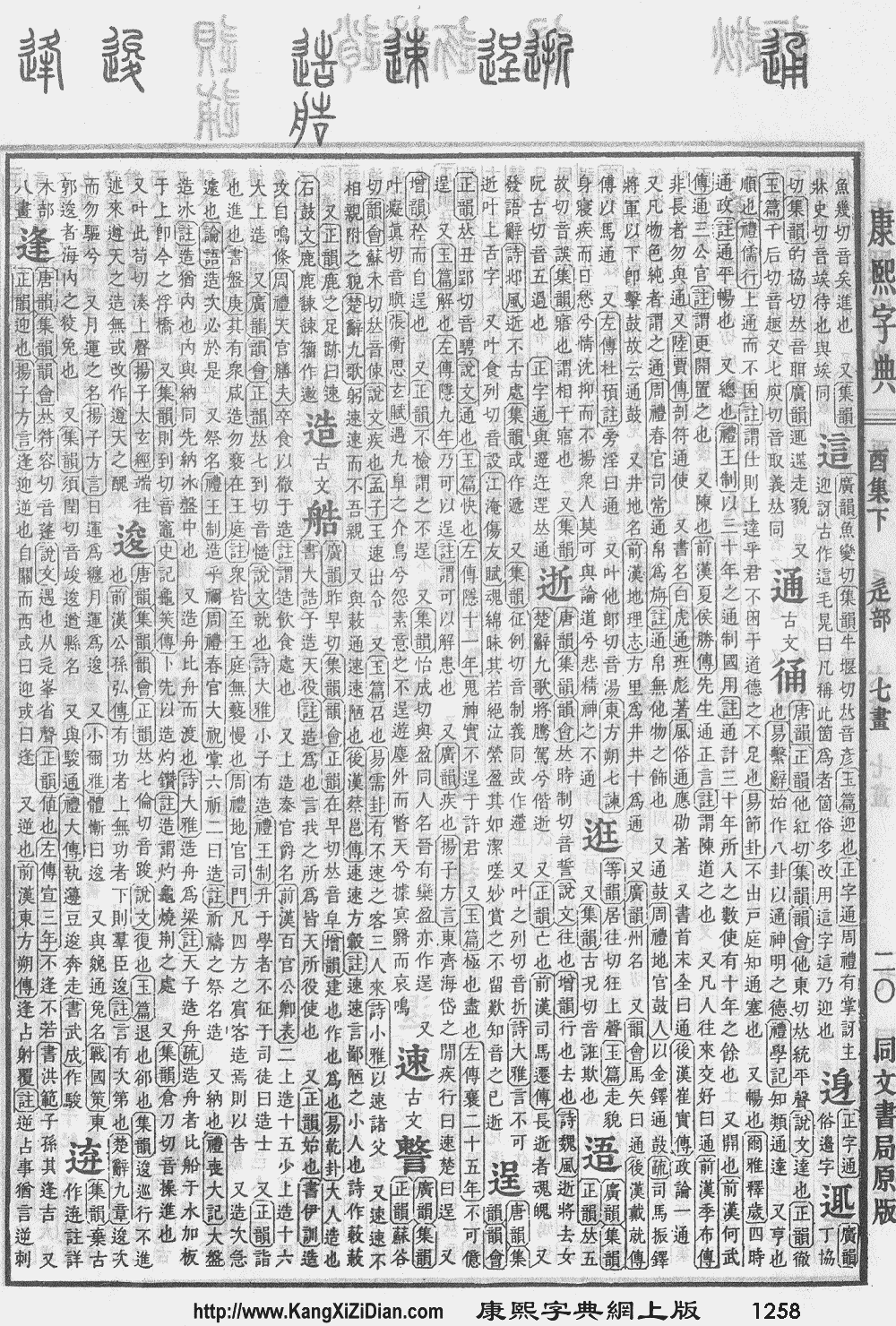
- KangXi: page 1258, character 9
- Dai Kanwa Jiten: character 38896
- Dae Jaweon: page 1746, character 3
- Hanyu Da Zidian: volume 6, page 3840, character 8
- Unihan data for U+901E
Chinese
| simp. and trad. |
逞 | |
|---|---|---|
Glyph origin
| Characters in the same phonetic series (呈) (Zhengzhang, 2003) | |
|---|---|
| Old Chinese | |
| 挰 | *rleːŋ |
| 鋥 | *rleːŋs |
| 逞 | *l̥ʰeŋʔ |
| 裎 | *l̥ʰeŋʔ, *rleŋ |
| 悜 | *l̥ʰeŋʔ |
| 睈 | *l̥ʰeŋʔ |
| 呈 | *rleŋ, *l'eŋs |
| 程 | *rleŋ |
| 酲 | *rleŋ |
| 珵 | *rleŋ |
| 徎 | *rleŋʔ, *l̥ʰeːŋʔ |
| 郢 | *leŋʔ |
| 浧 | *leŋʔ |
| 桯 | *l̥ʰeːŋ, *ɦleːŋ |
| 鞓 | *l̥ʰeːŋ |
| 壬 | *l̥ʰeːŋʔ, *njɯm |
| 鐵 | *l̥ʰiːɡ |
| 驖 | *l̥ʰiːɡ, *l'iːɡ |
| 戜 | *l'iːɡ |
Pronunciation
Definitions
逞
- This term needs a translation to English. Please help out and add a translation, then remove the text
{{rfdef}}.
Compounds
|
Japanese
Kanji
逞
(“Jinmeiyō” kanji used for names)
- sturdy
- brawny
- bold
Readings
Korean
Hanja
逞 • (ryeong>yeong, jeong) (hangeul 령>영, 정, revised ryeong>yeong, jeong, McCune–Reischauer ryŏng>yŏng, chŏng, Yale lyeng>yeng, ceng)
- This term needs a translation to English. Please help out and add a translation, then remove the text
{{rfdef}}.
This article is issued from
Wiktionary.
The text is licensed under Creative Commons - Attribution - Sharealike.
Additional terms may apply for the media files.