軛
See also: 轭
| ||||||||
Translingual
Han character
軛 (radical 159 車+4, 11 strokes, cangjie input 十十一尸山 (JJMSU), four-corner 51012, composition ⿰車厄)
References
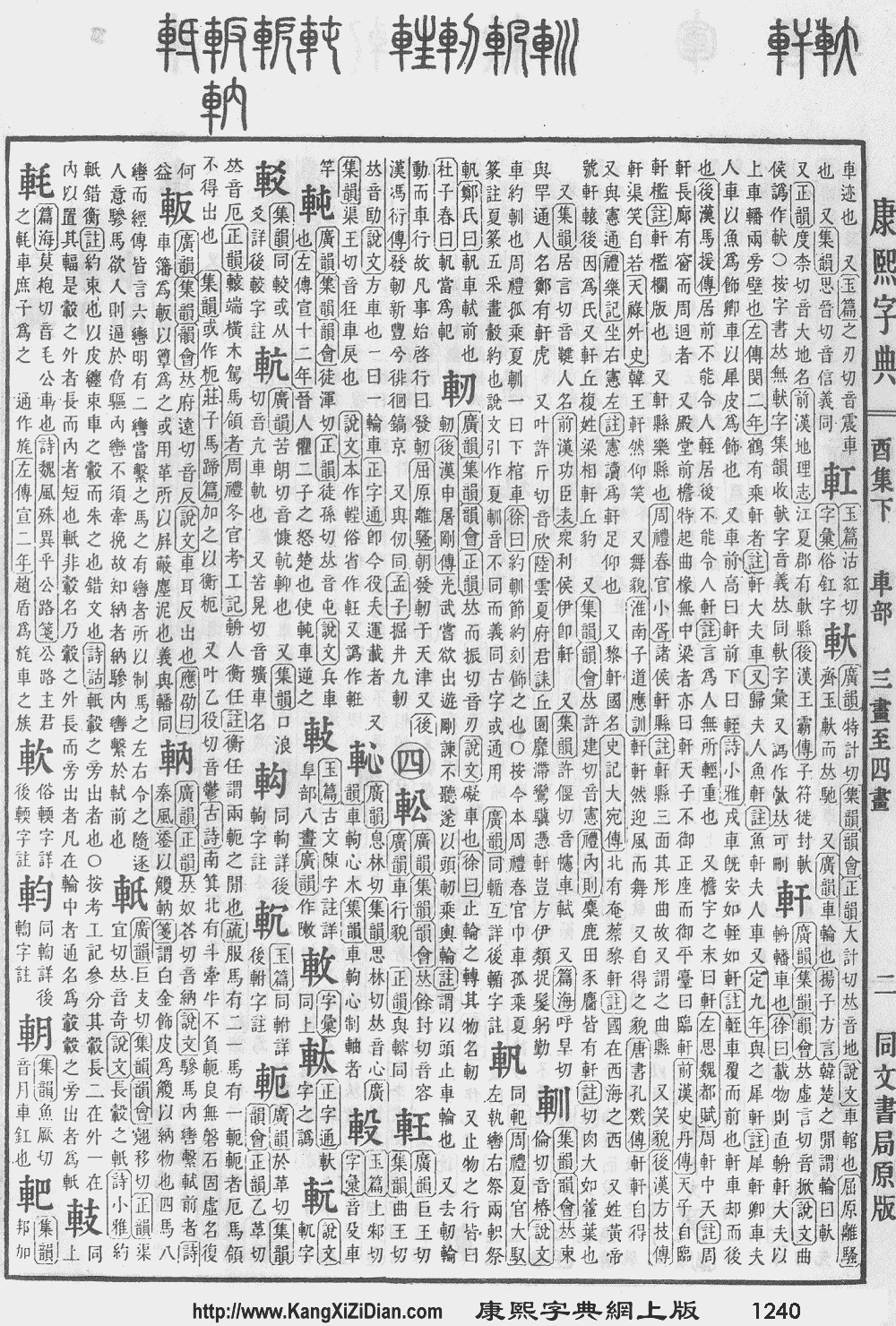
- KangXi: page 1240, character 20
- Dai Kanwa Jiten: character 38207
- Dae Jaweon: page 1716, character 16
- Hanyu Da Zidian: volume 5, page 3517, character 8
- Unihan data for U+8EDB
Chinese
| trad. | 軛 | |
|---|---|---|
| simp. | 轭 | |
Glyph origin
| Characters in the same phonetic series (戹) (Zhengzhang, 2003) | |
|---|---|
| Old Chinese | |
| 呃 | *qreːɡs, *qreːɡ |
| 阸 | *qreːɡs, *qreːɡ |
| 厄 | *qreːɡ |
| 蚅 | *qreːɡ |
| 扼 | *qreːɡ |
| 軛 | *qreːɡ |
| 戹 | *qreːɡ |
| 豟 | *qreːɡ |
| 呝 | *qreːɡ |
| 軶 | *qreːɡ |
Ideogrammic compound (會意) and phono-semantic compound (形聲, OC *qreːɡ) : semantic 車 (“chariot”) + phonetic 厄 (OC *qreːɡ, “yoke”) – specialized form of 厄.
Pronunciation
Definitions
軛
- This term needs a translation to English. Please help out and add a translation, then remove the text
{{rfdef}}.
Compounds
|
|
|
References
Japanese
Kanji
軛
Readings
Noun
軛 (hiragana くびき, rōmaji kubiki)
- yoke (wooden bar)
Alternative forms
This article is issued from
Wiktionary.
The text is licensed under Creative Commons - Attribution - Sharealike.
Additional terms may apply for the media files.