耗
See also: 秏
| ||||||||
Translingual
Han character
耗 (radical 127 耒+4, 10 strokes, cangjie input 手木竹手山 (QDHQU), four-corner 52914, composition ⿰耒毛)
References
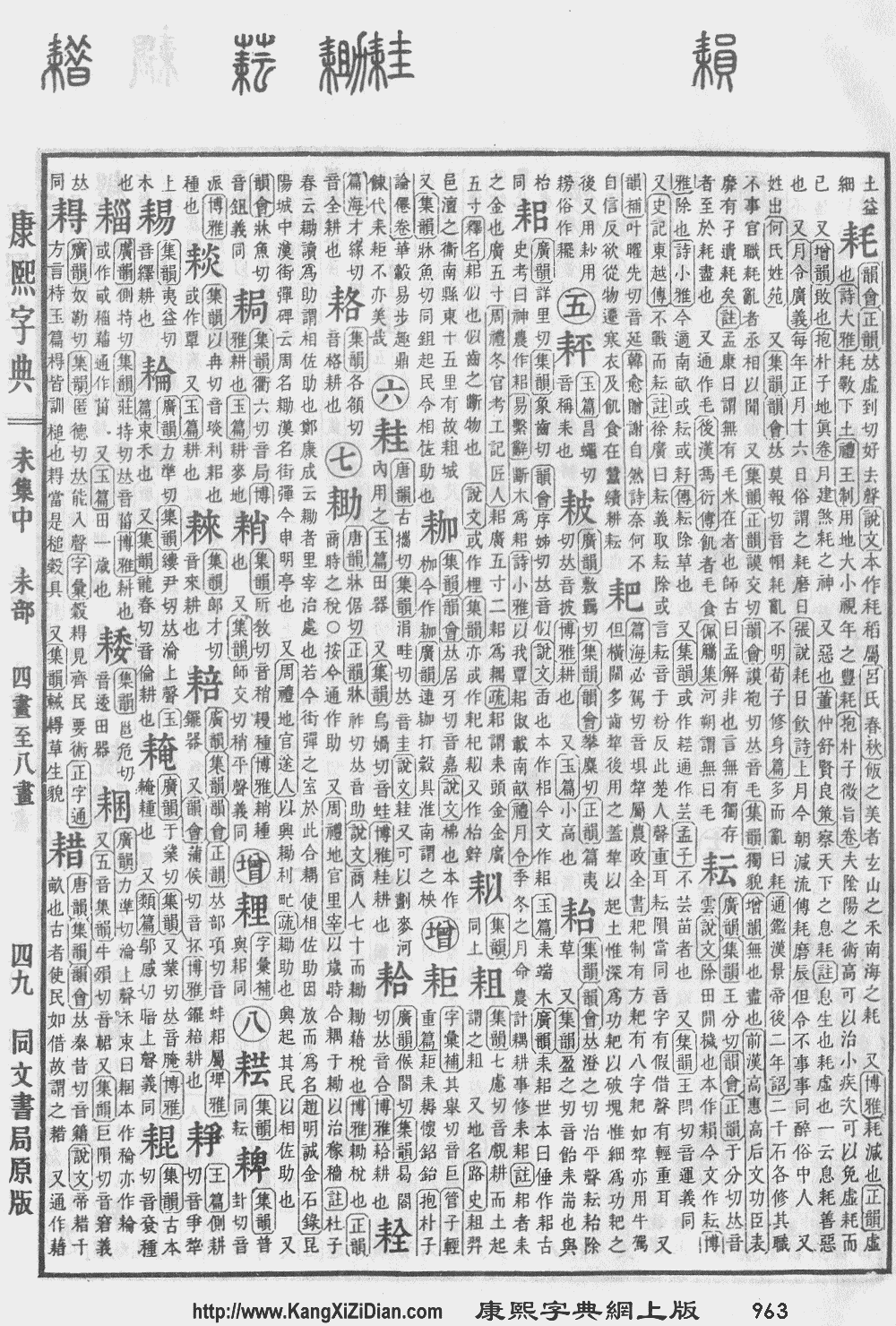
- KangXi: page 963, character 1
- Dai Kanwa Jiten: character 28909
- Dae Jaweon: page 1411, character 3
- Hanyu Da Zidian: volume 4, page 2771, character 3
- Unihan data for U+8017
Chinese
| simp. and trad. |
耗 | |
|---|---|---|
| alt. forms | 㘪 秏 | |
Glyph origin
| Characters in the same phonetic series (毛) (Zhengzhang, 2003) | |
|---|---|
| Old Chinese | |
| 毛 | *maːw, *maːws |
| 髦 | *maːw |
| 旄 | *maːw, *maːws |
| 芼 | *maːw, *maːws |
| 氂 | *rɯ, *maːw |
| 枆 | *maːw |
| 酕 | *maːw |
| 牦 | *maːw |
| 耄 | *maːws |
| 覒 | *maːws |
| 眊 | *maːws, *mraːwɢ |
| 耗 | *hmaːws |
| 秏 | *hmaːws, *hmɯːbs |
| 毣 | *mraːwɢ, *moːwɢ |
Etymology 1
Pronunciation
Definitions
耗
Compounds
Etymology 2
Pronunciation
Definitions
耗
- all used up, nothing left (Same as 罄尽)
Etymology 3
Definitions
耗
Japanese
Kanji
耗
Readings
- Goon: こう (kō, Jōyō, uncommon)
- Kan’on: こう (kō, Jōyō, uncommon)
- Kan’yōon: もう (mō, Jōyō)
- Kun: へる (heru, 耗る)
Korean
Hanja
耗 • (mo) (hangeul 모)
- This term needs a translation to English. Please help out and add a translation, then remove the text
{{rfdef}}.
Vietnamese
Han character
- This term needs a translation to English. Please help out and add a translation, then remove the text
{{rfdef}}.
This article is issued from
Wiktionary.
The text is licensed under Creative Commons - Attribution - Sharealike.
Additional terms may apply for the media files.