罠
| ||||||||
Translingual
Han character
罠 (radical 122 网+5, 10 strokes, cangjie input 田中口女心 (WLRVP), four-corner 60747, composition ⿱罒民)
- animal trap
References
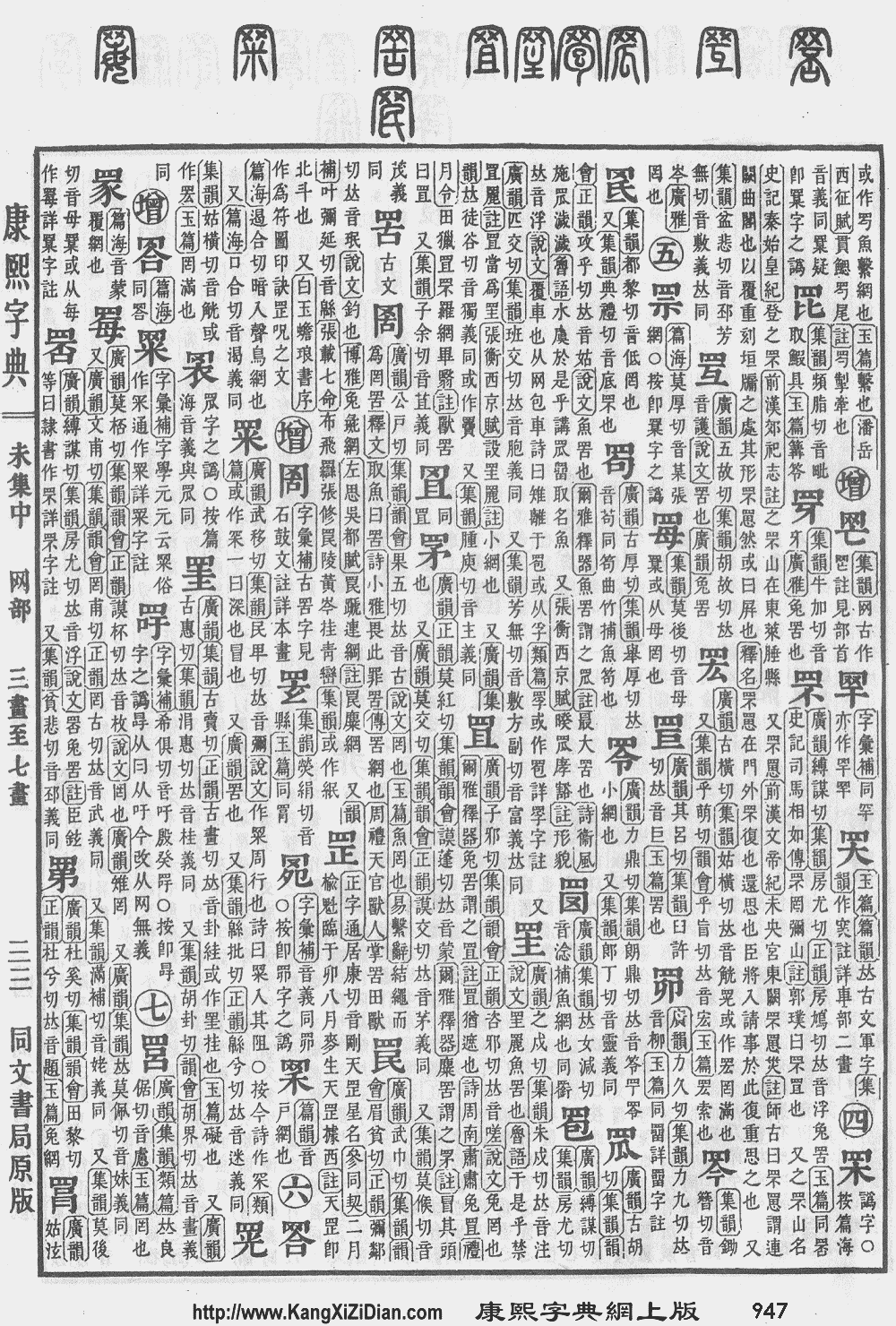
- KangXi: page 947, character 27
- Dai Kanwa Jiten: character 28249
- Dae Jaweon: page 1388, character 19
- Hanyu Da Zidian: volume 4, page 2916, character 15
- Unihan data for U+7F60
Chinese
| simp. and trad. |
罠 | |
|---|---|---|
Glyph origin
| Characters in the same phonetic series (民) (Zhengzhang, 2003) | |
|---|---|
| Old Chinese | |
| 眠 | *miːn |
| 民 | *min |
| 泯 | *min, *minʔ |
| 怋 | *min, *mɯːn |
| 岷 | *mrin |
| 珉 | *mrin |
| 罠 | *mrin |
| 笢 | *mrin, *minʔ |
| 鈱 | *mrin |
| 抿 | *mrɯn, *mrɯn, *mrɯnʔ |
| 刡 | *minʔ |
| 敃 | *mrinʔ |
| 愍 | *mrinʔ |
| 暋 | *mrinʔ |
| 蟁 | *mɯn |
Pronunciation
Definitions
罠
Japanese
Kanji
罠
Readings
Compounds
Etymology
| Kanji in this term |
|---|
| 罠 |
| わな Hyōgaiji |
| kun’yomi |
Pronunciation
Noun
Derived terms
Derived terms
- 罠者: trapper
- 罠師: trap master; a Master Trapper
Idioms
Idioms
- わな こしらえて くび つっこむ: “set a trap and get (your own) head stuck” → to set a trap but catch yourself: hoist by one's own petard
See also
References
Korean
Hanja
罠 • (min) (hangeul 민, revised min, McCune–Reischauer min, Yale min)
- This term needs a translation to English. Please help out and add a translation, then remove the text
{{rfdef}}.
This article is issued from
Wiktionary.
The text is licensed under Creative Commons - Attribution - Sharealike.
Additional terms may apply for the media files.